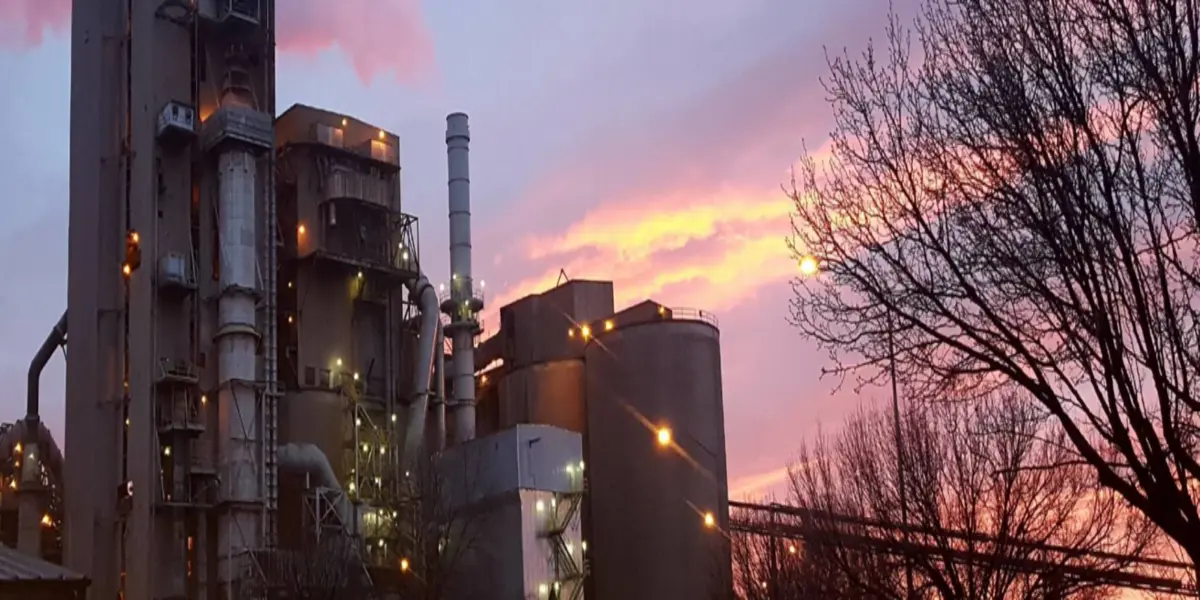
Meet the biggest cement companies in the USA in 2026. Analyse regional capacity, Sunbelt construction demand, and the engineering shift to low-carbon Type IL PLC.
In the world of civil engineering, structural design, and heavy infrastructure, hydraulic cement is both the literal and figurative foundation of civil growth.
From the high-performance concrete decks of interstate highway interchanges to the deep foundation piles of modern semiconductor gigafactories, cement remains the most consumed man-made material on the planet.
The United States cement market in 2026 is navigating a complex and highly stratified economic landscape.
Faced with a projected 2.5% contraction in national cement consumption due to lingering high interest rates, volatile global fuel prices, and a cooling private residential sector, manufacturers are pivoting from a model of raw tonnage expansion to one of hyper-efficiency, vertical integration, and deep carbon mitigation.
Concurrently, structural demand remains resilient. The multi-year disbursement pipelines of the Infrastructure Investment and Jobs Act (IIJA)—which faces its scheduled legislative transition in late 2026—continue to pour billions into public works.
Furthermore, the localised industrial boom triggered by the CHIPS and Science Act has generated concentrated, high-volume demand for cement in key manufacturing corridors.
This comprehensive, peer-reviewed market guide evaluates the top ten cement manufacturing companies operating in the USA in 2026.
We analyse their production capacities, key structural assets, recent corporate mergers, and the cutting-edge green technologies they are deploying to achieve net-zero concrete.
Recommended Articles:
- Apply Before It’s Too Late: High-Value Scholarships Closing This Month
- Best Engineering Universities in Africa: The Ultimate Guide to Programs, Funding, and Fellowships
- Best Paint Brands in Tanzania: A Complete Guide for Homeowners, Builders, and Contractors
- Tekla Structural Designer vs. ETABS: The US Engineer’s Guide to Complex Seismic & Lateral Design
Also Read: Best Paint Brands in Tanzania: A Complete Guide for Homeowners, Builders, and Contractors
The Macro-Landscape of US Cement in 2026
Historically, cement manufacturing has been localised due to the high weight and low transport efficiency of dry bulk materials.
However, a series of global corporate consolidations, regional demand imbalances, and stringent environmental regulations have concentrated the vast majority of US cement clinker capacity into a select group of multinational giants and highly efficient domestic pure-plays.
Regional Drivers: The Sunbelt Resilience and Coastal Environmental Mandates
As of 2026, cement consumption is heavily stratified by region, reflecting demographic shifts and localised industrial development:
- The South (36.7% market share): This region remains the undisputed engine of the domestic industry. Year-round construction, commercial logistics hubs, and massive population inflows to Texas, Florida, Georgia, and Arizona have kept southern kilns running at peak capacity. The “Texas Triangle” alone represents one of the densest clinker-consuming regions in the Western Hemisphere.
- The West (24.1% market share): Highly governed by environmental legislation, California, Washington, and Oregon are setting the baseline for the future of concrete. The widespread enforcement of state-level “Buy Clean” acts and mandatory Environmental Product Declarations (EPDs) has forced producers in these regions to transition almost entirely to Portland Limestone Cement (PLC) and complex blended clinkers.
- The Midwest & Northeast: These regions are seeing stable, institutional demand tied heavily to municipal infrastructure rehabilitation, water systems, and public transit expansions, funded by the tail end of the initial IIJA disbursements.
The Chemistry of Modern Decarbonization
Historically, traditional Portland Cement (ASTM C150 Type I/II) was the undisputed standard. However, its manufacturing process is highly carbon-intensive.
The calcination of limestone, along with the combustion of fossil fuels to heat rotary kilns to 1450-1500 °C, releases approximately 0.8-0.9 tons of CO per ton of clinker produced.
In 2026, the industry standard has rapidly pivoted to Portland Limestone Cement (Type IL under ASTM C595).
Type IL allows up to 15% interground raw limestone (CaCO3), reducing the embodied carbon of the cement by roughly 10% without sacrificing early strength development or long-term durability.
Blended cements (incorporating fly ash, slag, and natural pozzolans) are growing at a 4.86% CAGR over the 2026–2034 forecast period, solidifying their position as the fastest-growing cement segment.
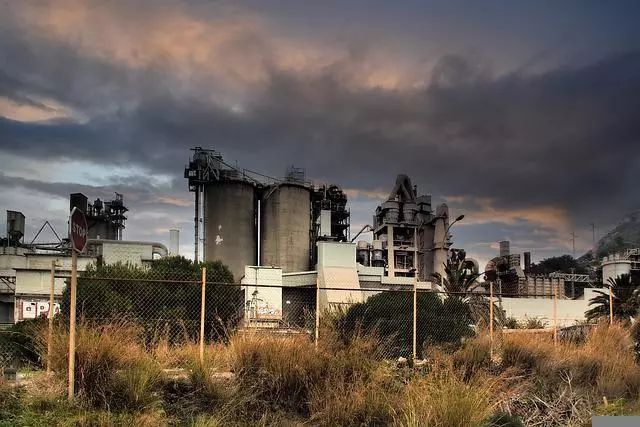
The Top 10 Cement Companies in the USA (2026)
The following are the top Cement Companies in the USA:
1. Amrize Ltd (Formerly Holcim US)
- Estimated US Cement Capacity: approx 22.0 Million Metric Tons per Year (Mt/yr)
- US Headquarters: Chicago, Illinois
- Primary Geographic Footprint: National (Northeast, Midwest, Mid-Atlantic, South, and West)
Company Overview and Strategy
Following its highly anticipated spinoff from its Swiss parent, Holcim Group, completed in late June 2025, Amrize Ltd (trading under the ticker AMRZ on the NYSE) entered 2026 as the largest independent building materials company in North America.
Amrize operates a vast network of 18 primary cement plants, 143 terminals, and more than 1,000 active facilities.
In 2025, Amrize delivered impressive revenue of $11.8 billion, net income of $1.2 billion, and Adjusted EBITDA of $3.0 billion.
For 2026, the company has ramped up its capital expenditure program to $900 million to fund aggressive production expansions.
This includes optimising its massive Ste. Genevieve, Missouri facility (the largest single-line cement plant in America) and integrating its strategic $788 million acquisition of PB Materials in Texas to directly feed the booming Sunbelt infrastructure, data centre, and commercial markets.
Sustainability and Technology Leadership
Amriz leads the market in low-carbon transition, standardising its operations around the ECOPlanet and OneCem portfolios.
As one of the largest cement companies in the USA, the company has completely replaced traditional Type I/II cements with ASTM C595 Type IL (PLC) in its largest markets.
In 2026, Amrize is focusing heavily on its “ASPIRE” synergy program, aiming to achieve 70 basis points of margin expansion through optimised river and rail logistics, alternative fuel deployment, and advanced clinker factor reduction.
Also Read: The Best 6 Cement Manufacturing Brands in Tanzania [2026]
2. CRH plc (Ash Grove Cement & Eco Material Technologies)
- Estimated US Cement Capacity: approx 15.5 Mt/yr
- US Headquarters: Atlanta, Georgia
- Primary Geographic Footprint: Great Plains, Midwest, South, and West Coast
Company Overview and Strategy
As one of the largest cement companies in the USA, CRH plc, an Irish-headquartered global powerhouse, established its dominant position in the US cement industry through its landmark acquisition of Ash Grove Cement Company.
Since then, CRH has operated its primary cement arm under the highly trusted, century-old Ash Grove brand.
A key competitive differentiator for CRH in 2026 is its highly successful integration of Eco Material Technologies, the nation’s largest processor of fly ash and near-zero-carbon cementitious materials.
By pairing Ash Grove’s clinker capacity with Eco Material’s supplementary cementitious material (SCM) supply chains, CRH has achieved unparalleled vertical integration, securing its position as a primary supplier for high-spec municipal and commercial infrastructure across North America.
Strategic Assets and Plants
Ash Grove operates 12 modern cement plants spanning from the Pacific Northwest to the Gulf Coast. Key assets, such as the Midlothian, Texas, plant and the Seattle, Washington, facility, serve high-density infrastructure corridors.
CRH’s internal ready-mix and aggregates divisions (operating under Oldcastle Materials) provide an immediate, high-volume internal market for its cement production.
3. Heidelberg Materials AG (Formerly Lehigh Hanson)
- Estimated US Cement Capacity: approx 13.0 Mt/yr
- US Headquarters: Irving, Texas
- Primary Geographic Footprint: Northeast, Midwest, South, and West Coast
Company Overview and Strategy
As one of the largest cement companies in the USA, Heidelberg Materials (historically known in North America as Lehigh Hanson) rebranded to align its global entities under a unified, materials-centric identity.
To expand its East Coast reach and solidify its grip on the high-demand Northeastern infrastructure corridor, Heidelberg Materials fully integrated its strategic acquisition of Giant Cement Holding, an asset optimisation program that reached full operational maturity in early 2026.
Modern Technological Initiatives
As one of the largest cement companies in the USA, Heidelberg Materials is currently executing some of the most ambitious Carbon Capture, Utilisation, and Storage (CCUS) projects in the Western Hemisphere.
The company is developing a full-scale industrial carbon capture installation at its Mitchell, Indiana, plant, aiming to capture up to 95% of the plant’s CO2 emissions.
Mitchell’s state-of-the-art kiln system, opened in 2023, represents the gold standard of energy efficiency in modern US pyroprocessing, utilising advanced digital twins and artificial intelligence to minimise fuel combustion.
4. CEMEX USA
- Estimated US Cement Capacity: approx 9.5 Mt/yr
- US Headquarters: Houston, Texas
- Primary Geographic Footprint: Texas, Florida, California, and the Southwest
Company Overview and Strategy
As one of the largest cement companies in the USA, CEMEX USA is a wholly owned subsidiary of Mexican multinational CEMEX S.A.B. de C.V. Strategically oriented around rapidly growing, high-urbanisation states, CEMEX USA has optimised its footprint to dominate the southern half of the United States.
With major coastal importing terminals and 6 highly efficient, heavy-output cement plants, CEMEX is the primary supplier for iconic infrastructure projects throughout the Sunbelt.
Sustainable Portfolios & Operations
CEMEX’s environmental strategy is centred on its Vertua line of low-carbon products, which deliver carbon reductions ranging from 30% to over 70% compared to traditional mixes.
As one of the largest cement companies in the USA, CEMEX has dramatically increased the alternative fuel substitution rates at its Balcones plant in New Braunfels, Texas, and its Victorville plant in California, burning municipal solid waste, biomass, and chipped scrap tyres to supply up to 60 of the thermal energy required for clinkerization, thereby displacing heavy fossil fuels like coal and petcoke.
5. Quikrete Holdings (Summit Materials / Argos USA)
- Estimated US Cement Capacity: approx 9.6 Mt/yr
- US Headquarters: Denver, Colorado / Atlanta, Georgia
- Primary Geographic Footprint: Southeast, Mid-Atlantic, Great Plains, and Texas
Company Overview and Strategy
The biggest blockbuster transaction of recent years occurred when Quikrete Holdings, Inc. completed its definitive acquisition of Summit Materials, Inc. in an all-cash merger valued at billions of dollars.
This merger radically restructured the upper echelons of the US building materials market. Just a year prior, in early 2024, Summit Materials had combined its operations with Argos USA, the US business of Colombia’s Cementos Argos S.A.
By acquiring Summit, Quikrete (already the dominant household brand for packaged concrete, repair mortars, and speciality bag products) instantly became a major cement manufacturer.
Synergies and Market Consolidation
By absorbing Summit’s vast aggregates reserves and Argos’s former portfolio of 4 massive cement plants, 2 grinding stations, and roughly 10 million tons of active capacity, Quikrete has achieved near-flawless vertical integration.
It can now feed its national network of pre-blended bagging plants directly from its own domestic cement kilns, bypassing third-party clinker suppliers and significantly insulating itself from raw material price shocks.
6. Buzzi Unicem USA
- Estimated US Cement Capacity: approx 8.5 Mt/yr
- US Headquarters: Bethlehem, Pennsylvania
- Primary Geographic Footprint: Midwest, Southwest, and Northeast
Company Overview and Strategy
A subsidiary of the Italian multinational Buzzi Unicem S.p.A., Buzzi Unicem USA is a quiet giant of the American construction market.
Operating 8 cement plants across key logistical arteries (primarily along the Mississippi and Ohio rivers), Buzzi has specialised in supplying large-scale civil engineering, paving, and industrial commercial developments.
Digital Logistics and Distribution Excellence
As one of the largest cement companies in the USA, Buzzi Unicem’s competitive advantage lies in its peerless riverine and rail distribution logistics.
Buzzi’s advanced digital freight coordination and automated terminal loading platforms allow high-capacity bulk carriers to load and dispatch pneumatic trucks 24/7 without manual administrative friction, drastically lowering transit lead times for time-sensitive infrastructure concrete pours.
7. Eagle Materials Inc.
- Estimated US Cement Capacity: approx 6.2 Mt/yr
- US Headquarters: Dallas, Texas
- Primary Geographic Footprint: Midwest, Rocky Mountains, Texas, and Nevada
Company Overview and Strategy
Unlike its multinational peers, Eagle Materials Inc. is a highly profitable, independent, publicly traded American company (NYSE: EXP) specialising in cement, ready-mix, and wallboard production.
Operating on a decentralised business model, Eagle Materials owns and runs 8 cement plants (including its joint ventures).
By targeting highly specific inland markets with strong local demand and limited exposure to low-cost seaborne imports, Eagle consistently generates among the highest operating margins in the heavy materials industry.
Flagship Operations
As one of the largest cement companies in the USA, Eagle’s Joint Venture with Lhoist—operating under Texas Lehigh Cement Company in Buda, Texas—and its major manufacturing facilities in Illinois, Nevada, and Wyoming, give it unmatched access to major growth pockets.
Eagle has been an aggressive early adopter of energy-saving clinker grinding technologies, installing vertical roller mills (VRMs) across its plants to reduce electrical consumption during the final finish-grinding stage.
8. CalPortland Company
- Estimated US Cement Capacity: approx 4.8 Mt/yr
- US Headquarters: Glendora, California
- Primary Geographic Footprint: California, Oregon, Washington, Arizona, and Nevada
Company Overview and Strategy
As one of the largest cement companies in the USA, CalPortland, a key subsidiary of Japan’s Taiheiyo Cement Corporation, is the preeminent building materials supplier on the West Coast.
With a history dating back to 1891, the company has grown to encompass 5 modern cement plants and an extensive system of rail-connected distribution terminals.
CalPortland has historically dominated the Southern California and Arizona infrastructure markets.
Environmental Leadership
Operating in California, CalPortland faces the nation’s most stringent carbon compliance limits. The company’s Mojave and Oro Grande plants were among the earliest in the Southwest to receive the EPA’s Energy Star certification for outstanding energy efficiency.
CalPortland has fully standardised its product line around low-embodied-carbon cement, working in close coordination with California’s DOT (Caltrans) to pioneer the high-volume replacement of Portland cement with engineered PLC in highway pavements.
9. Martin Marietta Materials
- Estimated US Cement Capacity: approx 4.5 Mt/yr
- US Headquarters: Raleigh, North Carolina
- Primary Geographic Footprint: Texas and the Southwest
Company Overview and Strategy
While Martin Marietta is globally recognised as an aggregates giant (quarrying sand, gravel, and crushed stone), it maintains a highly strategic, high-output cement manufacturing division in Texas.
Operating massive wet-to-dry converted kiln lines in Midlothian and Hunter, Texas, Martin Marietta directly feeds the insatiable concrete demand generated by the Dallas-Fort Worth metroplex and the Central Texas growth corridor.
Infrastructure Alignment
As one of the largest cement companies in the USA, Martin Marietta’s cement strategy is optimised for direct corporate synergy. Over 70% of its cement output is utilised directly within Texas infrastructure, structural paving, and public works projects.
By integrating its extensive heavy-aggregate shipping networks with localised cement distribution, Martin Marietta offers heavy contractors a single-source solution for structural raw concrete components.
10. GCC (Grupo Cementos de Chihuahua)
- Estimated US Cement Capacity: approx 3.6 Mt/yr
- US Headquarters: Denver, Colorado
- Primary Geographic Footprint: Rocky Mountains, Upper Midwest, and West Texas
Company Overview and Strategy
As one of the largest cement companies in the USA, GCC America, the US division of Mexico-based Grupo Cementos de Chihuahua, is a highly specialised regional leader.
GCC has systematically built an interconnected, fortress-like market footprint across the Mountain West, running plants in Colorado, South Dakota, Montana, and Texas.
Because of this geography, GCC is highly insulated from coastal import competition, serving as the sole local cement supplier for thousands of miles of rural interstate, energy corridor, and wind-farm infrastructure.
Strategic Innovations
GCC’s operations are optimised for extreme climates, developing speciality cement varieties that maintain precise hydration parameters and enable rapid early-strength gain in freezing winter conditions.
The company has aggressively pursued coal-displacement programs, transitioning its Rapid City, South Dakota, plant to utilise municipal waste and high-BTU industrial byproducts as alternative fuels.
Comparative Technical Profile Matrix On Cement Companies In The US
To provide a direct corporate comparison of cement companies in the US, the matrix below details the operational structures of the top players shaping the US cement sector in 2026.
| Company Name | US Head Office | Estimated US Capacity (Mt/yr) | Active US Kilns | Core Strategic Advantage | Flagship Eco-Brand |
|---|---|---|---|---|---|
| Amrize Ltd | Chicago, IL | approx 22.0 | 18 | Massive national scale, extensive coastal and inland terminals. | OneCem / ECOPlanet |
| CRH plc (Ash Grove) | Atlanta, GA | approx 15.5 | 12 | Unmatched SCM supply via Eco Material Technologies. | Ash Grove Eco-Cement |
| Heidelberg Materials | Irving, TX | approx 13.0 | 12 | Advanced CCUS infrastructure, strong Northeast footprint. | Giant Cement / EcoCem |
| Quikrete (Summit/Argos) | Atlanta, GA | approx 9.6 | 4 | Complete vertical integration with pre-blended bag plants. | Argos Super Portland |
| CEMEX USA | Houston, TX | approx 9.5 | 6 | Dense Sunbelt footprint, high-output coastal import hubs. | Vertua |
| Buzzi Unicem USA | Bethlehem, PA | approx 8.5 | 8 | Riverine and rail logistics, digital freight integration. | Buzzi PLC |
| Eagle Materials | Dallas, TX | approx 6.2 | 8 | High operating margins, zero coastal import exposure. | Eagle TX Lehigh |
| CalPortland | Glendora, CA | approx 4.8 | 5 | Domination of strict West Coast environmental markets. | ADVENE PLC |
| Martin Marietta | Raleigh, NC | approx 4.5 | 2 | Deep vertical integration with major Texas aggregate networks. | Texas Premium |
| GCC America | Denver, CO | approx 3.6 | 4 | Geographically isolated mountain markets, specialty cold-weather cements. | GCC Premium PLC |
Key Trends Reshaping the US Cement Companies in 2026
The cement sector in 2026 is no longer just about moving heavy minerals. It is a highly specialised, technology-driven battleground defined by three structural trends:
1. The Rapid Obsolescence of Traditional OPC
Traditional Ordinary Portland Cement (OPC) is quickly becoming a speciality product. Due to state-level low-carbon procurement policies and corporate ESG mandates, ASTM C595 Type IL (Portland Limestone Cement) has become the baseline spec for state DOT highway designs and structural building columns.
Engineers have realised that PLC performs identically to standard cement in terms of sulfate resistance, freeze-thaw durability, and compressive strength, making the green transition a logical technical choice.
2. The Rise of Supplementary Cementitious Materials (SCMs)
As Cement Companies seek to lower the clinker-to-cement ratio, demand for high-quality SCMs has surged.
- Fly Ash (from coal power plants): Historically, the most common SCM, but its use is rapidly declining as coal-fired power plants are decommissioned.
- Slag Cement (ground granulated blast-furnace slag): An excellent replacement, but limited by localised steel production.
- Natural Pozzolans & Calcined Clays: The breakout stars of 2026. Companies are investing millions in specialised clay calcining facilities. Calcined clay can replace up to $30\%$ of clinker, providing an abundant, highly sustainable alternative to fly ash.
3. Heavy Electrification and Hydrogen Pyrolysis
To achieve deep decarbonization, manufacturers are looking beyond alternative fuels to alternative kiln heating methods.
Research is rapidly shifting to hydrogen combustion and electrical calcination. By utilising green hydrogen to heat rotary kilns or utilising massive electric arcs powered by renewable energy, manufacturers can completely eliminate the combustion component of kiln emissions, leaving only the process emissions from limestone calcination, which are far easier to capture via CCUS.
Frequently Asked Questions (FAQs) On Cement Companies In The US
1. What is the difference between cement and concrete?
While often used interchangeably, cement and concrete are completely different materials. Cement is a fine mineral powder that acts as the binding agent. Concrete is the final composite structural material made by mixing cement, water, fine aggregates (sand), and coarse aggregates (crushed stone). To use an analogy: cement is the flour, while concrete is the bread.
2. Why is Quikrete’s acquisition of Summit Materials considered a game-changer?
Historically, Quikrete was primarily a downstream packaging company that purchased raw bulk cement from third-party manufacturers to package its famous pre-mixed bags of concrete. By acquiring Summit Materials (which owned Argos USA’s massive cement assets) in February 2025, Quikrete became a major, vertically integrated heavy cement producer. This allows Quikrete to secure its own raw material supply chain, lower production costs, and assert control over both the consumer retail and heavy civil infrastructure supply chains.
3. How is Portland Limestone Cement (PLC / Type IL) different from traditional cement?
Traditional Portland cement contains up to 5% uncalcined limestone. Portland Limestone Cement (Type IL) is engineered to contain between 5% and 15% interground raw limestone. Because this additional limestone is ground raw rather than fired in a fossil-fuel-fired kiln, it reduces the carbon intensity of the cement manufacturing process by approximately 10% while delivering equivalent structural performance.
4. Which state produces the most cement in the United States?
Texas is the undisputed leader in US cement production. Because of its massive geological reserves of high-purity limestone, vast land area, and explosive growth in population and industrial infrastructure, Texas hosts the largest concentration of active cement kilns in the country, particularly in the Midlothian area south of Dallas-Fort Worth.
5. What is CCUS, and how does it apply to cement manufacturing?
CCUS stands for Carbon Capture, Utilisation, and Storage. In cement manufacturing, CCUS technologies are installed on massive gas-separation plants directly onto kiln exhaust stacks. These systems separate and capture the CO2 before it reaches the atmosphere. The captured gas is then either compressed and permanently injected deep into geological storage formations (sequestration) or utilised to cure precast concrete blocks, mineralise recycled aggregate, or manufacture synthetic fuels.
Conclusion On Cement Companies In The US
As we move through 2026, the US cement companies are proving that heavy manufacturing can adapt, innovate, and thrive in an environmentally conscious era.
The companies profiled in this guide are no longer measuring success solely by the million tons of clinker they grind, but also by the physical durability and environmental footprint of the final structures they enable.
Through ambitious green product portfolios, massive structural mergers like Quikrete’s acquisition of Summit, and cutting-edge carbon capture projects, these ten market giants are successfully rebuilding the foundation of American civil engineering.
For CAD managers, civil designers, and principal engineers, staying aligned with these manufacturers’ evolving product portfolios is no longer just an administrative choice—it is a technical necessity for designing the resilient, low-carbon infrastructure of tomorrow.
Join the conversation by replying on Bluesky.
That’s all.