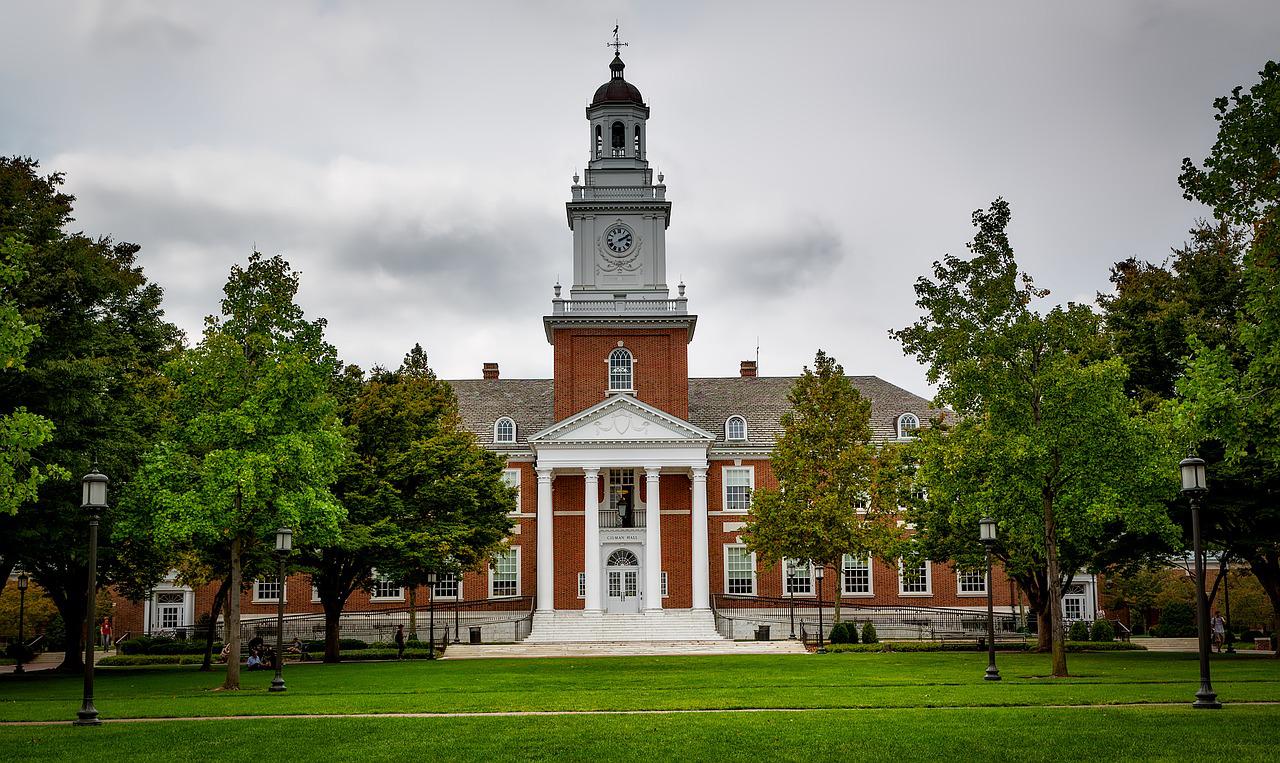
The QS World University Rankings 2023 have been released, featuring over 1,400 of the Best Engineering Universities in the World.
Our biggest-ever university rankings, this year’s table covers 100 study destinations, with the US, UK, and mainland China the most represented.
If you’re at the start of your university research, a global ranking like ours can be an easy way to begin building a shortlist of institutions.
It’s also worth cross-referencing this ranking with our QS World University Rankings by Subject, which will provide more detail on how each university scores for its teaching in particular subjects and subject areas. Here we have shortlisted only the 10 best Engineering Universities in the World.
Also Read: The Construction Team: Managing the Building Process
What are The Best Engineering Universities in the World?
#1. Massachusetts Institute of Technology (MIT)
Massachusetts Institute of Technology (MIT), Cambridge, United States
“Mind and Hand” is the thought-provoking motto of the Massachusetts Institute of Technology, known also as MIT. This motto enigmatically encapsulates this famous institution’s mission to advance knowledge in science, technology, and areas of scholarship that can help to make the world a better place.
At its founding in 1861, MIT was initially a small community of problem-solvers and science lovers eager to bring their knowledge to bear on the world. Today, MIT has evolved into an educational behemoth, with some 1,000 faculty members and more than 11,000 undergraduate and graduate students.
MIT is now an independent, coeducational, privately endowed university organised into five schools (architecture and planning; engineering; humanities, arts, and social sciences; management; science). Yet the principle of educational innovation remains at the core of MIT’s educational philosophy.
MIT researchers are at the forefront of developments in artificial intelligence, climate adaptation, HIV, cancer, and poverty alleviation, while in the past, MIT research has fuelled scientific breakthroughs such as the development of radar, the invention of magnetic core memory, and the concept of the expanding universe.
Science and technology are not the only strings to MIT’s bow, however. Approximately 20 per cent of MIT undergraduates join a sports team, and with 33 varsity sports, MIT boasts one of the broadest intercollegiate athletic programs in the world.
A vibrant arts culture also permeates college life. There are 12 museums and galleries on campus, with the MIT Museum drawing nearly 125,000 visitors each year. Students participate in more than 60 music, theatre, writing, and dance groups, and MIT faculty members include Pulitzer Prize winners and Guggenheim Fellows.
MIT is set in 168 acres of grounds that extend for more than a mile along the Cambridge side of the Charles River basin. The campus features stunning landmarks designed by architects such as Alvar Aalto, Frank Gehry, and Steven Holl, as well as buildings in a range of architectural styles, from neoclassical to modernist to brutalist.
At its edges, the campus merges with various Cambridge neighbourhoods, including Kendall Square, which is one of the most innovative square miles on the planet.
The close association between industry and research has enabled MIT alumni to launch more than 30,000 active companies, creating 4.6 million jobs and generating roughly $1.9 trillion in annual revenue. No wonder, then, that a nation of MIT graduates would be the 10th-largest economy in the world.
#2. University of Cambridge
University of Cambridge, Cambridge, United Kingdom. Located in the centre of the ancient city of Cambridge, 50 miles north of London, the University of Cambridge is a collegiate public research institution that serves more than 18,000 students from all corners of the globe.
The university consists of numerous listed buildings and is divided into 31 autonomous colleges, with many of the older ones situated on the famous River Cam. Applications are made directly to the individual colleges, rather than to the university overall. You can live and are often taught at your college, receiving small-group teaching sessions known as college supervision.
Six academic schools – Arts and Humanities, Biological Sciences, Clinical Medicine, Humanities and Social Sciences, Physical Sciences, and Technology – are spread across the university’s colleges, housing roughly 150 faculties and other institutions.
Founded in 1209, the University of Cambridge’s 800-year history makes it the fourth-oldest university in the world and the second-oldest university in the English-speaking world. Cambridge students make up 20 per cent of the town’s population, and most of the older colleges are situated near the city centre.
Its notable buildings give the city of Cambridge a unique character, including King’s College Chapel, the History Faculty Building designed by James Stirling, and the Cripps Building at St John’s College.
Cambridge is widely acknowledged as a vibrant place to be a student. On the academic side, the university is home to over 100 libraries, which hold more than 15 million books. There are also nine world-renowned arts, scientific, and cultural museums, such as Kettle’s Yard and the Fitzwilliam Museum, which are open to the public year-round, as well as a botanical garden.
Extracurricular activities give you the chance to get involved with anything from the university’s renowned student drama societies, which spawned the likes of the comedy group Monty Python, to music, politics, and hundreds of other clubs and societies. The sports scene at Cambridge is huge too, with state-of-the-art facilities and over 80 sports on offer with teams for novices and experts alike.
With its reputation for academic excellence and traditional scholarly values, the University of Cambridge often ranks among the very top universities in the world for teaching, research, and international outlook. The university has educated eminent mathematicians, scientists, politicians, lawyers, philosophers, writers, actors, and heads of state. Ninety-eight Nobel laureates and 15 British prime ministers have affiliations with Cambridge as students, faculty, or alumni, including the scientists Francis Crick and Frederick Sanger.
Also Read: Best Gifts For Civil Engineers and Architects in 2022
#3. Stanford University
Stanford University, Stanford, United States
Located 35 miles south of San Francisco and 20 miles north of San Jose, Stanford University is in the heart of Northern California’s dynamic Silicon Valley, home to Yahoo, Google, Hewlett-Packard, and many other cutting-edge tech companies that were founded by and continue to be led by Stanford alumni and faculty. Nicknamed the “billionaire factory”, it is said that if Stanford graduates formed their own country, it would boast one of the world’s top ten economies.
Covering 8,180 acres, Stanford has one of the largest university campuses in the US, with 18 interdisciplinary research institutes and seven schools: the Graduate School of Business; School of Earth, Energy & Environmental Sciences; Graduate School of Education; School of Engineering; School of Humanities and Sciences; Law School; and School of Medicine.
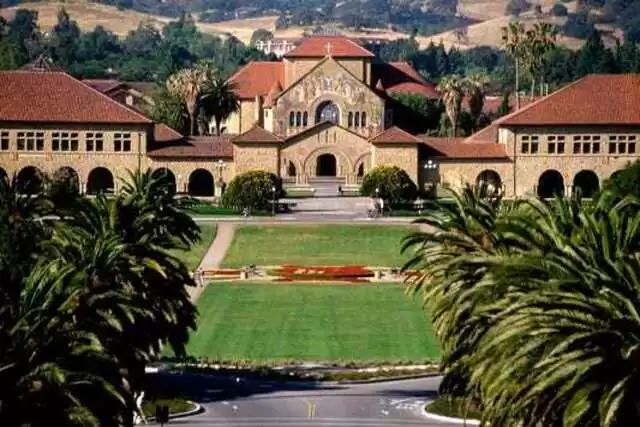
Stanford University was founded in 1885 by California senator Leland Stanford and his wife, Jane, to “promote the public welfare by exercising an influence on behalf of humanity and civilisation”. The couple’s only child had died of typhoid, and their decision to build a university on their farm was intended as a memorial. From the start, the university was non-sectarian, co-educational, and affordable, teaching both the traditional liberal arts and the technology and engineering that was shaping the new America at the time.
Fast-forward more than a century, and Stanford counts 19 Nobel laureates among its community and is regularly ranked among the top three universities in the world. Nicknamed “The Farm” from the days when horses roamed there, Stanford’s campus is now a thriving community of more than 11,000 creative and accomplished people from around the world. Nearly all undergraduate and 60 per cent of graduate students live on campus, so it is hardly surprising that student life is rich and diverse, with over 625 organised student groups.
Sport is popular, with students, faculty, and staff enjoying state-of-the-art recreational facilities and wellness programs. Stanford students compete in 36 varsity and 32 club sports, including baseball, football, basketball, and squash. Sports teams are referred to as the “Stanford Cardinal”.
Stanford also has a rich tradition of fostering creativity and the arts: a vibrant campus arts district and two world-class museums host regular exhibitions. Eight dining halls, a teaching kitchen, and organic gardens provide the campus community with healthy, sustainable meals. The close-knit communal nature of life on campus has even given rise to “Stanford speak”, a special language only spoken on campus.
#4. University of Oxford
Wellington Square, Oxford, GB, Oxford, United Kingdom
The University of Oxford is the oldest university in the English-speaking world and is actually so ancient that its founding date is unknown – though it is thought that teaching took place there as early as the 11th century.
It’s located in and around the medieval city centre of Oxford, dubbed “the dreaming city of spires” by the 19th-century poet Matthew Arnold, and comprises 44 colleges and halls as well as the largest library system in the UK.
There are 22,000 students at Oxford in total, around half of whom are undergraduates, while 40 per cent are international students. A quarter of the city of Oxford’s residents are students, giving the city the youngest population in the UK.
The University of Oxford does not have a main campus; its buildings and facilities are instead scattered around the medieval city centre. Its colleges each have distinctive characters and traditions, often dating back centuries. Colleges are self-governing institutions to which students usually apply directly. There are four academic divisions within Oxford University: Humanities, Mathematical, Physical, and Life Sciences; Medical Sciences; and Social Sciences. The university’s particular strength is the sciences, and it is ranked number one in the world for medicine.
Oxford is a youthful and cosmopolitan city with plenty to see and do. There are dozens of historic and iconic buildings, including the Bodleian Libraries, the Ashmolean Museum, the Sheldonian Theatre, the cathedral, and the colleges themselves.
Students can choose to spend their time studying or avail themselves of the many extracurricular activities available. There’s a strong musical life at Oxford, with clubs and societies spanning all genres, from jazz to classical and folk. Oxford is also ranked highly for sport, with its top rowers taking part every year in the world-famous boat race with the University of Cambridge on the River Thames. Drama lovers are also well catered for, with one of the largest and most vibrant university drama scenes in the country.
Oxford has an alumni network of over 250,000 individuals, including more than 120 Olympic medalists, 26 Nobel Prize winners, seven poet laureates, and over 30 modern world leaders (including Bill Clinton, Aung San Suu Kyi, Indira Gandhi, and 26 UK Prime Ministers).
It has a friendly rivalry with Cambridge for the title of the best university in the UK and is regularly ranked among the top three universities in the world. Notable Oxford thinkers and scientists include Tim Berners-Lee, Stephen Hawking, and Richard Dawkins.
Also Read: Best CAD Software For Architects | All You Need to Know
#5. Harvard University
Harvard University, Cambridge, United States
Established in 1636, Harvard is the oldest higher education institution in the United States and is widely regarded for its influence, reputation, and academic pedigree as a leading university not just in the US but worldwide.
Located in Cambridge, Massachusetts, three miles northwest of Boston, Harvard’s 209-acre campus houses 10 degree-granting schools in addition to the Radcliffe Institute for Advanced Study, two theatres, and five museums. It is also home to the world’s largest academic library system, with 18 million volumes, 180,000 serial titles, an estimated 400 million manuscript items, and 10 million photographs.
Like most of the United States’ pre-Civil War colleges, Harvard was founded to train clergy, but Harvard’s curriculum and student body quickly secularised, and in the 20th century, admissions policy was expanded to bring in a more diverse pool of applicants.
Now, a total of 21,000 students attend the university, each of whom at some point can be seen bustling past the famous statue of John Harvard, the university’s first benefactor and founder, which looks on benignly in the centre of the campus. The bronze statue’s gleaming foot is the result of almost incessant rubbing by tourists and students, who believe the act brings good luck.
Only the academic elite can claim a place at Harvard, and the nominal cost of attendance is high – though the university’s hefty endowment is such that it can offer generous financial aid packages, which around 60 per cent of students take advantage of.
As freshmen, students live in one of the dormitories in Harvard Yard, a prime location, and eat in the historic and picturesque Annenberg dining hall. Harvard students are active both on and off campus, with over 400 official student societies, including extracurricular, co-curricular, and athletic opportunities. Whether playing on the field in Harvard Stadium, fostering entrepreneurial activities at the Harvard Innovation Lab, or writing and editing at the daily newspaper, the Harvard Crimson, student life is a rich and rewarding experience.
Harvard\’s alumni include eight US presidents, several foreign heads of state, 62 living billionaires, 359 Rhodes Scholars, and 242 Marshall Scholars. Whether it be Pulitzer Prizes, Nobel Prizes, or Academy Awards, Harvard graduates have won them. Students and alumni have also won 108 Olympic medals between them. The university is regularly ranked number one in the world, and the consistency of its chart-topping performances shows that success is yet to breed complacency.
#6. California Institute of Technology (Caltech)
California Institute of Technology (Caltech), Pasadena, United States
The California Institute of Technology (Caltech) is a world-renowned science and engineering research and education institution, located in Pasadena, California, around 11 miles northeast of downtown Los Angeles.
Caltech has a high research output and many high-quality facilities, including the Jet Propulsion Laboratory (owned by NASA), the Caltech Seismological Laboratory, and the International Observatory Network. It’s among a small group of institutes of technology in the United States primarily devoted to teaching technical arts and applied sciences, and its fiercely competitive admissions process ensures only a small number of the most gifted students are admitted.
The university was founded as a preparatory and vocational school by Amos G. Throop in 1891, with the mission “to expand human knowledge and benefit society through research integrated with education”. It became a major hub of US scientific research in the early 20th century and was instrumental to the United States’ war effort during World War II.
Today, it is home to the Einstein Papers Project, an initiative seeking to preserve, translate and publish selected papers from the estate of Albert Einstein. It has also established an energy innovation hub that aims to discover revolutionary methods of generating fuels directly from sunlight.
Caltech’s 124-acre campus is within walking distance of Old Town Pasadena and the Pasadena Playhouse District, and the two locations are frequent getaways for students. Life on campus is rich with social activities, clubs, associations, and recreational facilities. Intercollegiate sport is taken very seriously, with the Caltech Beavers (the beaver – nature’s engineer – is the college’s mascot) competing in 13 intercollegiate sports.
Caltech also offers excellent opportunities for the study and performance of music, theatre, and the visual arts, all activities that play a vital role in realising the Institute’s mission of “educating outstanding students to become creative members of society”. Providing a touch of grandeur, the Athenaeum is a stately building in the centre of the campus where members can go for formal and informal dining, meetings, rendezvous, and private parties.
The balance at Caltech between a rigorous academic curriculum and activities that promote personal development ensures that students’ time there is both formative and an invaluable staging post for a successful career. Although it may lack the reputation of Ivy League universities or the likes of Oxford and Cambridge, Caltech is undoubtedly one of the best universities in the world, a fact reflected in rankings that regularly single out technology and engineering as the school’s key academic strengths.
Also Read: Best Types of Kitchen | All You Need To Know- Right Now
#7. Imperial College London
South Kensington Campus, London, United Kingdom
Imperial College London is a one-of-a-kind institution in the UK, focusing solely on science, engineering, medicine, and business. Imperial offers an education that is research-led, exposing you to real-world challenges with no easy answers, and teaching that opens everything up to questions and opportunities to work across multicultural, multinational teams.
Imperial is based in South Kensington, London, in an area known as ‘Albertopolis’, Prince Albert and Sir Henry Cole’s 19th-century vision for a place where science and the arts would come together. As a result, Imperial’s neighbours include a number of world-leading cultural organisations, including the Science, Natural History, and Victoria and Albert museums; the Royal Colleges of Art and Music; and the Royal Albert Hall, where all of their students also graduate.
There is plenty of green space too, including two Royal Parks (Hyde Park and Kensington Gardens) within a 10-minute walk of campus. Travelling to and from the area is also really easy as it’s served by three Tube lines and many bus routes.
One of the most distinctive elements of an Imperial education is that students join a community of world-class researchers. The cutting-edge and globally influential nature of this research is what Imperial is best known for. It’s the focus on the practical application of their research – particularly in addressing global challenges – and the high level of interdisciplinary collaboration that make their research so effective. Read more about their research impact on their research and innovation webpages.
The number of award winners, Nobel Prize holders, and prestigious Fellowships (Royal Society, Royal Academy of Engineering, Academy of Medical Sciences) amongst their staff is a testament to the outstanding contributions they have made in their respective fields.
Imperial is one of the most international universities in the world, with 59% of its student body in 2019-20 being non-UK citizens, and more than 140 countries are currently represented on campus. Meanwhile, the College’s staff, like their students, are diverse in their cultural backgrounds, nationalities, and experiences.
#8. UCL
UCL Bloomsbury, London, United Kingdom
Where novel thinking is nurtured and encouraged
UCL is a diverse community with the freedom to challenge, question, and think differently. Our community pursues academic excellence, breaks boundaries, and makes a positive impact on real-world problems.
An Academic Powerhouse
UCL is 8th in the world in the “QS World University Rankings 2022.” There have been 30 Nobel laureates among its former staff and students, a winner in every decade since the Prize started.
World-Leading Research University
At the very heart of UCL’s mission is our research. We have rated the top university in the UK for research strength in the last Research Excellence Framework (REF 2014). We offer over 675 postgraduate taught, research, and initial teacher education programs across a wide range of disciplines, and encourage our community to work across traditional subject boundaries. UCL’s research-based teaching methodology means that research is integrated into many of our degrees and students have the opportunity to make an original contribution to their field of study.
London’s Global University
UCL sits at the heart of one of the world’s most dynamic cities, meaning you are perfectly placed to take advantage of everything London has to offer. We were the first university in England to welcome women to university education and the first to welcome students of any religion or social background. UCL has 18,000 students from outside the UK, with over 150 countries represented, providing a truly global perspective.
Also Read: The Best Garden Hoses of 2022
#9. ETH Zurich
ETH Zurich – Swiss Federal Institute of Technology, Zürich, Switzerland
ETH Zurich is one of the world’s leading universities in science and technology, known for its cutting-edge research and innovation. It was established in 1855 as the Swiss Federal Polytechnic School, and a century and a half later, the university can count 21 Nobel laureates, 2 Fields Medalists, 3 Pritzker Prize winners, and 1 Turing Award winner as alumni, including the great Albert Einstein himself.
The university, officially called the Swiss Federal Institute of Technology Zurich in English, has 16 departments that offer academic education and conduct scientific research in subjects ranging from engineering and architecture to chemistry and physics.
Education at ETH Zurich combines solid theory with practical application, and most degree programs build on strong mathematical foundations. For undergraduates, the primary language of instruction is German, while most master’s programs and doctoral studies are in English.
Located in Zurich, Switzerland’s largest city, ETH Zurich has two main locations: in downtown Zurich and on a modern campus built on a hill on the outskirts of the town. Students at ETH face an intensive workload, but they can still find time for cultural and other leisure activities and for attending the many regular symposia and conferences on campus, where some of the best minds in science come to speak.
ETH students like to exercise their bodies as well as their minds, and there is a wealth of various sports on offer on campus. The largest annual event is the SOLA relay race, taking place in 14 sections over a total distance of 140 kilometres. More than 900 teams have been known to take part in the annual spectacle at once.
Since the 1880s, students have also been able to show off their best moves at the Polyball, a classic ball event, featuring live music by several orchestras and bands. Every November, 10,000 dancers, music lovers, and partygoers descend on ETH’s extensively decorated main building for what is usually an unforgettable night.
#10. University of Chicago
The University of Chicago, Chicago, United States
Established in 1856, the University of Chicago is a private research university based in the urban centre of Chicago, the third most populous city in the United States. Outside of the Ivy League, Chicago is one of America’s top universities and holds top-ten positions in various national and international rankings.
Beyond the arts and sciences, Chicago has a glowing reputation for its professional schools, including the Pritzker School of Medicine, the Booth School of Business, and the Harris School of Public Policy Studies. The University of Chicago alumni are responsible for the development of many academic disciplines, such as sociology, economics, law, and literary criticism.
The college’s crest sees a phoenix rising from the ashes, a reference to the fire, foreclosure, and demolition of the Old University of Chicago campus, with the current University of Chicago emerging triumphantly in its place in 1890. The old university was founded through a land endowment from the controversial senator Stephen Douglas, a supporter of slavery who authored the Kansas-Nebraska Act. By contrast, the new University of Chicago was co-educational and funded through donations from wealthy Chicagoans and the oil magnate John D. Rockefeller.
Today, the University of Chicago has approximately 16,000 students enrolled, with a male-to-female ratio of 56:44. A quarter of all students hail from overseas, a nod to the institution’s progressive credentials.
Students run more than 400 clubs and societies, comprising a typical mix of sports teams, arts, cultural and religious groups, academic and political groups, and societies that promote eclectic common interests. Among the more famous examples is the University of Chicago bowl team, which has won 118 tournaments and 15 national championships, while the university’s competitive Model United Nations team was the top-ranked team in North America from 2013–to 14 and 2014–to 2015.
If you have an interest in media and film, then you’re well catered for: the university is home to the longest continuously running student film society, Doc Films and publishes several newspapers and magazines. Budding thespians can join the renowned improvisational theatre troupe Off-Off Campus or learn how to broadcast at the university-owned radio station WHPK.
Notable faculty members, past and present, include 29 Nobel laureates and former US President Barack Obama. Illustrious alumni come in practically every field, including the novelists Philip Roth and Saul Bellow, political movers and shakers such as pollster Nate Silver and Obama strategist David Axelrod, pioneering balloonist Jeannette Piccard, and the fictional archaeologist Indiana Jones.
That’s all.