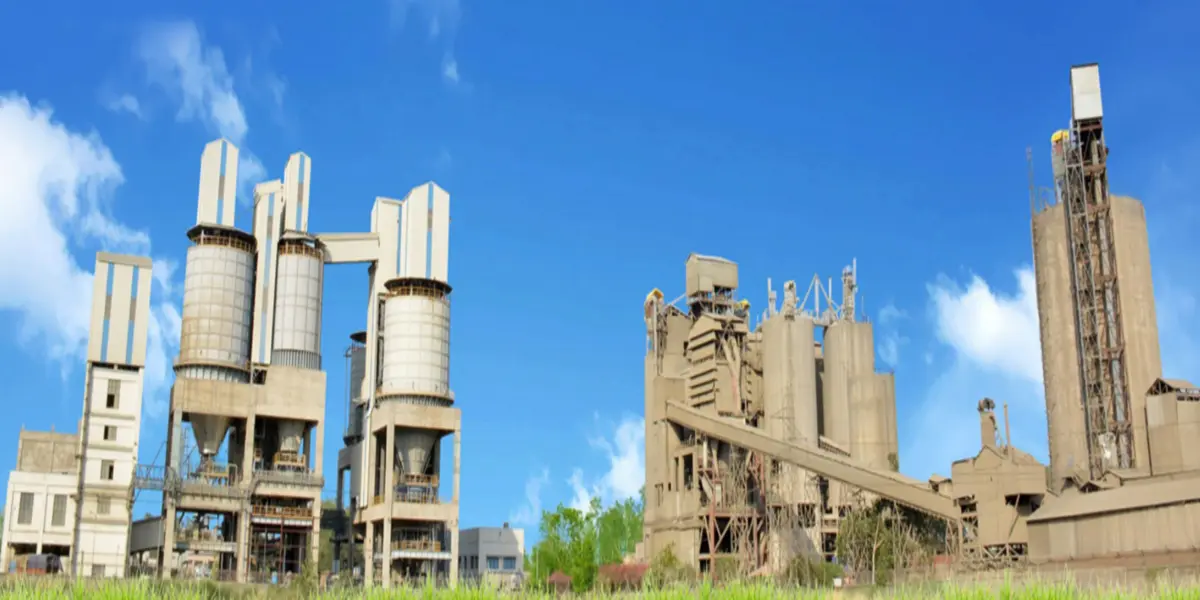
Explore India’s top cement companies in 2026. Get up-to-date capacities, green calcination tech, and the impact of the UltraTech-Adani consolidation wars.
In the theatre of global civil engineering, structural design, and national development, hydraulic cement is the literal and physical backbone of growth.
India is the second-largest cement producer in the world, accounting for over 8% of global installed capacity.
As the nation marches through 2026, its cement sector is undergoing an epochal transformation. Driven by a massive federal infrastructure push, an aggressive wave of corporate consolidation, and the urgent necessity to meet net-zero carbon targets, the Indian cement market has ceased to be a localised commodity business. It is now a high-tech, highly consolidated corporate battleground.
For civil designers, structural engineers, real estate developers, and institutional investors, keeping a finger on the pulse of India’s cement industry is no longer optional.
With the Union Budget committing a massive capital expenditure (Capex) allocation of ₹11.21 lakh crore (approx 135 billion USD) to infrastructure, alongside the scaling of the Pradhan Mantri Awas Yojana (PMAY) for housing, cement demand is experiencing a historic surge.
This comprehensive market guide evaluates the top ten cement manufacturing companies in India in 2026, analysing their production capacities, strategic acquisitions, mineral chemistry profiles, and the cutting-edge green technologies they are deploying to shape India’s concrete horizon.
Recommended Articles
- FRP: What You Need To Know About Fibre-Reinforced Plastic?
- The Best Engineering Universities in China: You Can Apply
- Curing of Concrete: The Complete Guides To All Engineers
- How To Simply Estimate The Quantity of Plastering Materials
- Everything You Need To Know About Ready-Mix Concrete (RMC)
- Quantities Of Materials For Concrete: The Simple Calculation You Need To Know
- The Basic Civil Engineering Materials: What You Need To Know
The Macro-Landscape of Indian Cement in 2026
The Indian cement sector in 2026 is characterised by robust, sustained volume growth, projected at 6.5% to 8.0% Year-on-Year (YoY), pushing total national demand to an estimated 480 to 485 Million Metric Tonnes Per Annum (MTPA).
This relentless demand is structurally supported by two main pillars:
- Infrastructure (28% to 30% of consumption): Expressways, high-speed rail corridors (such as the Mumbai-Ahmedabad bullet train), mega-ports under the Sagarmala initiative, and urban transit systems (metros) across Tier-1 and Tier-2 cities.
- Housing & Real Estate (55%-60% of consumption): Driven by urban migration and rural redevelopment programs.
Historically, the high freight cost of heavy bulk minerals divided India into five highly distinct regional cement markets (North, South, East, West, and Central).
However, 2026 marks the climax of the Consolidation Era. The top five industry players now command over 62% of the national market share—a massive leap from just 45% in FY19.
Regional players are being rapidly absorbed by national conglomerates seeking to optimise their logistics chains under the PM Gati Shakti national master plan.
Also Read: The Biggest Cement Companies In The USA In 2026
The Chemistry of Modern Decarbonization
Traditional Ordinary Portland Cement (OPC, ASTM Type I / IS 269) is an incredibly carbon-intensive material.
The manufacture of clinker—the active mineral component of cement—requires heating limestone (CaCO3 and clay to approximately 1450 °C in a rotary kiln.
This chemical decomposition of raw limestone accounts for roughly 60% of a cement plant’s direct CO2 emissions.
The remaining 40% comes from burning fossil fuels (primarily petcoke or coal) to heat the kiln. For every 1 ton of pure OPC clinker produced, approximately 0.8 to 0.9 tons of CO2 are emitted into the atmosphere.
The Rise of Blended Cements
To achieve deep carbon mitigation and meet the strict compliance parameters of India’s Carbon Credit Trading Scheme (CCTS), manufacturers are aggressively reducing their clinker-to-cement ratio by producing blended cements.
The two primary varieties utilised in India are:
1. Portland Pozzolana Cement (PPC – IS 1489)
This blend replaces a portion of the clinker with fly ash (siliceous waste from coal-fired thermal power plants).
The active silica (SiO2) in fly ash reacts chemically with calcium hydroxide (Ca(OH)2) generated during clinker hydration:

This secondary reaction produces additional Calcium Silicate Hydrate (C-S-H) gel, which is the primary compound responsible for concrete’s long-term strength, density, and chemical resistance.
2. Portland Slag Cement (PSC – IS 455)
This blend incorporates Ground Granulated Blast-furnace Slag (GGBS), a byproduct of the steel industry.
PSC offers exceptional resistance to sulfate and chloride attacks, making it the preferred choice for marine infrastructure, high-performance concrete foundations, and underground civil structures.
Also Read: Tekla Structural Designer vs. ETABS: The US Engineer’s Guide to Complex Seismic & Lateral Design
Profiles of India’s Top Cement Companies in 2026
1. UltraTech Cement Limited (Aditya Birla Group)
- Estimated Installed Capacity: approx 180.5 MTPA (Excluding overseas operations; aiming for 200+ MTPA by end-of-year)
- National Headquarters: Mumbai, Maharashtra
- Primary Geographic Footprint: Pan-India (Dominant in North, West, Central, and South)
Strategic Positioning & Mergers
As one of the Top Cement Companies in India, UltraTech Cement, the flagship company of the Aditya Birla Group, is not only the undisputed leader in India but also the largest cement manufacturer globally outside of China.
In recent years, UltraTech has pursued aggressive defensive acquisitions to protect its market leadership against the rising Adani Group.
Notable moves include the successful integration of Kesoram Industries’ cement division and a decisive open-offer acquisition of India Cements, which significantly bolstered UltraTech’s capacity and limestone reserves in the high-demand southern Indian market.
Technological & Green Initiatives
As one of the Top Cement Companies in India, UltraTech is leading the electrification of industrial heavy logistics in India. In early 2026, the company deployed a fleet of 45 electric heavy-duty trucks for clinker transportation in northern India, preventing an estimated 8,900 tonnes of CO2 emissions annually.
Furthermore, UltraTech has set a benchmark by sourcing over 35% of its power requirements from renewable energy sources (solar, wind, and Waste Heat Recovery Systems – WHRS), targeting 100% clean energy consumption by 2050.
2. Ambuja Cements Limited (Adani Group – Consolidated Platform)
- Estimated Installed Capacity: approx 118.0 MTPA (Consolidated including ACC, Penna, Sanghi, and Orient Cement)
- National Headquarters: Ahmedabad, Gujarat
- Primary Geographic Footprint: Pan-India (Strongest in West, North, and South)
The Adani Consolidation Strategy
Since entering the cement sector with the acquisition of Holcim’s Indian assets in 2022, the Adani Group has radically restructured the market.
In late 2025 and early 2026, Adani shifted from rapid inorganic expansion to a phase of deep operational integration.
As one of the Top Cement Companies in India, the group consolidated its primary brands—Ambuja Cements, ACC Limited, Sanghi Industries, Penna Cement, and the newly acquired Orient Cement (formerly of the CK Birla Group)—under a single, centralised operating system.
This massive operational consolidation simplifies corporate governance and creates a single heavy-materials platform.
Logistics as the Core Margin Driver
In cement, logistics accounts for 30%-35% of total manufacturing costs. By integrating these disparate companies into a unified logistics matrix, Adani has optimised dispatch routes, utilised captive shipping terminals (such as the Sanghipuram port assets), and negotiated bulk power and raw material rates.
The group plans to increase its operating EBITDA from 795 tonne to nearly ₹1,250 tonne by optimising raw material flows and shifting transport to rail under the PM Gati Shakti framework.
Advanced Green Engineering
As one of the Top Cement Companies in India, Ambuja Cements has pioneered the integration of alternative fuel systems, deploying the world’s first commercial Roto Dynamic Heater (RDH) for green calcination.
This technology utilises thermal plasma electrification to replace fossil-fuel combustion inside the calcination stage, drastically reducing the direct carbon footprint of clinker production.
3. Shree Cement Limited
- Estimated Installed Capacity: approx 51.5 MTPA
- National Headquarters: Kolkata, West Bengal (Manufacturing origin: Beawar, Rajasthan)
- Primary Geographic Footprint: North, East, and South India
Company Profile and Strategy
Shree Cement is globally recognised as one of the top cement companies in India and as one of the most cost-efficient and operationally lean cement manufacturers.
Known for its strong flagship brands such as Shree Jung Rodhak, Bangur, and Rockstrong, the company has successfully expanded beyond its traditional northern stronghold into the eastern and southern Indian corridors.
As one of the Top Cement Companies in India, Shree Cement avoids high-cost corporate acquisitions, preferring greenfield and brownfield capacity additions to keep its capital expenditure per metric ton exceptionally low.
Energy Efficiency and Sustainability Leadership
Shree Cement was the first Indian cement producer to join the global RE100 initiative, pledging to consume 100% renewable electricity.
The company has installed some of the largest Waste Heat Recovery Systems (WHRS) in the global cement industry, capturing exhaust heat from kiln preheaters and clinker coolers to generate zero-emission electricity:
Exhaust Heat (Gas) = Steam Generator = Steam Turbine = Electricity
Through this, Shree Cement meets up to 45% of its total power requirements internally, shielding itself from volatile commercial power grids and coal price hikes.
4. Dalmia Bharat Cement
- Estimated Installed Capacity: approx 46.5 MTPA
- National Headquarters: New Delhi
- Primary Geographic Footprint: East, Northeast, and South India
The Slag Cement Specialists
With a legacy spanning over eight decades, Dalmia Bharat is the undisputed expert in slag cement and blended binder systems in India.
As one of the Top Cement Companies in India, Dalmia Cement is highly favoured by structural designers for heavy infrastructure, including concrete highways, bridges, railway sleepers, and airports.
Its product portfolio features specialised variants engineered for low heat of hydration and extreme chemical durability.
The “Grey to Green” Promise
As one of the Top Cement Companies in India, Dalmia Bharat is an industry leader in decarbonization. The company has committed to becoming carbon negative by 2040, the most ambitious timeline in the global heavy building materials sector.
Their strategy is anchored in substituting over 35% of their kiln thermal energy with municipal solid waste, agricultural biomass, and hazardous industrial byproducts (an industry-leading Alternative Fuel Resource (AFR) substitution rate).
5. JSW Cement
- Estimated Installed Capacity: approx 22.0 MTPA
- National Headquarters: Mumbai, Maharashtra
- Primary Geographic Footprint: South, West, and East India
Strategic Industrial Symbiosis
As one of the Top Cement Companies in India, JSW Cement, part of the multi-billion-dollar JSW Group, is a modern success story in circular-economy engineering.
By positioning its grinding facilities in close physical proximity to JSW Steel’s manufacturing plants, JSW Cement secures a direct, uninterrupted, and low-cost supply of high-grade blast-furnace slag (GGBS).
This operational integration enables the company to manufacture JSW Compcem (composite cement) and pure slag cement with an incredibly low clinker factor, resulting in a carbon footprint up to 60% lower than traditional OPC.
6. JK Cement Limited
- Estimated Installed Capacity: approx 24.5 MTPA (Grey Cement), 3.0 MTPA (White Cement & Wall Putty)
- National Headquarters: Kanpur, Uttar Pradesh
- Primary Geographic Footprint: North, West, and Central India
White and Grey Cement Leadership
As one of the Top Cement Companies in India, JK Cement is a highly respected name in the Indian construction market, holding a dominant position in both grey and white cement segments.
The company is one of the leading producers of white cement and wall putty globally, operating state-of-the-art facilities in Rajasthan and Madhya Pradesh, as well as an international manufacturing plant in Fujairah, UAE.
JK Cement is currently expanding its grey cement footprint into Central and Eastern India through highly efficient brownfield expansions.
7. Nuvoco Vistas Corporation Limited (Nirma Group)
- Estimated Installed Capacity: approx 25.0 MTPA
- National Headquarters: Mumbai, Maharashtra
- Primary Geographic Footprint: East and Central India
Eastern Market Consolidation
As one of the Top Cement Companies in India, Nuvoco Vistas, a member of the diversified Nirma Group, established itself as a major cement heavyweight through its successful acquisition of Lafarge India’s assets and Emami Cement.
This dual acquisition instantly gave Nuvoco a dominant market share in West Bengal, Bihar, Odisha, and Chhattisgarh.
The company’s flagship brand, Duraguard, is widely trusted in Eastern India for its advanced water-repelling properties and structural consistency.
8. The Ramco Cements Limited
- Estimated Installed Capacity: approx 22.0 MTPA
- National Headquarters: Chennai, Tamil Nadu
- Primary Geographic Footprint: South and East India
Technological and Dry-Mortar Innovation
Part of the prominent Ramco Group, Ramco Cements is a technology-driven pioneer. The company is highly regarded for its state-of-the-art manufacturing facilities in Tamil Nadu, Andhra Pradesh, and Karnataka.
As one of the Top Cement Companies in India, Ramco was among the earliest adopters of Vertical Roller Mills (VRMs), reducing the electrical energy consumed during the finish-grinding stage of clinker processing.
The company also operates specialised dry-mortar and pre-mixed plaster plants, catering to high-speed mechanised plastering applications in modern high-rise developments.
9. Birla Corporation Limited (MP Birla Group)
- Estimated Installed Capacity: approx 20.0 MTPA
- National Headquarters: Kolkata, West Bengal
- Primary Geographic Footprint: Central, North, and East India
Legacy and Brand Equity
As one of the Top Cement Companies in India, Birla Corporation Limited, the flagship company of the MP Birla Group, is a historical pillar of the Indian cement industry.
Operating under the trusted Birla Cement banner (with popular sub-brands such as Perfect Plus, Samrat, and Cheetak), the company has a highly optimised network of integrated plants and grinding units.
Its modern clinker lines in Maihar (Madhya Pradesh) and Mukutban (Maharashtra) are strategically placed near key limestone reserves, supplying rapidly expanding real estate hubs in Central and Western India.
10. JK Lakshmi Cement Limited (JK Organisation)
- Estimated Installed Capacity: approx 16.5 MTPA
- National Headquarters: New Delhi
- Primary Geographic Footprint: North, West, and Central India
Value Engineering and Localised Footprint
A key subsidiary of the industrial conglomerate JK Organisation, JK Lakshmi Cement has built a reputation for high-value engineering, cost-efficient distribution networks, and strong technical services.
With modern integrated plants in Sirohi (Rajasthan) and Durg (Chhattisgarh), the company is a primary supplier to major government infrastructure projects, highway corridors, and smart-city developments across Gujarat, Rajasthan, Haryana, and Uttar Pradesh.
Also Read: Autodesk AutoCAD Review: The Complete Engineering & CAD Standard Guide
Comparative Technical & Operational Matrix On Top Cement Companies
To assist CAD managers, principal structural engineers, and contractors in sourcing, the matrix below details the technical and operational profiles of the top players in the Indian cement sector.
| Company Name | National HQ | Est. Capacity (MTPA) | Active Regions | Core Technical Advantage | Flagship Eco-Brand |
|---|---|---|---|---|---|
| UltraTech Cement | Mumbai, MH | 180.5 | Pan-India | Unmatched global scale, electric heavy logistics, deep regional quarry access. | UltraTech Premium / Super Premium |
| Ambuja Cements (Adani) | Ahmedabad, GJ | 118.0 | Pan-India | Unified maritime and rail logistics, plasma green calcination technology. | Ambuja Kawach / ACC ECOMaxx |
| Shree Cement | Kolkata, WB | 51.5 | North, East, South | Low capital expenditure per ton, industry-leading WHRS capacity. | Shree Jung Rodhak / Bangur Power |
| Dalmia Bharat | New Delhi | 46.5 | East, South, Northeast | High-grade slag binders, advanced alternative fuels, 2040 carbon-negative path. | Dalmia Infra Pro / Dalmia Supreme |
| Nuvoco Vistas | Mumbai, MH | 25.0 | East, Central | Consolidation of premium Eastern brands, advanced waterproofing. | Duraguard Microfiber / Concreto |
| JK Cement | Kanpur, UP | 24.5 | North, West, Central | Global leader in white cement and putty, optimized dry mortar mixes. | JK Super Strong / JK ShieldMax |
| JSW Cement | Mumbai, MH | 22.0 | South, West, East | Circular economy industrial symbiosis, ultra-low clinker-to-slag ratio. | JSW Compcem / JSW Green Cement |
| The Ramco Cements | Chennai, TN | 22.0 | South, East | VRM grinding efficiency, highly specialized dry-mortar products. | Ramco Supercrete / Ramco Supergrade |
| Birla Corporation | Kolkata, WB | 20.0 | Central, North, East | Deep Central India limestone reserves, strong micro-market penetration. | Birla Cement Perfect Plus |
| JK Lakshmi Cement | New Delhi | 16.5 | North, West, Central | Localized northern supply chains, robust value-engineered concrete mixes. | JK Lakshmi PRO+ / Platinum Heavy Duty |
Key Trends Reshaping the Sector in 2026
The Indian cement sector is no longer just a business of processing minerals; it is a technology-driven, environmentally conscious industry defined by three major trends:
1. The “Clinker Factor” Reduction and Blended Cement Standard
In 2026, standard OPC is increasingly reserved only for high-strength specialised structures (such as precast railway sleepers or bridge piers).
For standard residential columns, high-rise frames, and highway pavements, PPC and PSC have become the default engineering specifications.
By reducing the clinker factor (the ratio of pure clinker to total cement weight) from 70% to under 50%, manufacturers are successfully lowering both their manufacturing costs and their carbon tax exposure.
2. Heavy Capex and the Shift to Rail (PM Gati Shakti)
The Indian cement industry is executing its largest-ever expansion phase, with a massive ₹1.2 lakh crore capital expenditure program slated through 2028.
To counter rising diesel prices and road transport inefficiencies, manufacturers are rapidly transitioning their distribution chains to rail and coastal shipping.
Under the PM Gati Shakti framework, new grinding stations are being built as “rail-connected terminals,” allowing bulk cement to be moved across regions in specialised pneumatic rail wagons with zero dust emissions.
3. Deep Decarbonization and Alternative Fuel Resources (AFR)
With the implementation of the national Carbon Credit Trading Scheme (CCTS), cement manufacturers are penalised for exceeding carbon caps.
This has triggered a massive race to adopt green technologies:
- Waste Heat Recovery Systems (WHRS): Capturing thermal exhaust to generate electricity.
- Alternative Fuel Substitution: Burning processed municipal waste, plastic waste, and biomass to replace coal and petcoke.
- Solar and Wind Power Purchase Agreements (PPAs): Building dedicated captive renewable energy farms to power heavy clinker grinding mills.
FAQs On Top Cement Companies
1. What is the difference between PPC and OPC cement, and which is better for residential construction?
Ordinary Portland Cement (OPC) is made of pure ground clinker and gypsum. Portland Pozzolana Cement (PPC) contains up to 30% interground fly ash.
For standard residential home construction (foundations, columns, slabs, and plastering), PPC is highly recommended. PPC has a slower heat of hydration, which prevents micro-cracking during early curing, develops superior long-term strength, and is highly resistant to chemical attacks compared to standard OPC. OPC is typically reserved for specialised heavy engineering projects where rapid, high early strength is required (e.g., precast concrete structures).
2. Why is the Adani Group’s consolidation of its cement brands considered a game-changer?
Historically, Ambuja and ACC operated as sister companies under Holcim with separate administrative teams, overlapping distribution networks, and duplicated marketing budgets. By consolidating them, along with Penna and Orient, under Ambuja Cements in 2025/2026, the Adani Group eliminated these operational redundancies.
This allows the group to coordinate shipping routes, optimise sourcing of bulk raw materials, share captive power assets, and leverage their collective scale, thereby significantly reducing costs and increasing operating margins.
3. Which Indian state leads in cement production and limestone reserves?
Rajasthan is the leading state in both limestone reserves and cement production capacity, particularly in the northern region. In the south, Andhra Pradesh and Karnataka hold massive reserves of high-purity limestone and host some of the largest integrated cement kilns in the country.
4. What is WHRS in cement manufacturing?
WHRS stands for Waste Heat Recovery System. During clinker production in a rotary kiln, large amounts of thermal energy are released as high-temperature exhaust gas.
A WHRS captures these hot gases and routes them through a heat-exchanger boiler to produce steam, which drives a turbine to generate clean, emission-free electricity. Modern Indian cement plants can meet 30%-45% of their total electrical energy needs through WHRS.
Conclusion On The Top Cement Companies in India
As India executes its ambitious infrastructure master plans, the domestic cement manufacturing sector is proving that heavy manufacturing can innovate, adapt, and lead in a green transition.
The top ten giants profiled in this guide are no longer just measuring success by raw output volumes. Instead, they are defining their market value by the cost efficiency of their logistics chains, the low carbon intensity of their products, and their ability to supply resilient materials for the megaprojects rebuilding the nation.
For civil designers, project managers, and principal contractors, staying aligned with these manufacturers’ evolving product lines and green certifications is no longer just an administrative task.
It is a technical necessity to design and build the sustainable, low-carbon, and highly durable infrastructure of tomorrow.
Thats All.