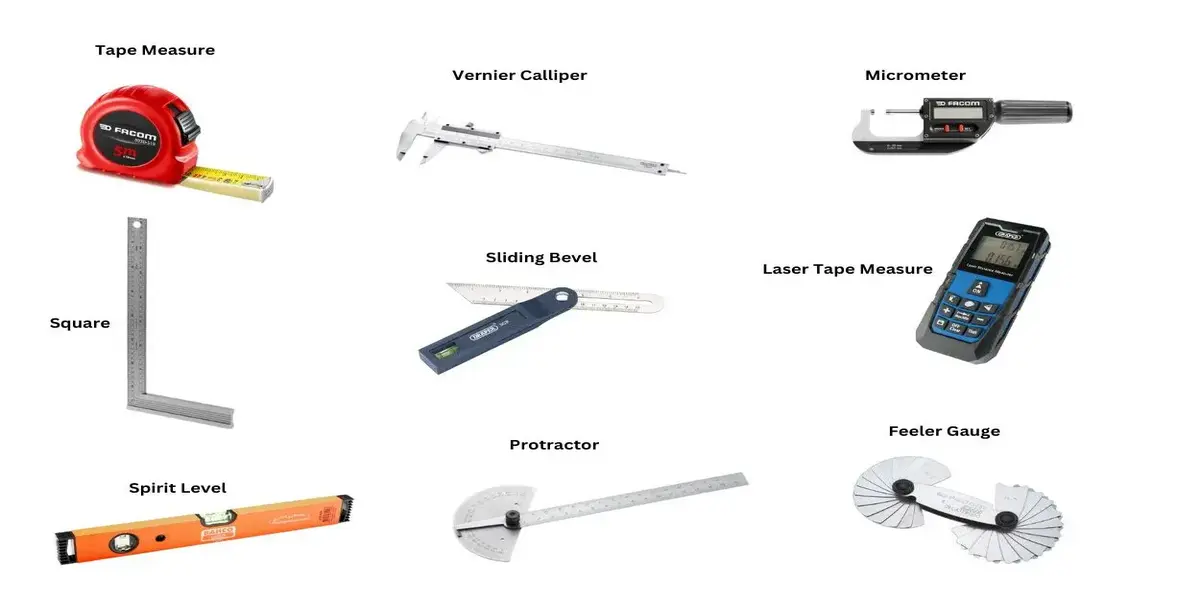
The baseline for engineering measurement has shifted from isolated data collection to a fully integrated Reality Capture ecosystem.
For civil and structural professionals, the “most useful” measuring tools right now are no longer defined solely by their physical accuracy but by their ability to feed high-fidelity, radiometric, or geospatial data directly into BIM and CIM environments.
Recommended Deals
- 10 Best Laptops for Civil 3D and Revit Right Now
- 9 Best Monitors For Engineers and Architects 2026
- How to Choose the Best Laptop for Architecture in 2026
- The Best Gifts For Engineers To Make Them Smile in 2026
- Best Engineering Books For Engineers
- Best Laptop Brands For Engineers | All You Need To Know
- Home Furniture | Meaning and Type You Should Know In 2026
- Best Drones for Surveying and Mapping: Guide for Engineers
Please Note: This Post Contains Affiliate Links. I may earn a commission if you make a purchase, at no additional cost to you. As an independent Blogger, I use affiliate links to keep my website free. I only recommend products and services that add value to my readers. However, this is not a sponsored post. Learn More.
Factors to Consider When Buying Measuring Tools
With such a wide variety of measuring tool types available, some better suited to different applications, the most important thing to consider when buying measuring tools is what you need the tool to do.
This will immediately rule out some types of tools and shift your focus onto those best suited to the job at hand.
Once you’ve established the type of measurements you need to collect, consider where you will be working.
Are you likely to be permanently based in a workshop, or to move from location to location? The answer to this question will impact not only the types of measuring tools you choose to buy but also the tool storage you need to protect them.
Finally, consider how accurate you need the results to be. Measuring tools come in different degrees of accuracy, often reflected in their price.
If you’re only using your tools casually, say for home DIY, being 98.9% accurate might suffice. If you’re a professional carpenter, on the other hand, laser accuracy is likely to be paramount.
How to Properly Store and Maintain Measuring Tools
The best way to store and maintain measuring tools is with purpose-designed tool storage, ideally something hardstanding and watertight, fitted with custom foam inserts.
Cleaning your tools regularly will also help to remove grease, dirt, and other residue that, if left alone, could impact your tools’ integrity.
Spaying metal tools with WD-40 (“Water Displacement, 40th formula”) is another good tool-maintenance habit you should get into.
This, along with drying your tools before storing them, will go a long way toward protecting them from rust and corrosion.
Usefully Measuring Tools and Equipment
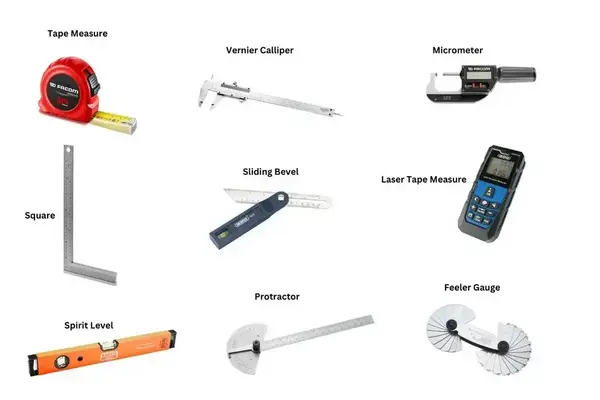
Are you ready to improve the accuracy of your measuring?. The following are the most useful measuring Tools and equipment for engineers;
1. Tape Measures
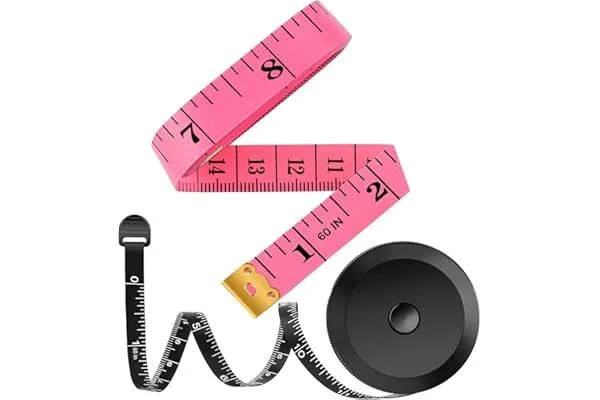
Among measuring tools, a tape measure is an essential hand tool utilised to measure a wide range of materials, objects, and distances in both professional settings and home DIY projects.
Tape measures consist of a long, marked strip featuring measurements along its entire length, available in various sizes to suit different needs.
Check Price On Amazon2. Digital Multimeter Tester
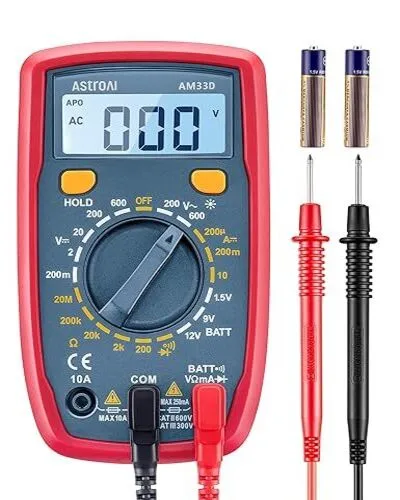
As measuring tools, Digital Multimeters are no longer just handheld testers; they have become a data-logging diagnostic tool essential for structural health monitoring and site-wide electrical safety.
Check Price On Amazon3. Digital Meat Thermometer for Cooking
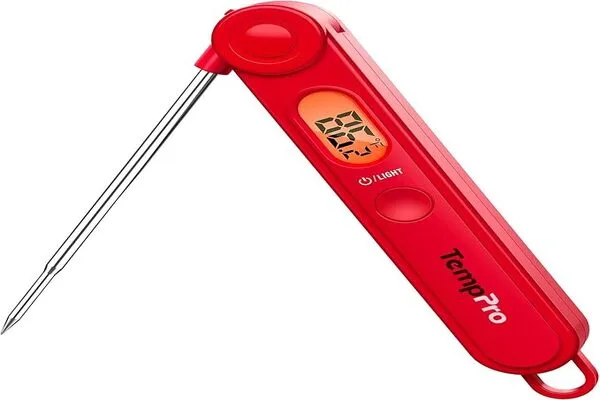
While digital meat thermometers might seem like a departure from structural analysis equipment, they share the same core requirement for engineering-grade precision: thermal lag reduction and sensor accuracy.
Check Price On Amazon4. Stud Finder Wall Scanner

For a structural engineer or a professional contractor, a “stud finder” isn’t just about finding a wooden timber; it’s about subsurface imaging. In 2026, the technology has split into two distinct paths: traditional Dielectric (Capacitance) sensors and advanced Radar (RF/UWB) imaging.
Check Price On Amazon5. Tape Measure with Fraction Marketing
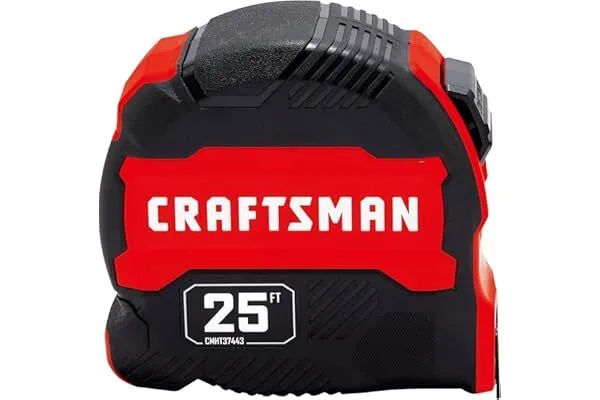
For a structural engineer, a tape measure with fractional markings (also known as “Easy-Read” blades) is a high-utility asset that bridges the gap between technical design and site execution.
Today, the trend has moved toward “High-Contrast” and “Multi-Scale” blades that reduce cognitive load during fast-paced inspections.
Check Price On Amazon6. Franklin Sensors ProSensor
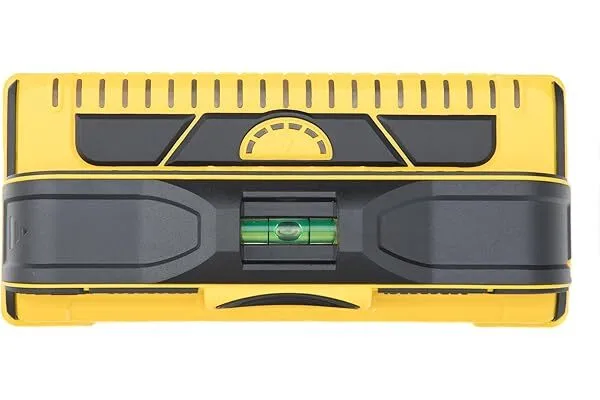
As measuring tools, Franklin Sensors represent the “no-fluff” peak of dielectric sensing. While radar-based scanners (like the Bosch D-tect) are for deep concrete, the ProSensor line is the gold standard for high-speed, high-accuracy surface layout.
Check Price On Amazon7. Motovera Self-Levelling Laser Level
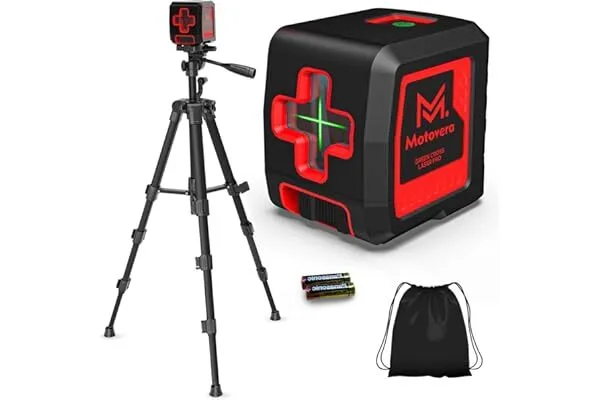
The Motovera Self-Levelling Laser Level is positioned in the market as a high-utility, “budget-pro” solution.
While it doesn’t carry the premium price tag of a Leica or Hilti, it offers the core technical specs—green beam technology and pendulum locking—that site engineers and contractors require for rapid layout.
Check Price On Amazon8. Laser Level Line Tool
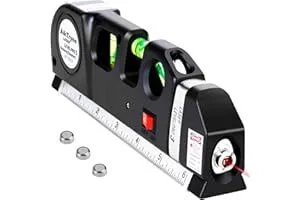
Laser Level Line Tool is a high-utility asset that replaces the traditional spirit level and plumb bob with a continuous, hands-free reference.
Check Price On Amazon9. Fibreglass Measuring Tape
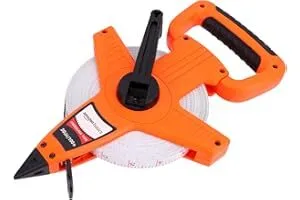
For civil and structural engineers, a fibreglass measuring tape (often called a “Long Tape”) is the preferred tool for large-scale site layouts, grading, and boundary verification.
Unlike steel tapes, fibreglass is non-conductive and resistant to thermal expansion, making it indispensable for work near electrical utilities or in the high-heat environments common in regions like Tanzania.
Check Price On Amazon10. Metal Carpenter Square
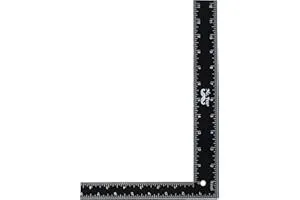
As a measuring tool, the metal carpenter square (also known as a framing square or Rafter Square) is a fundamental tool for verifying 90-degree geometry on-site, checking the verticality of formwork, or laying out structural steel.
Check Price On AmazonWrapping Up
As we navigate the complexities, the transition from manual data collection to intelligent field ecosystems has become the defining standard for civil and structural engineering.
Whether you are using a 3-plane laser to ensure the precision of a structural frame or a radiometric thermal camera to monitor the health of an ageing bridge, the utility of your equipment is now measured by its connectivity.
By integrating these high-accuracy physical Measuring tools with your existing suite of digital calculators and BIM workflows, you effectively close the “as-built gap,” replacing guesswork with empirical, cloud-synced data.
As infrastructure projects across Tanzania and the globe face increasingly tight tolerances and regulatory scrutiny, investing in gear that offers contextual intelligence, not just a raw measurement, is no longer a luxury but a fundamental requirement for the modern, high-performing engineering professional.
For More Measuring Tools and Equipment, please visit here. Furthermore, visit our WebsiteForEngineers Deals page for more great news.
Like Our Page on Facebook | Share — to educate another engineer today!
Thats All.