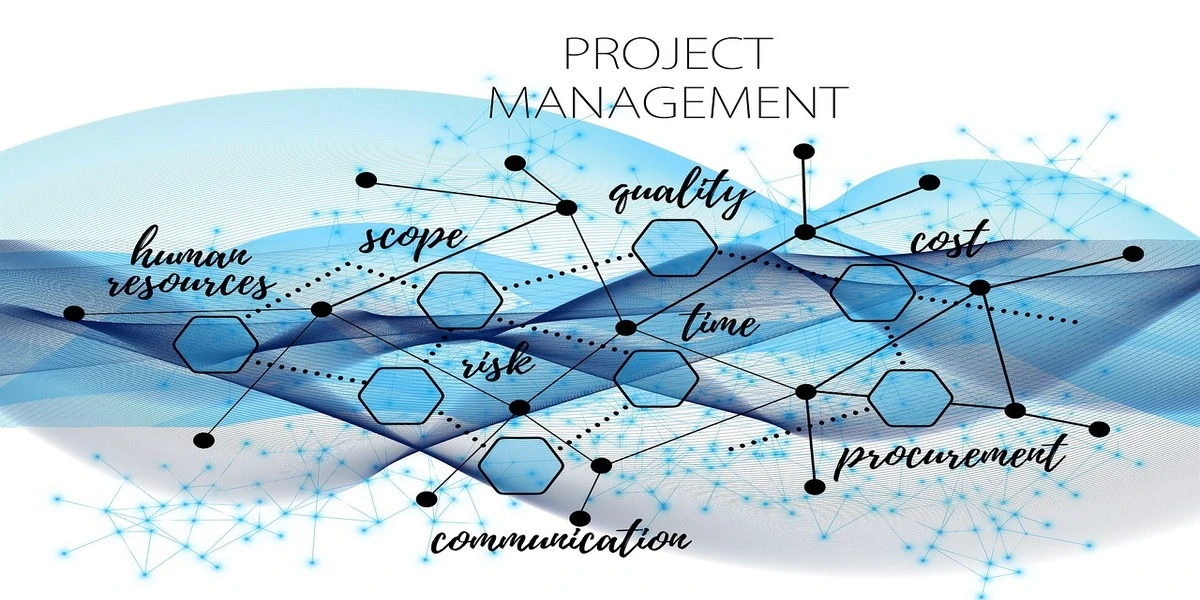
Project Management Software is a digital workspace designed to help teams plan, execute, and monitor projects from start to finish.
At its core, it centralises all project data, tasks, schedules, budgets, and communication into a single “source of truth.”
Selecting the best engineering project management software for 2026 depends heavily on whether your firm focuses on software development, civil/construction infrastructure, or general consulting.
Based on current industry performance and 2026 feature sets, the following are the top recommendations, categorised by their “best-fit” engineering use case.
Key Components of project management software include task management, scheduling & timelines, and resource allocation.
Recommended Articles
- The Best 6 Cement Manufacturing Brands in Tanzania
- FRP: What You Need To Know About Fibre-Reinforced Plastic?
- Open University of Tanzania: You Should Apply Right Now
- How To Be a Professional Engineer With Examples In 2026
- What Does a Project Manager Do in the Construction Site?
- How to Simply Estimate Footings Foundation Reinforcements
- Free Engineering Calculators
- IS Codes
Engineering Project Management Software
Based on current industry performance and 2026 feature sets, the following are the top recommendations, categorised by their “best-fit” engineering use case.
1. Best for Software Engineering: Jira Software
Jira remains the gold standard for agile development due to its deep integration with the developer ecosystem (GitHub, Bitbucket) and its native support for Scrum/Kanban.
Furthermore, in 2026, its integration with Atlassian Intelligence (AI) and the new Rovo search engine makes it indispensable for teams managing massive codebases and complex sprints.
Jira Software Pricing Plans (Cloud)
| Plan | Estimated Monthly Cost | Best For |
| Free | $0 (Up to 10 users) | Startups & Small Teams |
| Standard | ~$8.15 / user | Teams needing data residency & audit logs |
| Premium | ~$15.50 / user | Advanced roadmaps & unlimited automation |
| Enterprise | Custom ($150k+ annual) | Global firms needing 99.9% uptime & 24/7 support |
As you can see, the 2026 update to Jira Service Management Software has turned into a full-scale enterprise service desk, bridging the gap between dev and ops better than any competitor.”
2. Best for Civil & Construction Engineering: Procore
For projects involving physical assets, Procore is the dominant player because it bridges the gap between the field (mobile) and the office (desktop).
Procore isn’t just software; it’s a Construction ERP ecosystem. It is the most expensive tool on this list, but its “Unlimited User” model makes it the most scalable for multi-stakeholder infrastructure projects.
Precore Software targets Civil Engineers, Developers, & General Contractors.
Procore Pricing Structure 2026
The Procore uses a Volume-Based Pricing model. You can pay based on your Annual Construction Volume (ACV) rather than per-user seats.
- Small Firms (ACV <$10M): Expect to pay $15,000 – $25,000/year.
- Mid-Market (ACV $50M+): Typically ranges from $55,000 – $100,000+/year.
- Enterprise (ENR 100): Custom contracts often exceeding $250,000/year.
- Review Highlight: “In 2026, Procore’s BIM (Building Information Modelling) integration allows field teams to view 3D models on-site with zero lag, drastically reducing rework costs.”
3. Best for Complex Global Programs: Oracle Primavera P6
When a project involves tens of thousands of activities and strict dependencies (such as a power plant or aerospace project), Primavera P6 remains the industry standard.
When a project has 50,000+ activities and strict dependencies (such as a nuclear plant or a dam), Primavera P6 is the only tool that offers the necessary mathematical rigour.
2026 License & Hosting Costs
| Version | Price (Perpetual/Annual) | Best For |
| P6 Professional | ~$2,500 (One-time license) | Power users/Schedulers |
| P6 EPPM (Cloud) | ~$2,750 (Per user/year) | Web-based global portfolio management |
| Progress Reporter | ~$950 (Per user/year) | Field updates & timesheet tracking |
While the UI still feels ‘corporate,’ its Earned Value Management (EVM) and Critical Path Method (CPM) engines are still the gold standard for regulatory compliance in 2026.
The Oracle Primavera P6 targets Industrial, Energy, & Large-Scale Program Managers.
4. Best for Startups & Fast Teams: Shortcut
As Project Management Software, Shortcut (formerly Clubhouse) has emerged as a favourite for engineering teams that find Jira too “clunky” but need more power than a simple Trello board.
Formerly known as Clubhouse, Shortcut is the tool of choice for teams that find Jira too bloated. It is designed specifically for software engineering workflows without enterprise friction.
Shortcut Pricing Tiers
The price tiers are as follows:
- Free Forever: $0 (Up to 10 users, full features).
- Team Plan: $8.50 / user/month. Best for growing teams needing advanced integrations.
- Business Plan: $12.00 / user/month. Includes roadmaps, milestones, and priority support.
- Enterprise: Custom. Adds SAML/SSO and dedicated success managers.
Shortcut’s GitHub and GitLab integrations are the smoothest in the market, automatically moving ‘Stories’ across the board based on PR status and commits.
5. Best for Engineers: Monday.com
As Project Management Software, Monday.com should be presented as the “Visual Work OS” that bridges the gap between technical execution and business oversight.
Unlike Jira (which can be too rigid) or Procore (which is highly specialised), Monday.com is known for its extreme flexibility and high-adoption rate among non-technical stakeholders.
In 2026, Monday.com has evolved from a simple task manager into a powerful Work Operating System.
Its primary appeal for engineering firms is its ability to centralise cross-functional collaboration, allowing marketing, sales, and engineering teams to work in a single, unified environment.
By using Monday.com, engineers can flip any project into a Gantt Chart, Workload View (to prevent burnout), or a Map View for site-based civil projects.
Pricing & Tier Analysis
| Plan | Price (per user/mo) | Best For | Engineering Limitation |
| Basic | ~$9.00 | Simple task tracking | No Automations or Integrations. |
| Standard | ~$12.00 | Most Mid-sized Teams | Limited to 250 automation actions/mo. |
| Pro | ~$19.00 | Complex Workflows | Best for engineers (includes Time Tracking and Dependencies). |
| Enterprise | Custom Quote | Large Corporations | Adds SAML/SSO and advanced security/audit logs. |
Engineers who need Gantt Charts and Automations must start at the Standard tier. For Time Tracking and Formula Columns (essential for job costing), the Pro tier is required.
Also Read: Autodesk AutoCAD Review: The Complete Engineering & CAD Standard Guide
Quick Comparison of “Best-in-Class” Tools for 2026
The following are comparisons of Project Management Software in tabular form:
| Tool | Primary Use Case | Best For |
| Jira | Software Engineering | Agile sprints and bug tracking. |
| Procore | Construction/Civil | Field-to-office coordination and RFIs. |
| Primavera P6 | Heavy Industrial | Complex scheduling with 1,000+ dependencies. |
| Monday.com | General/Multidisciplinary | Visual workflows and easy automations. |
Also Read: Construction Management vs Civil Engineering vs Quantity Surveying: The Career Paths
Please Note: While we strive to provide the most accurate and up-to-date pricing information for Project Management Software, software providers frequently update their subscription models and feature tiers without notice. The figures provided on WebsiteForEngineers.com are for informational purposes only and do not constitute a binding offer or financial advice. Your final costs may vary based on implementation fees, data migration services, and regional taxes.
Wrapping Up: Project Management Software
As we move through 2026, the distinction between “doing the work” and “managing the work” has effectively disappeared.
For the modern engineer, the project management software is the primary interface for innovation.
Ultimately, the best engineering project management software is the one that your team will actually use without friction.
For Civil Engineering firms, the focus remains on field-to-office connectivity and rigorous document control.
For Software Engineering teams, the priority is developer velocity and Agile scalability.
While the initial SaaS subscription cost may seem like significant overhead, the ROI of project management software lies in the disasters you avoid.
In a competitive 2026 landscape, the right digital infrastructure doesn’t just track your progress—it protects your profit margins.
Thats All.