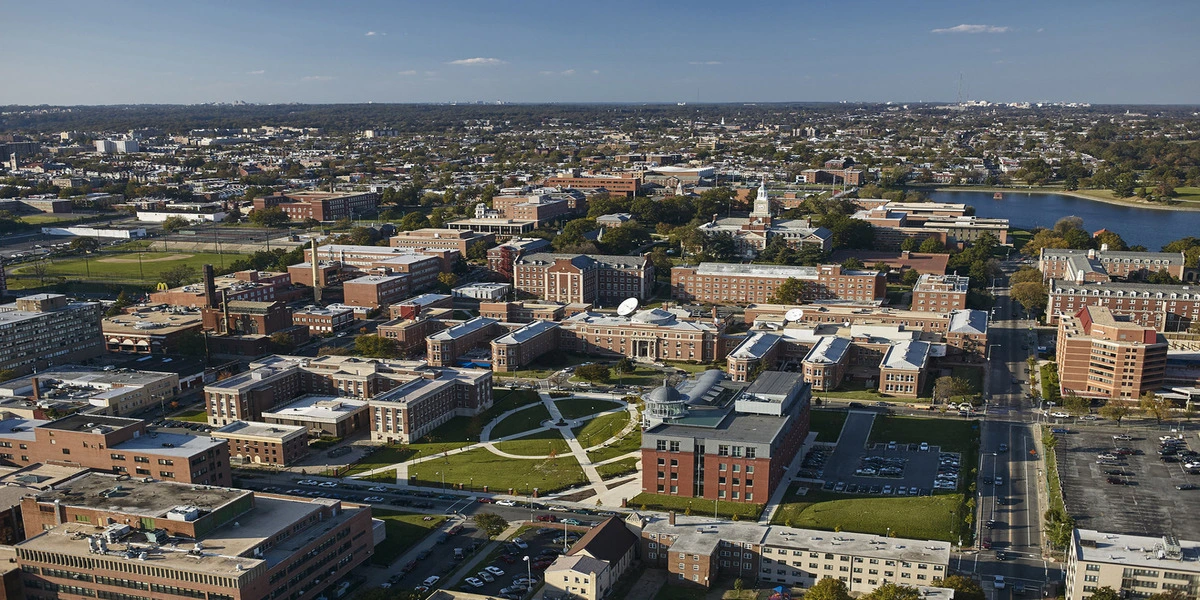
Historically Black Colleges and Universities (HBCUs) occupy a distinct, powerhouse position within the landscape of American higher education.
Originally established to provide undergraduate and graduate opportunities to Black Americans during legal segregation, these institutions have transformed into some of the most competitive, culturally rich, and academically rigorous centres of learning in the world.
While making up only a small fraction of the nation’s post-secondary institutions, HBCUs punch far above their weight class: they are responsible for producing a disproportionate share of the nation’s African American doctors, engineers, judges, and corporate executives.
As we navigate through 2026, institutional performance metrics have shifted. Academic evaluations now heavily emphasise social mobility, research funding, corporate pipelines, and long-term alumni earning power.
Recommended Articles
- The Blueprint of Success: A Complete Guide to the Best Engineering Scholarships in the World
- The Pinnacle of African Higher Education: The Guide to the University of Cape Town
- The Best Civil and Structural Engineering Universities in the World 2026
- The Best Engineering Universities in Singapore 2026: Complete Guide
- Best Engineering Universities in East Africa: The Complete Guide
The 2026 HBCU Evaluation Blueprint
Evaluating an institution requires looking past simple popularity metrics to examine how an academic ecosystem aligns with modern career paths.
The 2026 evaluation framework focuses on performance metrics across three critical areas:
- Institutional Endowment Rigour: The financial backing available to secure top-tier faculty, build modern research facilities, and offer competitive financial aid packages.
- Social Mobility Index (SMI): The efficiency with which an institution educates low- to moderate-income students and graduates them into high-paying, upwardly mobile professional careers.
- Market Alignment & STEM Pipeline: The depth of corporate partnerships, federal defence research contracts, and exclusive recruitment pipelines in high-growth fields such as data science, structural engineering, and pre-medical tracks.
Why HBCUs
The decision to attend a Historically Black College or University (HBCU) is increasingly driven by a single, powerful reality. These institutions offer an unmatched return on investment, combining an empowering culture with elite academic outcomes.
While making up only about 3% of all post-secondary institutions in the United States, HBCUs punch vastly above their weight class when it comes to launching high-impact professional careers.
The Professional Powerhouse Metrics
For students looking to enter competitive fields such as healthcare, corporate law, engineering, or high finance, the data show that HBCUs serve as primary engines of professional advancement.
- The Black Medical & STEM Feeder: HBCUs produce roughly 25% of all African American graduates with STEM degrees (Science, Technology, Engineering, and Mathematics). For example, Xavier University of Louisiana consistently outpaces Ivy League universities in placing Black undergraduates into medical schools.
- Legal & Political Leadership: Approximately 80% of Black judges and 50% of Black lawyers in the United States earned their degrees from HBCUs.
- The Wealth-Building Engine: According to UNCF data, HBCU graduates experience a greater upward shift in social mobility than peers at predominantly white institutions (PWIs), helping close the generational wealth gap by placing graduates directly into corporate and engineering pipelines.
The Cultural and Psychological Advantage
Beyond corporate recruitment and academic metrics, the structural design of an HBCU changes how a student learns.
- The “Mecca” Effect: In a traditional university setting, students of colour often carry the mental weight of being “the only one” in the room. At an HBCU, your identity is the baseline, not an exception. This shifts your energy away from navigating cultural isolation and redirects it entirely toward academic mastery and professional ambition.
- Intentional Mentorship: Faculty members at HBCUs have historically been known for serving as hands-on career sponsors rather than detached lecturers.
- The Elite Alumni Network: The professional network (often referred to as the “HBCU Mafia”) operates with immense loyalty. A degree from a top HBCU provides lifetime access to closed-door corporate referrals, executive mentorship, and collaborative business networks spanning the globe.
High-Growth Industry Partnerships in 2026
As tech hubs, financial institutions, and federal defence agencies look to diversify their leadership, they have established exclusive recruitment pipelines directly on HBCU campuses.
Institutions like North Carolina A&T (the nation’s top producer of Black engineering graduates) manage massive research budgets funded directly by tech giants and defence contractors.
Choosing an HBCU means entering an ecosystem where global talent acquisition teams come directly to you, looking for the next generation of leadership.
Definitive Best 10 HBCU Selection Breakdown
The following are the definitive selection breakdown details of the best 10 HBCUs in America for 2026, analysing their distinct structures, academic programs, geographic pipelines, and selection parameters to help future leaders make an informed decision:
1. Spelman College
Spelman College maintains its position as the premier private liberal arts college for women of African descent.
Recognised for its top-tier retention rates and elite academic expectations, Spelman is a primary feeder for Black women earning doctorates in STEM disciplines.
- Location: Atlanta, Georgia
- Selection & Academic Overview: Spelman balances an elite liberal arts foundation with intensive technical training. It shares resources with neighbouring institutions through its position in the Atlanta University Centre (AUC). The campus features a selective learning environment with an average acceptance rate of 25%, highlighting a student body focused on leadership and civic engagement.
- Core Strengths: Best-in-class graduation rates, exceptional social mobility, and structured corporate pathways into major tech and financial firms. Notable focus areas include Psychology, Biology, and Political Science.
2. Howard University
Known globally as “The Mecca,” Howard University is a private research university that serves as an intellectual, cultural, and political hub in the nation’s capital.
Location: Washington, D.C.
Selection & Academic Overview: Howard is a comprehensive doctoral research powerhouse, administering 14 distinct schools and colleges. From its historic campus, Howard manages high-value federal research grants, highly ranked law and medical schools, and a dedicated teaching hospital.
Core Strengths: High first-year student retention rates, unmatched political and media pipelines, and premier graduate school placements. Notable programs include Business Administration, Communications, Law, and Biomedical Sciences.
3. Morehouse College
As the Definitive Best HBCUs in America, Morehouse College is a private, all-male liberal arts institution dedicated to developing men of colour into impactful global leaders focused on business, academic excellence, and social justice.
In the 2026 academic rankings cycle, Morehouse surged up to the No. 3 spot nationwide due to historic application volume and enhanced post-grad placement data.
- Location: Atlanta, Georgia
- Selection & Academic Overview: As a foundational member of the Atlanta University Centre (AUC), Morehouse provides a unique cohort-based learning environment. The college is renowned for producing a high number of Rhodes Scholars, political leaders, and business executives. Driven by their “Campus of the Future” initiative, demand has reached an all-time high, pushing their acceptance rate down to 33%.
- Core Strengths: Elite leadership development programs, strong corporate banking pipelines, and robust pre-law preparation tracks. Notable programs include Economics, Political Science, and Business Management.
4. Tuskegee University
Tuskegee University is a private, state-related institution that holds a legendary place in American history, carrying forward a legacy of technical, scientific, and agricultural innovation.
- Location: Tuskegee, Alabama
- Selection & Academic Overview: Designated as a National Historic Site, Tuskegee bridges historic preservation with high-level technical research. It produces a significant percentage of the nation’s Black veterinarians through its College of Veterinary Medicine and features highly ranked programs in aerospace engineering and architecture.
- Core Strengths: High placement rates in aerospace and defence contracting industries, agricultural science research, and material science engineering. Notable programs include Veterinary Medicine, Mechanical Engineering, and Architecture.
5. Florida A&M University (FAMU)
As one of the best HBCUs in America, Florida A&M University (FAMU) consistently stands out as a top public HBCU for its competitive academic programs, high enrollment, and prominent cultural footprint.
- Location: Tallahassee, Florida
- Selection & Academic Overview: Backed by the State University System of Florida, FAMU offers a wide range of accredited degree programs. The institution operates the joint FAMU-FSU College of Engineering and maintains a highly respected School of Business and Industry (SBI), which serves as a major pipeline for Fortune 500 recruiters.
- Core Strengths: High performance on licensing exams for health professions, a large alumni network, and excellent social mobility scores for Pell Grant recipients, helping it retain its crown as the #1 public HBCU for seven consecutive years. Notable programs include Pharmacy, Architecture, and Journalism.
6. Hampton University
Hampton University, often called “Our Home by the Sea,” is an elite private institution known for its structured, professional environment and cutting-edge scientific research.
- Location: Hampton, Virginia
- Selection & Academic Overview: Situated on a historical 314-acre waterfront campus, Hampton combines a rich legacy with high technical achievement. The university manages advanced scientific facilities, including the world-renowned Hampton University Proton Therapy Institute (HUPTI), making it a significant hub for cancer research and physical science education.
- Core Strengths: Strong aviation management tracks, commercial pilot pipelines, and corporate business alliances. Notable programs include Liberal Arts, Marine Science, and Corporate Finance.
7. North Carolina A&T State University
As one of the best HBCUs in America, North Carolina A&T is the largest HBCU by student enrollment and holds a dominant position as a top-tier public engineering and agricultural research powerhouse.
- Location: Greensboro, North Carolina
- Selection & Academic Overview: With a student population exceeding 13,500, “Aggieland” serves as a powerful engine of workforce development and innovation. The university manages large state allocations and corporate partnerships, driving research in autonomous systems, computing, and smart agriculture.
- Core Strengths: The nation’s top producer of African American engineering graduates, massive research funding, and direct pipelines into the Research Triangle Park tech hub. Notable programs include Computer Science, Agricultural Education, and Supply Chain Management.
8. Morgan State University
As one of the best HBCUs in America, Morgan State University is a dynamic, rapidly expanding public urban research institution designated as Maryland’s preeminent public urban research university.
- Location: Baltimore, Maryland
- Selection & Academic Overview: Morgan State is a critical driver of economic development in the Mid-Atlantic region. The campus has seen substantial infrastructure investments, building state-of-the-art facilities for engineering, business management, and cybersecurity research.
- Core Strengths: Deep integration with federal cybersecurity agencies, high-volume civil engineering placements, and flexible options for non-traditional students. Notable programs include Civil Engineering, Architecture, and Hospitality Management.
9. Xavier University of Louisiana
Xavier University of Louisiana (XULA) holds a unique distinction as the nation’s only Catholic HBCU, recognised globally for its unmatched record in medical school placements.
- Location: New Orleans, Louisiana
- Selection & Academic Overview: As one of the best HBCUs in America, Xavier features a close-knit, scientifically rigorous learning environment. The institution focuses heavily on undergraduate laboratory research, structured faculty mentorship, and intense preparation for the health professions, consistently outpacing much larger universities in pre-med outcomes.
- Core Strengths: National leader in placing Black undergraduates into medical schools, advanced pharmacy licensing pipelines, and strong life science research grants. Notable programs include Chemistry, Biology, and Pharmacy.
10. Delaware State University
Delaware State University (DSU) rounds out the top ten, earning its spot through massive institutional growth, highly successful corporate integration, and an exceptionally strong social mobility index.
- Location: Dover, Delaware
- Selection & Academic Overview: As one of the best HBCUs in America, DSU enrols roughly 4,500 students and features a highly progressive learning infrastructure. The university has built specialised pipelines with global finance giants and aviation leaders, ensuring its students gain direct exposure to high-level internships early in their college careers.
- Core Strengths: Renowned professional pilot program, extensive financial tech (FinTech) academic tracks, and strong graduation outcomes for first-generation college students. Notable programs include Aviation, Business Intelligence, and Social Work.
High-Level Institutional Comparison
To help evaluate your choices, this comparative analysis breaks down the best institutions by structural type, enrollment scale, and core industry pipeline advantages:
| Rank | Institution | Institutional Control | Undergraduate Enrollment Scale | Core Industry Pipeline Advantage |
| 1 | Spelman College | Private Women’s | ~3,400 (Medium) | Global Finance, Tech Corporate Executive Elite |
| 2 | Howard University | Private Doctoral | ~11,500 (Large) | Federal Government, Corporate Law, Media, Medicine |
| 3 | Morehouse College | Private Men’s | ~2,800 (Medium) | Investment Banking, Civic Leadership, Political Strategy |
| 4 | Tuskegee University | Private State-Related | ~3,000 (Medium) | Aerospace Defense, Veterinary Medicine, Structural Design |
| 5 | Florida A&M University | Public Land-Grant | ~8,000 (Large) | Fortune 500 Management, Corporate Pharmacy, Journalism |
| 6 | Hampton University | Private Liberal Arts | ~3,700 (Medium) | Aerospace, Corporate Finance, Marine Sciences |
| 7 | North Carolina A&T | Public Land-Grant | ~13,500 (Very Large) | Heavy Engineering, Advanced Tech, Smart Agriculture |
| 8 | Morgan State University | Public Urban Research | ~9,000 (Large) | Mid-Atlantic Infrastructure, NSA Cybersecurity, Transit |
| 9 | Xavier Univ. of Louisiana | Private Catholic | ~2,700 (Medium) | Healthcare Systems, Clinical Medicine, Bio-Chemistry |
| 10 | Delaware State University | Public Land-Grant | ~4,500 (Medium) | Commercial Aviation, FinTech Corporate Pipelines |
Key Factors in Choosing Your HBCU
Selecting the right campus from this list depends heavily on aligning your professional goals with the institution’s design.
Public vs. Private Ecosystems
Public Universities (e.g., NC A&T, FAMU, Morgan State, DSU) are supported by state funding and federal land-grant allocations; these institutions offer a wide array of majors, extensive industrial labs, and lower tuition rates, particularly for state residents.
Also, private Colleges (e.g., Howard, Spelman, Morehouse, Tuskegee, Hampton, Xavier) are funded by endowments, alumni networks, and tuition; these schools offer smaller class sizes, tight-knit cohort models, and unique institutional networks that provide highly personalised professional mentoring.
Geographic and Regional Career Pipelines
Consider where you want to launch your career. The Atlanta University Centre (Spelman, Morehouse) places you in a booming Southern hub for tech, entertainment, and corporate finance.
Howard and Morgan State provide direct lines into the mid-Atlantic political, legal, and cybersecurity sectors.
North Carolina A&T and FAMU offer entry points into the Southeast’s rapidly growing industrial and tech corridors.
The Cost Breakdown: Sticker Price vs. Reality
Because public universities are subsidised by taxpayers, they offer tiered pricing that private schools do not.
| Cost Metric | Public HBCUs | Private HBCUs |
| In-State Tuition | Highly Affordable: Subsidized rates for residents of the state (typically averaging $8,000–$12,000/year). | Flat Rate: Does not matter what state you live in; everyone pays the same base tuition. |
| Out-of-State Tuition | Higher Cost: Rates often double or triple for out-of-state residents ($18,000–$30,000/year). | Flat Rate: Stays consistent (ranges wildly from $15,000 to over $30,000+/year depending on prestige). |
| Financial Aid Structure | Driven heavily by state-funded grants, federal Pell Grants, and institutional merit scholarships. | Driven heavily by institutional discounts, private endowments, and corporate-sponsored fellowship funds. |
- The Aid Paradox: While private HBCUs have a higher baseline “sticker price,” elite private institutions with large endowments (like Spelman or Howard) can sometimes offer larger institutional grant packages, occasionally making them cheaper out-of-pocket than an out-of-state public option.
Research Facilities & Academic Specialisation
Your intended career track should heavily dictate which system you choose. Due to their land-grant and state funding, public HBCUs excel in high-cost, asset-heavy technical programs.
They house massive laboratories for civil, mechanical, and aerospace engineering, autonomous drone testing, and advanced agricultural sciences.
Furthermore, private HBCUs are legendary for their liberal arts foundations, business management, and professional pre-graduate pipelines.
Xavier of Louisiana dominates undergraduate pre-med tracks, Howard acts as a premier feeder for corporate law, and Morehouse and Spelman serve as elite pipelines into global Wall Street finance firms.
Which One Fits Your Goal?
As explained above:
- Choose a Public HBCU if you want lower in-state tuition, thrive in a large, energetic campus environment, and are pursuing a career in industrial engineering, computer science, or agriculture.
- Choose a Private HBCU if you prefer small class sizes, highly personalised mentoring, do not mind a flat tuition rate, and are targeting highly competitive pipelines in medicine, law, or corporate leadership.
Frequently Asked Questions (FAQs)
Q1: What is the Common Black College Application (CBCA), and how does it work?
A: The Common Black College Application is an undergraduate admissions platform that allows students to apply to over 60 participating HBCUs simultaneously for a single processing fee. Applicants upload their academic records, standardised test scores, and personal essays once, enabling multiple institutions to review their profiles for admission and merit-based scholarship consideration.
Q2: Do public or private HBCUs offer better financial aid options?
A: Public HBCUs typically offer lower baseline tuition rates, particularly for in-state residents, making them highly cost-effective options out of the gate. Private HBCUs have a higher baseline cost but often manage substantial private endowments, institutional grants, and corporate-sponsored fellowships that can significantly reduce out-of-pocket expenses for competitive applicants.
Q3: What is the significance of ABET accreditation for HBCU engineering programs?
A: ABET (Accreditation Board for Engineering and Technology) accreditation is the national gold standard verifying that an engineering program meets strict quality benchmarks. Top institutions like North Carolina A&T, Howard, and FAMU hold full ABET accreditation across their engineering tracks, ensuring their graduates are fully eligible for professional licensure and top-tier industrial placement.
Q4: How does cross-registration work within the Atlanta University Centre (AUC)?
A: The AUC consortium allows undergraduate students enrolled at Spelman, Morehouse, or Clark Atlanta University to cross-register for academic courses at neighbouring campuses. This structure allows students to maintain the close community benefits of their home institution while taking advantage of a broader pool of faculty, libraries, social organisations, and specialised elective courses.
Q5: How do top HBCUs support social mobility for incoming students?
A: Top HBCUs excel at social mobility by intentionally pairing academic instruction with structured personal development, intensive alumni mentoring networks, and direct recruitment access to corporate partners. This system ensures that students from low- to moderate-income backgrounds receive the targeted academic support, professional polish, and placement opportunities required to enter high-paying career trajectories upon graduation.
Conclusion: Activating Your Future
The best 10 Historically Black Colleges and Universities enter 2026 with historic enrollment momentum, upgraded technical facilities, and deep industry connections.
Whether you choose the intensive scientific focus of Xavier, the extensive engineering capacity of North Carolina A&T, or the political connections of Howard, attending a top-tier HBCU offers an environment that fully supports your academic focus, professional ambition, and personal growth.
By analysing the structural profiles, geographic advantages, and target pipelines outlined in this guide, you can select the institution that best serves as the launchpad for your career goals.
Thats All.
Like Our Page on Facebook | Share to educate another engineer.