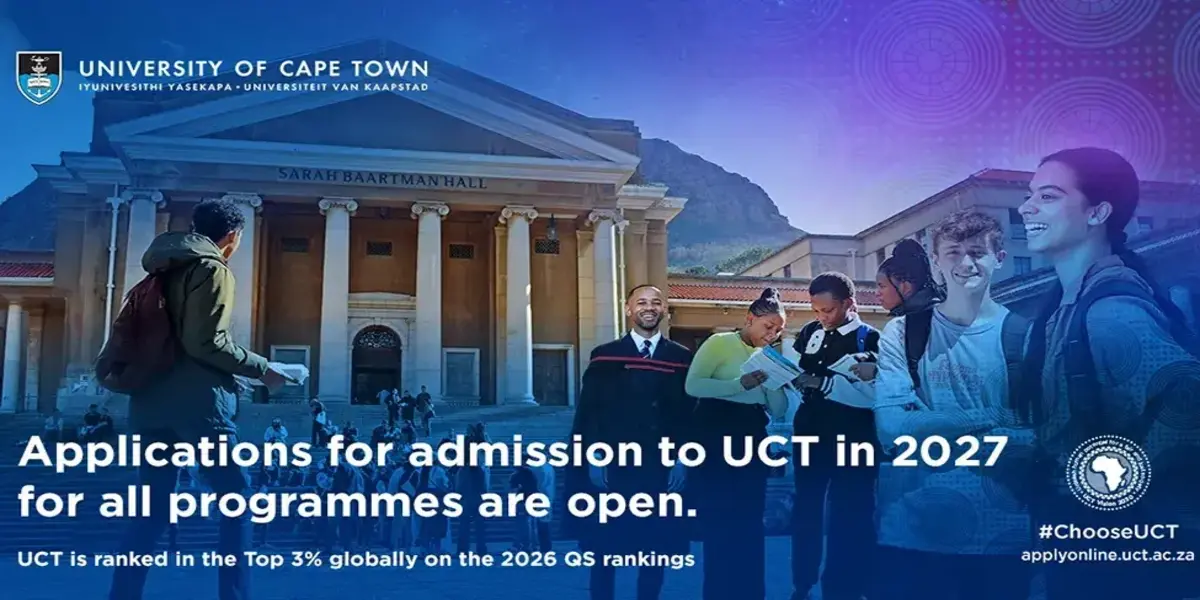
Nestled against the iconic, sweeping slopes of Devil’s Peak, the University of Cape Town (UCT) stands as a monumental beacon of academic brilliance, research impact, and socio-political history.
Consistently holding the crown as the number-one-ranked university in Africa, the University of Cape Town is not just an institution of higher learning; it is a global research powerhouse that bridges the unique developmental needs of the African continent with elite international academic standards.
Whether you are a prospective undergraduate hoping to secure a spot for the upcoming admissions cycle, a post-graduate researcher tracking high-impact fellowships, or an international student seeking a world-class semester abroad, this definitive guide provides a deep, multi-dimensional analysis of everything the University of Cape Town has to offer.
Recommended Articles
- The Best Civil and Structural Engineering Universities in the World 2026
- The Best Engineering Universities in Singapore 2026: Complete Guide
- Best Engineering Universities in East Africa: The Complete Guide
- Open University of Tanzania: You Should Apply Right Now
- Nelson Mandela African Institution of Science and Technology
- Artificial Learning for Engineers: What You Need to Know
Institutional Legacy and Campus Footprint
Founded in 1829 as the South African College, UCT is the oldest university in South Africa.
Over nearly two centuries, the institution has evolved from a small, colonial boys’ academy into an expansive, world-class public research university that has educated Nobel Laureates, medical pioneers, and global heads of state.
A Campus Divided by Geography, United by Architecture
UCT’s physical layout is renowned worldwide for its striking integration with Cape Town’s natural mountain ecology.
The University of Cape Town is primarily divided into distinct campus sectors, each maintaining an individualised functional and architectural persona:
- Upper Campus: The historic and aesthetic heart of UCT. Centred around the classical columned architecture of Sarah Baartman Hall, Upper Campus houses the foundational faculties of Commerce, Engineering & the Built Environment, and Science, along with the main Chancellor Oppenheimer Library.
- Middle and Lower Campus: Flowing down the slopes into the vibrant suburbs of Rondebosch, these sectors contain the Faculty of Law, the School of Economics, student housing complexes, administrative headquarters, and the university’s sports facilities.
- Medical Campus: Situated adjacent to the world-famous Groote Schuur Hospital in Observatory—the site of the world’s first human heart transplant, performed by UCT alumnus Dr Christiaan Barnard—this campus is the specialised home of the Faculty of Health Sciences.
- Hiddingh Campus: Located in the central business district of Cape Town, this historic urban campus serves as the creative engine for the Fine Arts and Drama departments.
- Breakwater Campus: Situated at the bustling V&A Waterfront, this beautifully converted 19th-century outpost is home to the internationally acclaimed University of Cape Town Graduate School of Business (GSB).
Global Standings and Academic Excellence
When evaluating global academic metrics, the University of Cape Town continuously outpaces regional competitors, solidifying its place within the top tier of international higher education.
Academic Rankings Matrix
According to the global university evaluations, University of Cape Town occupies elite positions across multiple ranking frameworks:
| Ranking Body | Global Position | Regional / Continental Rank | Distinct Institutional Strengths |
| QS World University Rankings | #150 globally | #1 in Sub-Saharan Africa | Outstanding Employment Outcomes (97.7), Sustainability (92.1), and Academic Reputation. |
| EduRank Index | #238 globally | #1 in Africa | Driven by an immense output of 99,684 academic publications and over 3.1 million citations. |
| Center for World University Rankings (CWUR) | Top 1.3% in the world | #2 in Africa | Strong scores in Research Performance and Global Employability metrics. |
High-Impact Research Subjects
The University of Cape Town does not merely teach; it actively leads global scientific discourse. The university ranks within the Top 100 worldwide across several highly specialised, critical research topics:
- Human Rights Law: Ranked #48 internationally, serving as a core ideological architect for constitutional law and post-apartheid social justice systems.
- Bioethics & Medical Ethics: Ranked #51 globally, driving complex international policies regarding healthcare equity and clinical trials in resource-constrained environments.
- Family Medicine & Public Health: Consistently tracking within the top 60 programs globally, running vital interventions against infectious diseases (such as HIV/AIDS and Tuberculosis) across sub-Saharan Africa.
- Development Economics & Mineral Processing: Bridging resource extraction modelling with advanced economic sustainability policy.
The Academic Structure: Faculties and Paradigms
The University of Cape Town organises its comprehensive educational pathways across six distinct academic faculties, each offering structured undergraduate, postgraduate, and doctoral degrees.
Faculty of Commerce
As one of the largest faculties on campus, Commerce trains the economic engine of the continent. It features specialised tracks in Actuarial Science, Finance, Economics, and Information Systems.
The school is heavily integrated with the financial hubs of Johannesburg, London, and New York, boasting an exceptionally high graduate employment rate.
Faculty of Engineering & the Built Environment (EBE)
EBE is a cornerstone of African infrastructure innovation. Offering internationally accredited degrees via the Washington Accord, the departments of Chemical, Civil, Electrical, and Mechanical Engineering focus on sustainable development, clean energy transition, microgrid design, and mineral processing technology.
Faculty of Health Sciences
As the oldest medical school in sub-Saharan Africa, this faculty is a world leader in clinical training and laboratory research.
Home to the Institute of Infectious Disease and Molecular Medicine (IDM), researchers here are on the global frontlines of developing next-generation vaccines, maternal health strategies, and epidemiological mapping models.
Faculty of Humanities
Encompassing a massive array of disciplines from Political Science and Sociology to Creative Writing and African Studies, the Faculty of Humanities encourages critical thinking and social engagement. It serves as a vital space for decolonial academic thought and cultural preservation.
Faculty of Law
Widely regarded as the premier legal faculty in Africa, the University of Cape Town Law has shaped the very fabric of South Africa’s democratic legal structure.
It specialises heavily in Constitutional Law, Marine and Environmental Law, Commercial Law, and International Human Rights Law.
Faculty of Science
With Cape Town located inside a unique floral kingdom and adjacent to the convergence of two major oceanic currents, the University of Cape Town’s Faculty of Science is uniquely positioned for environmental research.
It features world-leading departments in Marine Biology, Environmental & Geographical Science, Astronomy (linked to the Square Kilometre Array project), and Molecular Biology.
The 2027 Admissions Blueprint: Timelines, Rules, and Requirements
Securing admission into the University of Cape Town is an intensely competitive process. Because the University of Cape Town receives hundreds of thousands of undergraduate and postgraduate submissions from around the world, understanding the explicit timelines and strict structural rules of the application cycle is paramount.
Critical Application Dates for the 2027 Academic Year
UCT adheres to a rigid admissions timeline. No late applications are considered under any circumstances. For students aiming to enter the university for the 2027 academic year, the operational timeline is structured as follows:
- April 1, 2026: Applications officially open via the University of Cape Town online student portal. Prospective students must create their digital profile and log their initial program choices.
- July 31, 2026: Undergraduate applications close strictly. This is also the absolute deadline for student housing (residence) applications for incoming undergraduates.
- August 31, 2026: The final cutoff date to request an undergraduate program change. Requests must be sent formally to admissions@uct.ac.za with the subject line “Programme Change request”.
- September 30, 2026: Postgraduate applications close. This is also the critical target deadline for international applicants to upload mandatory supporting documents (transcripts, predicted grades, certified translations) and proof of English language proficiency.
- October 3, 2026: The absolute last opportunity for domestic applicants to sit for the National Benchmark Tests (NBTs) required by specific faculties.
- November 15, 2026: The target deadline for international applicants to receive a firm or conditional offer of admission. This ensures international scholars have sufficient time to process their South African study visas through regional embassies.
- December 31, 2026: Final official school-leaving transcripts and finalised academic records must be submitted to the admissions bureau
The Undergraduate Selection Process
For South African learners completing their National Senior Certificate (NSC), the University of Cape Town utilises a transparent, point-based system known as the Faculty Points Score (FPS), alongside a Medical Points Score (MPS) or WPS (Weighted Points Score) depending on the target discipline.
Each faculty member sets a specific baseline threshold, such as:
- Guaranteed Admission Threshold: If an applicant meets or exceeds this score and satisfies the specific subject prerequisites (such as a minimum 70% in Mathematics for Engineering), they are automatically granted a place.
- Discretionary Bands: Applicants falling within specified point bands are evaluated holistically under the University of Cape Town’s comprehensive redress and transformation policies, which aim to address historical inequalities in the South African education landscape.
International Student Admission Guidelines
International applicants evaluating a degree track at the University of Cape Town for 2027 must ensure their secondary school qualifications match South African matriculation exemption standards.
- Accepted Frameworks: The University of Cape Town regularly admits students with Cambridge A-Levels, International Baccalaureate (IB) Diplomas, Advanced Placement (AP) credits, and various national high school exit certificates.
- Document Certification: All uploaded materials must be certified electronic copies sent directly to the admissions portal. Any transcripts in languages other than English must be accompanied by an official, sworn translation
Funding Ecosystem and Research Assistant Fellowships
Pursuing a degree at an elite institution requires stable financial backing. The University of Cape Town has built a multi-layered funding framework composed of direct financial aid, merit-based undergraduate bursaries, and specialised postgraduate fellowships designed to recruit global scientific talent.
Undergraduate Financial Support
For South African citizens, the primary mechanism for financial accessibility is the National Student Financial Aid Scheme (NSFAS), which provides full bursaries covering tuition, accommodation, and living allowances to students from households with a combined annual income below a specified threshold.
Additionally, the University of Cape Town partners with programs like the Ikusasa Student Financial Aid Programme (ISFAP).
ISFAP targets missing-middle students pursuing designated scarcity-skills qualifications (such as Actuarial Science, Medicine, Engineering, and Accounting), providing a wrap-around funding package that includes custom academic tracking, mental health support, and baseline living stipends.
Postgraduate and Postdoctoral Funding Channels
For master’s, doctoral, and postdoctoral researchers, financial support transitions into highly competitive research grants and institutional awards managed via the University of Cape Town Research Support Hub.
1. National Research Foundation (NRF) Grants
The NRF functions as the central science council of South Africa, channelling significant research grants directly through UCT’s laboratories. These encompass:
- General Research Grants: Supporting collaborative international research programs, such as the South Africa-Sweden University Forum (SASUF) Seed Grants or the BRICS STI Framework multilateral projects.
- NRF/European Research Council (ERC) Exchange Channels: Allowing advanced UCT doctoral candidates to split their research timelines between Cape Town and top-tier European research consortiums.
2. Internal UCT Academic Awards and Nominations
UCT maintains a dedicated repository of internal funding mechanisms designed to reward innovative research:
- UCT College of Fellows Young Researcher Award (YRAC): Awarded annually to early-career researchers demonstrating exceptional international impact within their chosen scientific discipline.
- Alan Pifer Research Award: A prestigious annual prize given to a researcher whose work demonstrates clear, socially responsive impact, directly improving the lives of marginalised communities within South Africa.
- Vera Davie Study and Research Bursary: Aimed at supporting specialised research travel and material acquisition for dedicated postgraduate scholars.
3. Global Trust Fellowships
Through strategic international partnerships, University of Cape Town postgraduates can tap into substantial global medical and scientific trust funds:
- The Wellcome Trust Awards: Featuring multiple annual application cycles, these programs provide fully funded Early-Career, Career Development, and Discovery Awards for biomedical and health science researchers.
- L’Oréal-UNESCO for Women in Science Fellowships: Targeting exceptional female researchers in STEM fields, offering funding to accelerate their laboratory discoveries.
Research Assistant (RA) Positions
Beyond traditional scholarship payouts, advanced postgraduate students are regularly contracted as Research Assistants (RAs) or Teaching Assistants (TAs) directly within individual academic departments.
RAs work out-of-band hours on funded faculty projects—managing database logging, executing laboratory assays, or supervising undergraduate tutorials.
This provides an essential secondary income stream while building vital publication credits and project management skills.
Student Life, Culture, and the Surrounding Ecosystem
An education at the University of Cape Town extends far beyond the perimeter of the lecture halls. The student experience is defined by active engagement, rich cultural diversity, and a vibrant campus community.
Societies, Sports, and Social Justice
University of Cape Town hosts over 100 student-run societies and sports clubs, catering to every interest from investment banking and robotics to mountain climbing and political debate.
The university’s sports teams, known collectively as the Ikey Tigers, compete at the highest national levels, with the annual Varsity Cup rugby matches drawing thousands of passionate spectators to the Green Mile sports fields.
The campus has historically been a crucible for student activism and social change. From anti-apartheid mobilisation in the 20th century to the globally recognised Rhodes Must Fall and Fees Must Fall movements of the 21st century, University of Cape Town students have consistently driven dialogues around institutional transformation, decolonisation, and economic accessibility across higher education.
The Cape Town Advantage
Living in Cape Town provides students with an unparalleled lifestyle. As a global tourism and tech hub, the city offers pristine beaches, world-famous hiking trails up Table Mountain, and a thriving arts, culinary, and design culture.
For international students, it provides an immersion into a multilingual, multicultural metropole that serves as a primary gateway to the rest of the African continent.
The University of Cape Town’s Vision 2030
The University of Cape Town’s Vision 2030 is a comprehensive strategic framework designed to steer the institution through the decade.
Moving away from traditional university strategic planning, UCT frames its long-term direction around a singular, “massive transformative purpose”: “Unleash human potential to create a fair and just society.”
The strategy is built on three core pillars and executed through four primary strategic goals.
The Three Core Pillars
UCT operates under the philosophy that these three components are deeply codependent—excellence cannot exist in isolation; it requires transformation to cultivate true long-term sustainability.
- Excellence: Maintaining and expanding UCT’s status as a globally competitive, research-intensive African university.
- Transformation: Actively redressing historical inequalities, promoting non-racialism and inclusivity, and eroding the structural traces of past injustices both on campus and in broader society.
- Sustainability: Ensuring financial viability, operational efficiency, and environmental responsibility—exemplified by initiatives like using the campus as a “living laboratory” to reduce UCT’s ecological footprint.
The Four Strategic Goals
To bring its transformative purpose to life, UCT’s Vision 2030 outlines four distinct operational objectives across its academic and professional sectors:
1. Holistic, Innovative, and Future-Oriented Education
UCT aims to produce well-rounded, critical thinkers rather than just fit-for-purpose professionals.
- Blended Learning: Shifting toward a blended academic landscape that dynamically combines face-to-face and advanced digital education (such as the Amathuba platform and the UCT Online High School).
- Decolonised Curricula: Renewing course content to integrate decolonised knowledge and diverse worldviews.
- Problem-Based Learning: Bridging classroom theory with workplace application so students graduate as resilient agents of change.
2. Research Solving “Africa’s” Problems
The university deliberately spells “Afrika” with a “k” as an intentional invitation to reclaim the continent’s agency.
- The goal is to co-create a sustainable global future by producing top-tier research that directly tackles continental challenges (e.g., climate change, infectious diseases, and water scarcity) while contributing meaningfully to global knowledge.
- This relies heavily on fostering massive interdisciplinary action and expanding international research partnerships.
3. Providing Thought Leadership on Social Justice
UCT positions itself on the frontline of public and academic discourse surrounding equity. This involves modelling structural solutions for human rights, confronting institutional biases, and amplifying the voices and agency of marginalised groups within higher education and global spaces.
4. An Organisational Ethos of New Thinking, Being, and Doing
Realising Vision 2030 requires overhauling internal systems. UCT is actively updating its staff development and performance management systems to bridge the gap between academic and administrative support structures.
The objective is a collaborative, transparent institutional culture that champions creative problem-solving and respects diversity.
Frequently Asked Questions (FAQs)
Q1: Can I apply for undergraduate admission to UCT after the July 31 deadline for the 2027 academic year?
A: No. The University of Cape Town enforces a strict closing date of July 31, 2026, for all undergraduate applications for the 2027 academic year. Late applications or late documentation uploads for undergraduate programs are not considered under any circumstances. Prospective students are strongly urged to submit their profiles early to ensure all records are complete.
Q2: What are the National Benchmark Tests (NBTs), and are they mandatory for all 2027 applicants?
A: The National Benchmark Tests (NBTs) are national assessments designed to measure an applicant’s academic literacy, quantitative literacy, and mathematics proficiency. While historically mandatory for all programs, in the current admissions framework, they are primarily required for specific faculties, such as the Faculty of Health Sciences. The absolute final date to sit for the NBTs for the 2027 intake is October 3, 2026. Applicants must check their specific faculty prospectus to confirm if NBT scores are required for their chosen stream.
Q3: How do international student tuition fees compare to those for domestic South African citizens?
A: The University of Cape Town utilises a tiered fee structure. South African citizens and permanent residents, along with citizens of the Southern African Development Community (SADC) region, pay standard baseline tuition fees. International students from outside the SADC region are required to pay an additional international administrative levy and an international tuition fee profile, which varies by faculty. Full, transparent fee schedules are published annually by the University of Cape Town Fees Office.
Q4: Are international postgraduate applications subject to the same timelines as domestic applications?
A: Yes, postgraduate applications generally close on September 30, 2026, for both domestic and international tracks. However, international applicants must prioritise uploading all certified supporting materials (including English translations and transcripts) by this date, as incomplete international portfolios are systematically cancelled by November 15 to prevent visa processing backlogs.
Q5: What accommodation options are available for incoming first-year students?
A: The University of Cape Town operates a comprehensive three-tier student housing system. First-tier residences provide fully catered meals and structured warden support, tailored for incoming first-year undergraduates. Securing a residence place requires selecting the housing option on your primary application portal before the July 31, 2026, undergraduate housing cutoff. Second-tier and third-tier accommodations offer self-catering apartments suited for senior undergraduate and postgraduate scholars.
Conclusion: The Long-Term Value of a UCT Degree
The University of Cape Town continues to anchor the academic and scientific landscape of the African continent.
By combining traditional academic heritage with an unyielding commitment to modern, socially responsive research, the University of Cape Town prepares its graduates to tackle the defining challenges of the 21st century, from climate change mitigation and sustainable infrastructure development to global health equity and constitutional jurisprudence.
Navigating the competitive entry paths for the 2027 admissions cycle or securing advanced post-graduate funding requires careful planning and strict adherence to institutional timelines.
However, for those who earn their place beneath the columns of Upper Campus, a degree from the University of Cape Town is more than an academic credential; it is an invitation to join an elite global network of innovators, thinkers, and leaders who are actively shaping a more equitable and sustainable world.
Tell us. What do you think about the University of Cape Town? Drop your answer in the comments form below.
Bookmark this page for the latest in Engineering Universities.
Like Our Page on Facebook | Share to educate another engineer about The University of Cape Town.