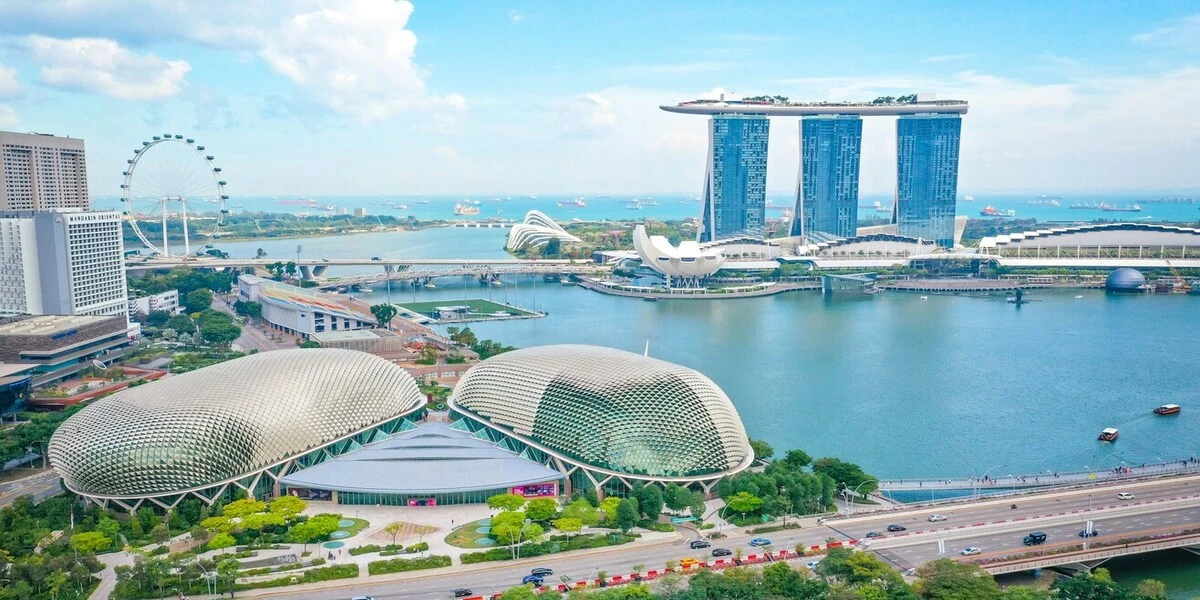
Singapore has established itself as one of the world’s leading centres for engineering education, research, and technological innovation.
Over the last few decades, this island nation has methodically engineered itself into a global nexus for advanced manufacturing, microelectronics, green energy infrastructure, and deep tech.
Despite its relatively small size, the country hosts some of the most prestigious engineering universities globally, attracting students from across Asia, Africa, Europe, North America, and beyond.
For aspiring engineers, choosing the right university can significantly influence career opportunities, professional development, research exposure, and future earnings.
Singapore offers a unique combination of world-class education, advanced research facilities, strong industry partnerships, and excellent employment prospects.
On the global stage, Singapore’s higher education infrastructure has reached unprecedented heights.
According to the Quacquarelli Symonds (QS) World University Rankings by Subject, Singapore ranks as the world’s third-most dominant higher education system for top-10 placements, trailing only the United States and the United Kingdom.
In this comprehensive guide, we explore the best engineering universities in Singapore in 2026, their strengths, programs, admission requirements, career prospects, and how to choose the right institution for your engineering journey.
Recommended Articles
Table of Contents
Why Study Engineering in Singapore?
Before reviewing the top universities in Singapore, it is important to understand why Singapore remains a preferred destination for engineering students worldwide.
- Global Academic Excellence: Singaporean universities consistently rank among the best in global university rankings. Their engineering faculties are recognised for academic rigour, innovation, and industry relevance.
- Strong Industrial Connections: Singapore hosts major multinational corporations across sectors including Electronics, Semiconductors, Construction, Aerospace, Energy, Artificial Intelligence, Robotics, and Biotechnology. Engineering students benefit from internships, research projects, and employment opportunities with leading companies.
- Advanced Research Infrastructure: Singapore invests heavily in research and development. Universities collaborate with government agencies and private industries to solve real-world engineering challenges.
- International Environment: Students from over 100 countries study in Singapore, creating a multicultural learning environment that prepares graduates for global careers.
- Excellent Graduate Employability: Engineering graduates from Singaporean universities enjoy high employment rates and competitive salaries across international markets.
Engineering Disciplines in High Demand in Singapore
In Singapore, the engineering sector continues to evolve rapidly. The most sought-after disciplines in 2026 include Civil Engineering, Structural Engineering, Mechanical Engineering, Electrical Engineering, and Electronics Engineering.
Other high-demand disciplines include Computer Engineering, Artificial Intelligence Engineering, Aerospace Engineering, Environmental Engineering, Biomedical Engineering, Data Engineering, and Robotics Engineering.
Best Engineering Universities in Singapore 2026
According to the Quacquarelli Symonds (QS) World University Rankings by Subject, here is the definitive guide to the best engineering universities in Singapore, analysed through a rigorous professional and technical lens.
1. National University of Singapore (NUS)
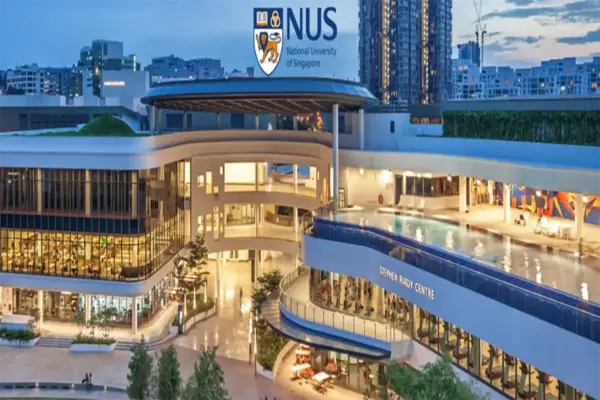
As one of the Best Engineering Universities in Singapore, the National University of Singapore is widely regarded as Singapore’s best university and one of the world’s top engineering institutions.
Founded in 1905, NUS has built a strong reputation for engineering excellence, innovation, and groundbreaking research.
The Comprehensive Powerhouse for Research and Systems Engineering Global Standing, NUS ranked #8 overall in the world (QS World University Rankings) and holds a firm Top 10 position globally for Engineering and Technology.
Key Engineering Programs
The key engineering programs at NUS include:
- Civil Engineering
- Environmental Engineering
- Mechanical Engineering
- Electrical Engineering
- Computer Engineering
- Biomedical Engineering
- Industrial Systems Engineering
Why NUS Stands Out
As one of the Best Engineering Universities in Singapore, NUS stands out for its structural shift toward a multidisciplinary foundation.
Recognising that modern engineering challenges do not operate in departmental silos, NUS requires a common core curriculum spanning design thinking, systems thinking, computing, and data analytics before students dive deep into their chosen majors.
Other reasons for NUS to stand out include:
- Consistently ranked among the world’s top universities
- State-of-the-art laboratories
- Extensive research funding
- Strong global partnerships
- Excellent graduate employability
Research Ecosystem & Industry Integrations
As one of the Best Engineering Universities in Singapore, NUS operates as an extension of Singapore’s urban planning and defence apparatus.
Initiatives like the Urban Systems Initiative work directly with statutory boards to model sustainable urban density and climate-resilient coastal infrastructure.
Other areas of research include Smart Cities, Sustainable Infrastructure, Artificial Intelligence, Renewable Energy, Robotics, and Advanced Manufacturing.
Career Prospects
Graduates enter the market with immediate structural advantages. Data from recent graduate employment surveys reveal a consistent 95% employment rate within six months of final examinations.
Furthermore, Graduates from the National University of Singapore (NUS) commonly secure positions in:
- Engineering consulting firms
- Construction companies
- Technology corporations
- Government agencies
- Research institutions
2. Nanyang Technological University (NTU)
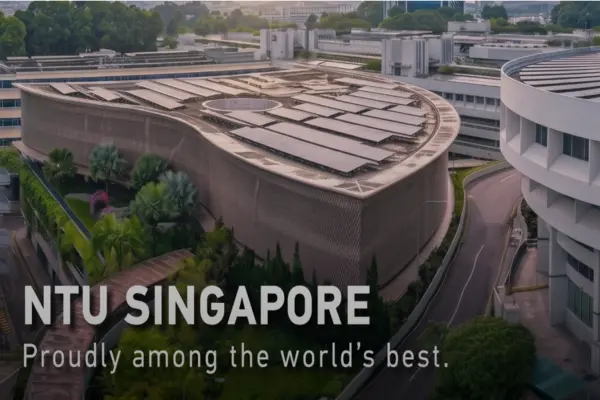
Nanyang Technological University is internationally recognised as one of the world’s leading engineering-focused universities.
As the Advanced Hardware and Deep Tech Forge, NTU is ranked #12 globally (QS World University Rankings), with its Engineering and Technology broad subject area ranked #10 worldwide.
As one of the Best Engineering Universities in Singapore, the College of Engineering is among the largest and most respected engineering schools globally.
Renowned for its industry-reputation metric, scoring a perfect 100/100 in industry income and collaborative output.
Key Engineering Programs
If NUS is the master of systems and interdisciplinary policy architecture, NTU is the premier engine for hard-core implementation, physical manufacturing, and breakthrough computing.
As one of the Best Engineering Universities in Singapore, NTU’s College of Engineering is visually and structurally built like a massive industrial sandbox.
Key Engineering Programs include:
- Civil Engineering
- Aerospace Engineering
- Mechanical Engineering
- Computer Engineering
- Electrical and Electronic Engineering
- Environmental Engineering
- Materials Engineering
Major Advantages
Students at Nanyang Technological University (NTU) have the following advantages:
- World-class engineering research
- Strong industry collaborations
- Advanced laboratories
- Global exchange opportunities
- Innovation-driven curriculum
Research Strengths
As one of the Best Engineering Universities in Singapore, NTU excels at embedding corporate mega-laboratories directly onto its campus. The campus hosts advanced collaborative hubs such as the NTU-Amazon Web Services Joint AI Lab, the Rolls-Royce at NTU Corporate Lab, specialised cleanrooms dedicated to semiconductor research, and the Delta Electronics lab.
Other areas of research include:
- Smart Manufacturing
- Artificial Intelligence
- Sustainable Construction
- Robotics
- Renewable Energy Systems
Graduate Opportunities
NTU grads are highly prized by multi-national corporations (MNCs) managing advanced supply chains and manufacturing facilities across Southeast Asia. Employment rates mirror those of NUS at 94–96%.
Therefore, NTU graduates are highly sought after by multinational companies across Asia and around the world.
3. Singapore University of Technology and Design (SUTD)

As one of the Best Engineering Universities in Singapore, the Singapore University of Technology and Design is a relatively young institution that has rapidly gained recognition for its innovative engineering education model.
As one of the Best Engineering Universities in Singapore, SUTD is positioned within the #511–520 band globally, but is intentionally distinct; it was built from the ground up via an architectural partnership with the Massachusetts Institute of Technology (MIT). SUTD focuses on combining engineering, technology, and design thinking.
Academic Infrastructure
As one of the Best Engineering Universities in Singapore, SUTD operates on the thesis that traditional academic departments inherently restrict innovation.
Instead of choosing mechanical or electrical engineering on day one, students complete a highly rigorous, math- and physics-heavy foundational year before entering the integrated specialisation pillars.
Learning here is explicitly project-based. Every single term requires collaborative deliverables where students must design, build, test, and present tangible physical or software systems. It is an intense, high-pressure environment modelled heavily after MIT’s legendary hands-on ethos.
Some of the engineering programs at SUTD include Engineering Product Development, Information, Systems Technology and Design, Computer Science and Design, and Architecture and Sustainable Design.
Unique Features
Some of the unique features found at Singapore University of Technology and Design (SUTD) are:
- Project-based learning
- Industry-centered curriculum
- Entrepreneurial mindset development
- Strong innovation culture
Research Focus
As one of the Best Engineering Universities in Singapore, SUTD is uniquely integrated with venture capital networks, startup incubators, and rapid prototyping ecosystems.
The campus features open fabrication labs equipped with industrial-grade additive manufacturing (3D printing) arrays, precision CNC machines, and testing environments.
Their industry partnerships favour the rapid deployment of tech, focusing on smart-nation technologies, human-computer interaction, cyber-physical security defence systems, and sustainable architectural engineering.
Other research areas include Smart Cities, Digital Technologies, Robotics, Cybersecurity, and Sustainable Design.
Career Outcomes
Despite its smaller footprint relative to the giants NUS and NTU, SUTD punches far above its weight class in industry compensation.
Because graduates exit the program with a substantial portfolio of actual functional products rather than just test scores, tech companies and design firms recruit them early.
Furthermore, graduates often pursue careers in:
- Technology startups
- Product development
- Software engineering
- Systems design
- Research and innovation
4. Singapore Institute of Technology (SIT)
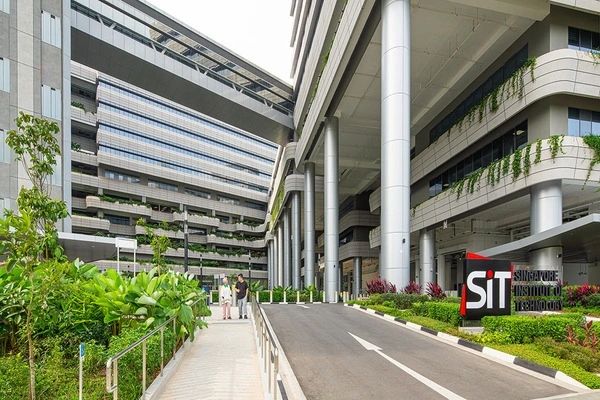
As one of the Best Engineering Universities in Singapore, the Singapore Institute of Technology provides industry-focused engineering education and practical learning experiences. It is known for preparing students to enter the workforce immediately after graduation.
SIT is focused entirely on domestic and applied integration; unlisted or lower-ranked on global pure-academic indexes, but highly critical to the regional industrial framework.
Academic Infrastructure
As one of the Best Engineering Universities in Singapore, SIT is Singapore’s premier university for applied learning. If your priority is deep theoretical academic research aimed at a PhD, SIT is not your target.
However, if your goal is to master practical, industry-standard engineering tools, protocols, and deployment strategies, SIT is exceptional.
The educational structure centres on structural competence across disciplines such as Marine Engineering, Telematics, Sustainable Infrastructure Engineering, and Chemical Engineering.
Concepts are taught through the lens of active field scenarios, troubleshooting real infrastructure, and optimising active production lines.
Some of the engineering courses at Singapore Institute of Technology include Civil Engineering, Mechanical Design Engineering, Electrical Power Engineering, Infrastructure Engineering, and Sustainable Built Environment.
The strengths of the Singapore Institute of Technology are in the following areas:
- Strong industry partnerships
- Applied learning model
- Extensive internships
- Career-oriented curriculum
Research Ecosystem & Industry Integrations
SIT’s crowning feature is the Integrated Work Study Programme (IWSP). Unlike a standard 8- to 12-week summer internship, SIT engineering students are embedded in an industrial partner company for a continuous, gruelling 8 to 12 months.
You operate as a full-time employee within companies like PSA Singapore, Singtel, or global chemical processors on Jurong Island.
The curriculum during this block is directly aligned with the problems you are solving for that specific enterprise.
Career Outcomes
The long-term IWSP structure eliminates the standard onboarding curve for employers. Consequently, over 90% of SIT engineering graduates receive full-time job offers from their host companies before they even step foot across the graduation stage.
SIT graduates enjoy strong employment rates due to the practical nature of their education.
Deep Technical Comparison of Universities in Singapore
To help you synthesise these structural paths, let’s look at how these four universities in Singapore match up across core operational metrics.
| Evaluation Metric | NUS (National University of Singapore) | NTU (Nanyang Technological University) | SUTD (Singapore University of Technology & Design) | SIT (Singapore Institute of Technology) |
| Primary Academic Philosophy | Macro-systems engineering, policy integration, and foundational research. | Specialized hardware innovation, silicon design, and deep tech. | Multi-disciplinary design thinking and rapid functional prototyping. | Applied operational competency and technical execution. |
| Standout Disciplines | Materials Science (#2), Mechanical (#3), Electrical (#3). | Electrical (#4), Data Science & AI (#4), Aeronautical (#5). | Cyber-Physical Systems, Sustainable Design, Product Engineering. | Infrastructure Engineering, Telematics, Marine & Mechatronics. |
| Typical Curricular Structure | Flexible modular tracks with a shared interdisciplinary core. | Specialized, intense engineering tracks focused on lab execution. | Cohort-based project sprints with no departmental walls. | Trimester-based applied blocks tied to field operations. |
| Industry Immersive Track | Standard internships or year-long NUS Overseas Colleges (NOC). | Extensive corporate laboratory network and structured industry attachments. | Venture incubation loops and capstone enterprise design projects. | Mandatory 8–12 month Integrated Work Study Programme (IWSP). |
| Target Engineering Persona | The System Architect or Research Pioneer. | The Hard-Tech Innovator or Silicon Engineer. | The Startup Founder or Agile Product Designer. | The Field Operations Leader or Deployment Master. |
Admissions Framework and Strategic Evaluation Criteria
Securing an admission offer from these institutions requires navigating a highly competitive selection funnel.
Academic Thresholds & Selection Protocols
For Singaporean applicants holding GCE A-Level credentials, entry into NUS or NTU engineering typically mandates straight A’s or near-perfect profiles in Physics, Mathematics, and Chemistry.
For international candidates, the bar is set exceptionally high as follows:
- International Baccalaureate (IB): A competitive score generally sits at a minimum of 40 to 43 points, with a strict requirement for perfect 7s in Higher Level (HL) Mathematics and Physics.
- Standardised Appraisals: Top-tier performance in Advanced Placement (AP) calculus and physics tracks, or high-percentile national entrance examinations (such as India’s JEE Advanced or China’s Gaokao) are basic baseline requirements for consideration.
SUTD and SIT deviate slightly from pure numerical cutoffs by employing holistic review processes. SUTD evaluates candidates through mandatory design portfolios and digital interactive interviews, seeking individuals who demonstrate spatial reasoning, creative problem-solving, and basic programming literacy.
SIT places massive emphasis on technical vocational diplomas or past engineering work experience, evaluating candidates via intense panels focused on practical engineering problem-solving.
The Subsidised Tuition & Work Bond Mechanism
A defining element of pursuing higher education in Singapore is the Tuition Grant Scheme managed by the Ministry of Education (MOE).
For international engineering students, opting into this grant at Universities in Singapore significantly reduces annual tuition overhead, dropping it from astronomical global tiers down to an approachable SGD 17,500 to SGD 32,000 per annum, depending on the school and specialisation.
However, this comes with a strict legal caveat: The Three-Year Service Bond. Upon graduation, you are legally contracted to work full-time for a company registered within Singapore for a minimum of 36 months.
For engineers looking to gain immediate international experience in a high-paying, low-tax financial tech or advanced manufacturing centre, this bond is not a penalty—it is a guaranteed pipeline into a professional career.
Financial Solutions for Engineering Students
Securing a seat at one of Singapore’s world-class engineering universities is a major achievement, but financing a top-tier degree in a premier global hub requires strategy.
Fortunately, Singaporean institutions, backed heavily by the state and global industry partners, offer some of the most generous financial aid packages in the world.
For both domestic high-achievers and international students, navigating the scholarship landscape is the key to unlocking a fully-funded education.
Top-Tier University Merit Scholarships (Undergraduate)
Singapore’s top universities look for more than just perfect grades; they look for leadership potential, innovative design capabilities, and high technical aptitude.
The flagship merit scholarships offered directly by universities usually cover 100% of tuition fees alongside substantial living stipends.
National University of Singapore (NUS)
NUS Global Merit & Merit Scholarships: Primarily targeted at domestic top-tier applicants. These awards offer full tuition coverage, guaranteed student exchange program placements, living allowances of approximately SGD 6,000 per year, and priority consideration for on-campus housing.
NUS International Undergraduate Scholarship: A premier award for outstanding international students. It covers 100% of subsidised tuition fees, provides an annual living allowance of USD 4,650, a USD 1,350 computer grant, and an annual accommodation allowance of USD 3,875.
Nanyang Technological University (NTU)
The Nanyang Scholarship & Nanyang Global Scholarship: NTU’s most prestigious undergraduate awards, open to all nationalities. They cover full tuition fees, provide a living allowance of USD 5,038 per academic year, an accommodation allowance of up to USD 1,550, a one-off computer allowance of USD 1,350, and a travel grant of up to USD 3,875 to cover overseas study programs.
Renaissance Engineering Programme (REP) Scholarship: Specifically tailored for NTU’s premier dual-degree program (Bachelor of Engineering and Master of Science in Technology Management). It provides comprehensive funding, including coverage for the mandatory year of study at partner universities like UC Berkeley or Imperial College London.
Singapore University of Technology and Design (SUTD)
SUTD Rainmaker & Trailblazers Scholarships: Highly competitive merit awards open to both local and international students. They emphasise multi-disciplinary design and venture exploration, completely covering tuition fees while funding design prototypes, international immersion cohorts, and project development.
Learn More:
- Best Engineering Universities in East Africa: The Complete Guide
- Mastering GPT Prompt Engineering: The 2026 Ultimate Guide
- How Engineers Use AI for Project Planning: The Complete Guide
- University of Dar Es Salaam: What You Need to Know Right Now
- Dar Es Salaam Institute of Technology: A Comprehensive Overview
Targeted International and Field-Specific Scholarships
If you are an international applicant or looking to enter a hyper-specific engineering discipline, there are highly targeted programs designed to attract global talent.
Science & Technology (S&T) Undergraduate Scholarship
Administered by universities like NUS and NTU, this scholarship is explicitly aimed at outstanding international students from Asian countries who are pursuing full-time undergraduate degrees in Science, Technology, Engineering, or Mathematics (STEM).
- Coverage: Full tuition fees, an annual living allowance of SGD 6,000, a settling-in allowance, and return airfare.
- Requirement: Like most international awards, it requires recipients to take up the Ministry of Education (MOE) Tuition Grant.
University Engineering Scholarship (UES)
This prestigious award is open specifically to local Polytechnic Diploma holders in Singapore who are looking to upgrade their skills by pursuing a full-time engineering or technology-related undergraduate degree at NUS, NTU, SUTD, or SIT.
- Coverage: Fully subsidised tuition fees, a USD 4,490 annual living allowance, and a USD 1,550 computer allowance.
- Bond: Recipients are required to serve a 4-year scholarship bond working in an engineering or technology-related field in Singapore immediately after graduation.
The Fully Funded Postgraduate Track (Master’s & PhD)
For research-driven engineers focusing on advanced hardware, silicon fabrication, artificial intelligence, or green infrastructure, postgraduate funding in Singapore is exceptionally robust.
Singapore International Graduate Award (SINGA)
SINGA is a massive, world-renowned collaboration among the Agency for Science, Technology and Research (A*STAR), NUS, NTU, SUTD, and SMU.
It allows brilliant international students to pursue a tuition-free PhD or Engineering Doctorate (EngD) in Science and Engineering.
- The Benefits: Full waiver of tuition fees for 4 years, a massive monthly living stipend of USD 2,090 (which scales up to USD 2,480 per month after passing your doctoral qualifying exams), a one-time airfare grant of up to USD 1,160, and a USD 775 settling-in allowance.
- The Ultimate Perk: Unlike undergraduate tracks, SINGA is entirely bond-free.
EDB Industrial Postgraduate Programme (EDB-IPP)
Managed by the Singapore Economic Development Board (EDB) in partnership with universities like SIT, NUS, and NTU, this programme targets graduate students working on deep R&D projects directly embedded within industrial companies.
It provides full postgraduate tuition alongside a competitive corporate salary, building a pipeline of elite corporate research leads
Understanding the “Bond” Factor: The MOE Tuition Grant
When evaluating scholarships in Singapore, it is vital to understand how the Ministry of Education (MOE) Tuition Grant Scheme interacts with your funding.
For international undergraduate students and Singapore Permanent Residents (PRs), accepting any university merit scholarship mandates that you also opt into the MOE Tuition Grant. This grant fundamentally lowers the baseline tuition cost.
- The Service Obligation: In return for this state subsidy, international students and PRs must sign a legal agreement to work for a Singapore-registered company for 3 years immediately following graduation.
- The Reality: For an engineer, this is rarely a burden. Singapore’s economy is highly concentrated with multinational engineering entities (such as ST Engineering, Dyson, GlobalFoundries, and Micron). This bond effectively serves as a structural launchpad, guaranteeing three years of high-value resume building in a low-tax, high-tech financial hub.
Frequently Asked Questions
1. Which universities in Singapore are best for an international engineering student looking to work globally afterwards?
NUS and NTU carry the highest international brand recognition. Because their engineering divisions place within the top 5 to 15 slots of global subject rankings, their degrees are viewed on equal footing with institutions like UC Berkeley, Imperial College London, or ETH Zurich by global enterprise recruiters across Europe, North America, and the Middle East.
2. How does SUTD’s relationship with MIT benefit students directly?
SUTD’s foundation, curriculum structure, and faculty training were designed in lockstep with MIT. This legacy manifests in collaborative research opportunities, student exchange programs, and a shared engineering culture centred on rapid, collaborative prototyping. While the dual-degree options have evolved, the curriculum retains its signature MIT rigour and design DNA
3. Is it difficult for international engineering graduates to fulfil their 3-year work bond?
Generally, no. The Singaporean state heavily protects and expands its high-tech industry sectors (biomedical, aerospace, semiconductors, and AI). Because the engineering curricula at these universities are explicitly tailored to support the local industrial roadmap, finding a qualifying engineering role within Singapore’s vast ecosystem of MNCs and domestic enterprises is highly achievable.
4. For data science and artificial intelligence engineering, should I target NUS or NTU?
Both are ranked in the global top 5 for this specific field, but their methodologies differ. NTU is deeply embedded in algorithmic optimisation, computing hardware, and enterprise AI platform deployment via major corporate research installations. NUS focuses heavily on the macro systems architecture, the mathematical foundations of data science, and integrating AI architectures into wider enterprise software networks and public policy models.
5. Which are the best engineering universities in Singapore?
The National University of Singapore (NUS) and Nanyang Technological University (NTU) are generally considered the best engineering universities in Singapore.
6. Is Singapore good for international engineering students?
Yes. Singapore offers world-class education, excellent infrastructure, strong employment opportunities, and a safe living environment.
7. Which engineering field has the highest salary in Singapore?
Artificial Intelligence Engineering, Software Engineering, and Computer Engineering typically offer the highest salaries.
8. Is NTU better than NUS for engineering?
Both universities are excellent. NTU is often recognised for its engineering-focused approach, while NUS offers broader interdisciplinary opportunities.
9. Are engineering degrees from Singapore recognised internationally?
Yes. Engineering degrees from Singapore’s leading universities are highly respected worldwide.
10. Can international students work in Singapore after graduation?
Many graduates obtain employment in Singapore through work visa programs and employer sponsorship.
11. What is the most in-demand engineering specialisation in Singapore?
Computer Engineering, Artificial Intelligence, Data Engineering, Civil Infrastructure Engineering, and Electrical Engineering remain highly sought after.
12. How much does it cost to study engineering at universities in Singapore?
International students generally spend between $18,000 and $32,000 per year on tuition, excluding living expenses.
13. What academic performance is required to keep a scholarship active?
Singaporean universities maintain strict academic standards. Most top-tier merit scholarships require you to maintain a minimum Cumulative Grade Point Average (CGPA) of 3.5 out of 5.0 (or equivalent tracking) evaluated every single semester.
14. Can I hold multiple scholarships concurrently?
Generally, no. Most university-administered scholarships explicitly state that the recipient cannot hold any other concurrent scholarships, bursaries, or university loans without prior written approval from the university administration.
15. Are there bond-free scholarships for undergraduate international students?
Purely bond-free, fully funded international undergraduate scholarships are incredibly rare in Singapore because undergraduate funding is tied structurally to the MOE Tuition Grant. If you want a 100% bond-free funded path, your best option is to target the postgraduate SINGA track for doctoral and advanced engineering research.
Conclusion on Universities in Singapore
Singapore remains one of the world’s premier destinations for engineering education in 2026. Universities such as the National University of Singapore, Nanyang Technological University, Singapore University of Technology and Design, and Singapore Institute of Technology continue to produce highly skilled engineers who contribute to global innovation and technological advancement.
Selecting the ideal engineering universities in Singapore ultimately comes down to mapping your personal professional style to an institutional philosophy:
- If you seek to lead massive systems projects, direct deep academic research initiatives, or pivot into structural technology consulting, NUS provides the ideal macro-scale runway.
- If your passions involve breaking limits in semiconductor design, creating complex automated hardware, or diving straight into elite corporate-sponsored tech labs, NTU is your destination.
- If you are naturally entrepreneurial, thrive in high-pressure project sprints, and view engineering primarily through a lens of human-centric design, SUTD offers the ultimate agile ecosystem.
- If you want to skip traditional academic ivory towers, gain deep, hands-on industrial domain experience, and secure immediate employment integration upon graduation, SIT is the optimal engine.
Singapore has meticulously built an engineering education ecosystem tailored for the demands of tomorrow.
Whichever path you choose, you will be positioning yourself at the epicentre of global technological transformation.
Whether your interests lie in civil engineering, mechanical engineering, artificial intelligence, aerospace engineering, or sustainable infrastructure, Singapore offers outstanding educational opportunities supported by cutting-edge research, strong industry partnerships, and excellent career prospects.
For students seeking a globally recognised engineering degree and access to one of Asia’s most advanced economies, Singapore remains an exceptional choice for engineering education in 2026 and beyond.
Tell us. What do you think about the best engineering universities in Singapore? Drop your answer in the comments form below.
Bookmark this page for the latest in engineering education.
Like Our Page on Facebook | Share to educate another engineer about Universities in Singapore.