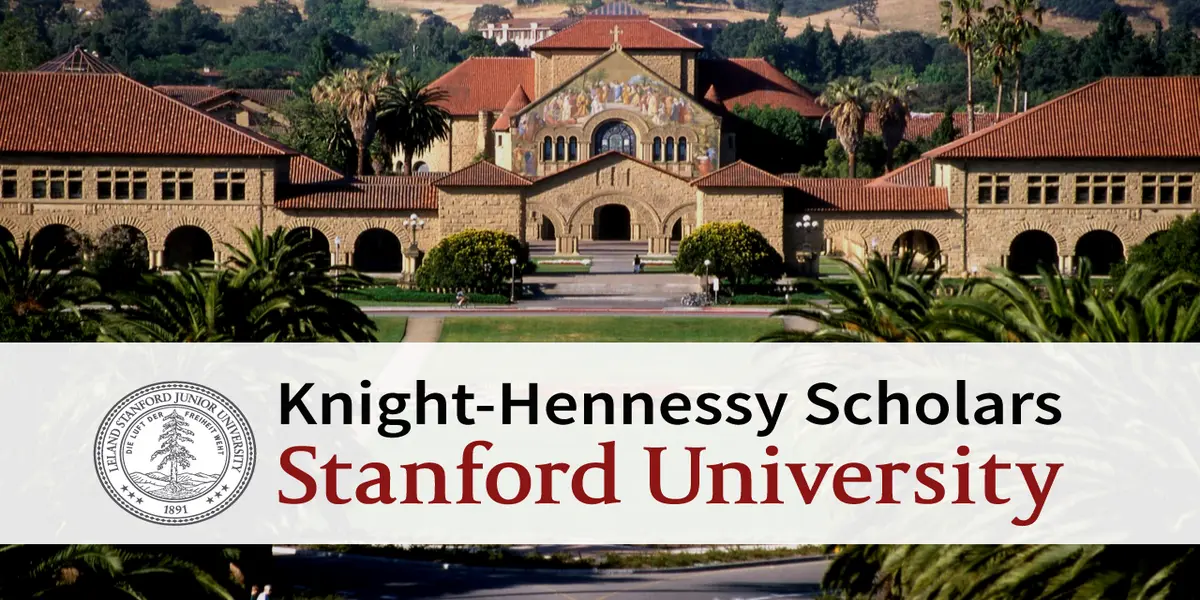
The Knight-Hennessy Scholars program at Stanford University is one of the most prestigious, fully funded graduate fellowship opportunities in global higher education.
Backed by a $750 million endowment, the program selects up to 100 exceptional students annually from around the world.
It provides full financial support to pursue any graduate degree at Stanford—including PhDs, MBAs, JDs, MDs, and master’s degrees—while simultaneously cultivating a community of visionary, multidisciplinary leaders at Denning House.
However, securing a place in the Knight-Hennessy cohort requires navigating a highly competitive, dual-track application process.
You must convince both your chosen Stanford graduate department of your academic brilliance and the Knight-Hennessy Scholars Program selection committee of your leadership potential.
This blog post breaks down every component of the application cycle for the 2027 cohort step by step, providing strategic advice to optimise your application.
Recommended Articles
- The Ultimate Guide to Tanzania’s Standard Gauge Railway (SGR) Project
- Construction Management vs Civil Engineering vs Quantity Surveying: The Career Paths
- The Blueprint of Success: A Complete Guide to the Best Engineering Scholarships in the World
- The Pinnacle of African Higher Education: The Guide to the University of Cape Town
- Best Side Hustles for Civil Engineers in 2026
- The Best Civil and Structural Engineering Universities in the World 2026
- The Best Engineering Universities in Singapore 2026: Complete Guide
The Core Admission Criteria & What KHS Seeks

The Knight-Hennessy selection committee evaluates candidates using three distinct, non-negotiable core criteria.
Unlike traditional graduate admissions that focus primarily on GPAs and test scores, the Knight-Hennessy Scholars Program looks deeply at character, mindset, and intent.
Independence of Thought
The committee seeks distinct individuals who challenge conventional wisdom, think critically, and approach complex problems with creativity.
- Indicators: Intellectual curiosity, a track record of exploring fresh ideas, a willingness to take calculated risks, and the ability to adapt seamlessly to ambiguous situations.
- Application Strategy: Do not just list your academic achievements. Demonstrate moments where you looked at an existing framework, asked a difficult question, and devised an entirely original solution.
Purposeful Leadership
The Knight-Hennessy Scholars Program does not define leadership by formal titles or corporate hierarchy. They look for “leadership through action”—individuals who take initiative to drive meaningful results.
- Indicators: The ability to inspire, motivate, and collaborate with diverse teams, clear value-based decision-making, and structural resilience in the face of failure.
- Application Strategy: Focus on the tangible impact of your actions. Highlight initiatives you started, movements you led, or systemic problems you fixed within your university, company, or community.
Civic Mindset
This criterion is anchored in what Stanford calls a “generosity of spirit.” The program seeks scholars driven by a deep desire to serve others and work for the greater good.
- Indicators: Deep humility, profound empathy, integrity, respect for contrasting perspectives, and a verifiable commitment to community upliftment.
- Application Strategy: Show where you have invested your time and skills for causes larger than personal advancement. Authenticity is crucial; superficial volunteer lines on a resume will not suffice.
Eligibility & The Dual-Application Framework
Understanding the strict structural boundaries of the Knight-Hennessy application is vital to avoid immediate disqualification.
The 7-Year Undergraduate Window
To be eligible to join the 2027 cohort, you must have earned your first bachelor’s degree on or after January 2020.
- Current Undergraduate Students: You are fully eligible to apply if you will complete your first bachelor’s degree by September 2027.
- Military Veterans Extension: If you served in your country’s military after earning your degree, the eligibility window is extended by two years (January 2018 or later).
- Prior Graduate Degrees: Holding a master’s degree or a prior PhD does not disqualify you, provided your baseline bachelor’s degree falls within the post-January 2020 window.
No Demographic or Institutional Restrictions
The Knight-Hennessy Scholars Program maintains zero quotas based on nationality, ethnicity, age, field of study, or career aspiration. No institutional endorsement or university nomination is required. You apply entirely independently.
The Concurrent Application Rule
You must submit two separate but concurrent applications through separate portals by their respective deadlines:
- The Knight-Hennessy Scholars Application: Submitted directly to the Knight-Hennessy Scholars Program selection committee.
- The Stanford Graduate Degree Program Application: Submitted directly to your chosen department (e.g., Stanford School of Engineering, Graduate School of Business, School of Humanities & Sciences).
Critical Dependency: To become a Knight-Hennessy Scholar, you must be admitted by both the KHS committee and your chosen Stanford graduate department.
If the department denies you entry, your Knight-Hennessy Scholars Program candidacy ends automatically.
Conversely, if you are admitted by the department but rejected by the Knight-Hennessy Scholars Program, you can still enrol at Stanford, but you must secure alternative financial funding.
Application Deadlines & Key Dates (2027 Cohort)
Timelines are rigid, and late submissions are absolutely not accepted. Review the key dates for the current application cycle:
| Date | Milestone Event | Strategic Requirement |
| June 1, 2026 | KHS Online Application Window Opens | Access the portal early, input basic biographic data, and register recommenders immediately. |
| September 15, 2026 | Stanford MBA Round 1 Application Deadline | Mandatory for MBA applicants seeking KHS. Only Round 1 aligns with the KHS selection timeline. |
| October 6, 2026 (1:00 PM PST) | Uniform KHS Application Deadline | The absolute cutoff for the main online KHS application across all global regions. |
| December 1, 2026 | Final Stanford Graduate Program Cutoff | The absolute latest date to submit your department application (unless your department specifies an earlier date). |
| January 2027 | Video Statement Invitations | Dispatched on a rolling basis to select applicants. |
| January 27, 2027 | Official Finalist Notification | Top applicants are invited to the mandatory Finalist Experience. |
| March 16, 2027 | Official Scholar Notifications | Final cohort decisions are officially released. |
Preparing Your Application Components: Step by Step
Every element of your Knight-Hennessy Scholars Program application packet must be polished, self-reflective, and strategically aligned with the core selection criteria.
Step 1: The One-Page Resume
The Knight-Hennessy Scholars Program enforces a strict one-page limit formatted to standard US Letter size (8.5 × 11 inches) in reverse chronological order.
- Strategic Sifting: Do not construct a simple checklist of duties. Frame every professional, academic, and extracurricular entry around quantifiable impact and results.
- The Blueprint: Use active verbs and metrics to show how you optimised systems, managed budgets, led teams, or spearheaded civic initiatives. Every line must showcase Independence of Thought, Purposeful Leadership, or Civic Mindset.
Step 2: Academic Transcripts
You must upload unofficial transcripts from every post-secondary institution you attended for at least one academic year.
If your transcript does not explicitly show your graduation date and degree awarded, you must upload a copy of your diploma or official certificate.
Step 3: Standardised Test Scores
The Knight-Hennessy Scholars Program follows the exact testing policies of your target Stanford graduate degree program.
- If your department does not require GRE, GMAT, or TOEFL scores, you do not need to submit them to the Knight-Hennessy Scholars Program.
- If your department requires them, you must report them. If you take a test and receive updated scores after the October 6 deadline, you can update them directly via your KHS applicant status page.
Step 4: Two Recommendation Letters
You must select and register two recommenders through the Knight-Hennessy Scholars Program portal early in the process.
The Knight-Hennessy Scholars Program prioritises letters that assess your leadership, character, and impact over routine academic praise.
- Who to Ask: Choose individuals who have supervised you directly in an academic, professional, or civic capacity. Avoid asking high-profile individuals who barely know you; their generic letters carry little weight.
- The Writing Prompt: Recommenders must provide specific examples of your leadership traits, how you handle setbacks, your openness to contrasting perspectives, and your dedication to the greater good. Provide them with a summary of your core achievements to help them write a vivid, example-driven letter.
Step 5: Short Answer Responses (250 Words Combined Limit)
You will answer three short-answer questions. These prompt you to reflect on moments when you:
- Engaged constructively with someone holding a fundamentally different perspective.
- Acted with profound courage.
- Fell short of your own high expectations or failed.
Strategy: Be concise, direct, and completely authentic. In the failure prompt, do not share a hidden triumph (e.g., “I worked too hard”).
Share a real, vulnerable failure, reflect honestly on what went wrong, and clearly show how that setback drove personal growth.
Step 6: The Personal Essay
The personal essay is the core of your application. The prompt asks you to connect the dots of your life journey: reflecting on the defining influences, experiences, and structural turning points that have shaped your values, identity, and future aspirations.
- Avoid the Narrative Trap: Do not turn this into a prose version of your resume. The committee can see your achievements on your resume sheet.
- The Narrative Frame: Use this space to explain why you do what you do. Trace the origins of your civic mindset, reveal your core personality, and explain how a Stanford education—and the Knight-Hennessy Scholars Program community—serves as the necessary vehicle to achieve your ultimate goals for society.
Funding, Research Assistant Fellowships, and Financial Benefits
The financial package provided by Knight-Hennessy Scholars is comprehensive, eliminating financial barriers to graduate study at Stanford.
Direct Financial Coverage
Scholars receive full financial support for up to three years, depending on the standard structural duration of their specific Stanford degree program. This package includes:
- Full Tuition Coverage: Covers the exact tuition costs and any mandatory fees levied by your specific Stanford graduate school.
- Living Stipend: A generous monthly stipend that fully covers on-campus housing, food, and personal living expenses.
- Travel Grant: An annual supplementary economy-class travel stipend intended to cover one round-trip flight between your home country and Stanford.
- Relocation Allowance: A one-time funding boost provided to incoming scholars to assist with initial moving costs and setup expenses.
PhD Funding Mechanics & Research Assistant Fellowships
For doctoral students whose programs extend beyond the three-year Knight-Hennessy Scholars Program funding window (as most Stanford PhD programs require 5 to 6 years), funding transitions smoothly into departmental hands.
Stanford graduate departments guarantee continued, comparable financial support for the remaining duration of your doctoral studies.
This is typically delivered through prestigious Research Assistant (RA) Fellowships or Teaching Assistant (TA) positions, ensuring your entire PhD remains fully funded from matriculation to dissertation defence.
Frequently Asked Questions (FAQs)
1. Can I apply to the Knight-Hennessy Scholars program if I am applying to two separate graduate programs at Stanford?
Yes. You can apply to concurrent or dual-degree graduate programs at Stanford (such as an MD/PhD or JD/MBA). You must indicate all intended degree programs in your single KHS online application form, and submit separate application packets to each Stanford department by their respective deadlines.
2. What happens if I am accepted into KHS but rejected by my Stanford graduate department?
You cannot become a Knight-Hennessy Scholar. The Knight-Hennessy Scholars Program is completely dependent on securing admission to a full-time Stanford graduate program. If your department denies your entry, your KHS application is automatically withdrawn, as you cannot matriculate into the fellowship without an active degree program.
3. Is there a minimum GPA or standardised test score cutoff for the Knight-Hennessy Scholars program?
No. Knight-Hennessy Scholars sets no minimum GPA benchmarks or standardised test score cutoffs. The selection committee evaluates applications holistically. However, you must remain mindful that your individual Stanford graduate department may hold high academic cutoffs; you must meet those baseline standards to secure departmental admission.
4. Does the Knight-Hennessy Scholars Program require an institutional endorsement or university nomination?
No. Unlike other major global fellowships such as the Rhodes or Marshall Scholarships, Knight-Hennessy Scholars does not require a university endorsement, an institutional nomination, or a campus committee interview. You apply entirely on your own initiative through the online portal.
5. Are undocumented or DACA-status students eligible to apply for the Knight-Hennessy Scholars program?
Yes. Undocumented students and individuals holding active DACA status are fully eligible to apply for both graduate study at Stanford University and the Knight-Hennessy Scholars program. The program welcomes applications from all candidates regardless of their formal citizenship status.
Conclusion On The Knight-Hennessy Scholars Program
Applying for the Knight-Hennessy Scholars program is an intensive journey of deep self-reflection. It requires absolute clarity of purpose and careful coordination across two separate university portals.
Success does not come from presenting a flawless, manufactured persona but from showcasing your genuine character, intellectual curiosity, and dedication to serving others.
Give yourself ample time to draft your personal essays, select recommenders who can speak to your true impact, and ensure both the Knight-Hennessy Scholars program and Stanford department applications are submitted before their respective deadlines.
By presenting an authentic, well-coordinated narrative, you position yourself to join a global community of leaders ready to tackle the complex challenges of tomorrow.
Thats All.
Like Our Page on Facebook | Share to educate another engineer.