
The construction industry is a massive, multi-trillion-dollar engine that shapes the world we live in. Every soaring skyscraper, expansive bridge, intricate highway network, and modern residential complex begins as an idea and evolves into a physical reality.
However, the journey from a blank plot of land to a completed structure requires a diverse symphony of professionals.
If you are considering a career in the built environment, you will inevitably encounter three dominant professional paths: Civil Engineering (CE), Construction Management (CM), and Quantity Surveying (QS).
To the untrained eye, these roles might seem interchangeable. After all, you will find all three professionals wearing hard hats, reviewing architectural blueprints, and collaborating on construction sites.
But look closer, and you will find fundamentally distinct disciplines requiring entirely different skill sets, mindsets, and day-to-day operations.
- The Civil Engineer focuses on physics, mathematics, and structural integrity (Will it stand?).
- The Construction Manager focuses on leadership, operations, logistics, and execution (How will we build it, and when?).
- The Quantity Surveyor focuses on economics, law, cost management, and contracts (How much will it cost, and how do we protect ourselves financially?).
Choosing the wrong path can lead to a career mismatch, while choosing the right one allows you to leverage your natural strengths, whether you are an analytical problem solver, a natural leader, or a meticulous financial strategist.
This blog post will break down these three powerhouse careers, analysing their core responsibilities, educational pathways, workplace environments, and earning potentials to help you make an informed decision about your professional future.
Recommended Articles
- The Best Civil and Structural Engineering Universities in the World 2026
- The Blueprint of Success: A Complete Guide to the Best Engineering Scholarships in the World
- The Best Engineering Universities in Singapore 2026: Complete Guide
- The Pinnacle of African Higher Education: The Guide to the University of Cape Town
- Best Paint Brands in Tanzania: A Complete Guide for Homeowners, Builders, and Contractors
- Best Engineering Universities in East Africa: The Complete Guide
- Artificial Learning for Engineers: What You Need to Know
- Building construction | Types of Building construction
Also Read: Autodesk AutoCAD Review: The Complete Engineering & CAD Standard Guide
Civil Engineering: The Analytical Pioneer

What is Civil Engineering?
Civil Engineering is one of the oldest and broadest engineering disciplines. It is the art and science of designing, maintaining, and adapting the physical and naturally built environment.
Civil engineers apply principles of classical mechanics, physics, thermodynamics, and mathematics to ensure that structures are safe, sustainable, resilient, and capable of withstanding environmental forces like earthquakes, wind loads, and soil degradation.
Core Responsibilities
A civil engineer’s primary objective is structural and functional integrity. They take an architectural concept and transform it into a mathematically viable design. Their day-to-day responsibilities include:
- Structural Analysis & Design: Calculating loads, stresses, and moments to determine the size, thickness, and material composition of structural elements (beams, columns, foundations, and slabs).
- Feasibility & Site Investigations: Analysing geotechnical reports, soil mechanics, and hydrological data to assess whether a site can safely support a proposed structure.
- Technical Specifications: Drafting highly detailed engineering drawings, calculation sheets, and technical specifications that construction crews must strictly follow.
- Regulatory Compliance: Ensuring that all designs comply with regional building codes, environmental regulations, and safety standards.
- Infrastructure Specialisation: Designing complex civil systems beyond buildings, such as water treatment plants, dams, highways, airports, and tunnels.
Ideal Personality Traits
Civil engineering is a highly technical discipline. You will thrive in this career if you possess:
- Advanced Mathematical & Analytical Skills: A love for calculus, physics, and solving complex spatial and structural problems.
- High Attention to Detail: A single misplaced decimal point in a structural calculation can lead to catastrophic failure.
- Design-Oriented Mindset: An interest in using advanced software tools like AutoCAD, Revit, and STAAD.Pro, or ETABS, to simulate real-world forces on digital models.
Also Read: The Ultimate Guide to Tanzania’s Standard Gauge Railway (SGR) Project
Construction Management: The Operational Conductor
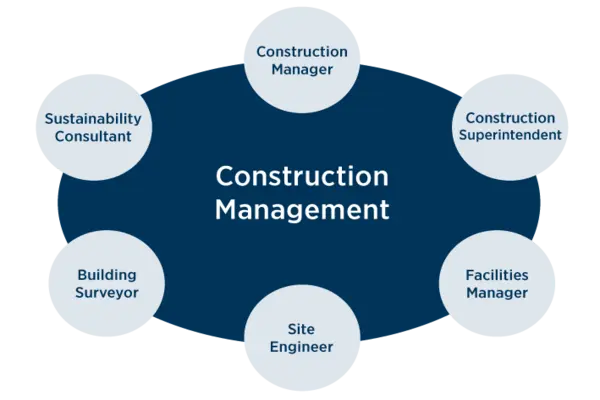
What is Construction Management?
If Civil Engineering is about the design of a structure, Construction Management is about the execution of that design.
Construction Management is a multidisciplinary field that blends engineering principles with business administration, project management, and leadership.
A Construction Manager (CM) acts as the bridge between the design team (architects and engineers) and the boots-on-the-ground labour force.
Core Responsibilities
The construction manager’s ultimate goal is to deliver a project on time, within scope, and safely. They manage the chaos of a construction site and turn a paper blueprint into a physical asset. Their core responsibilities include:
- Project Scheduling & Planning: Developing master project schedules using Critical Path Method (CPM) software (such as Primavera P6 or Microsoft Project) to orchestrate when tasks occur.
- Site Logistics & Operations: Coordinating the arrival of thousands of tons of materials, heavy machinery (cranes, excavators), and specialised subcontractors (electricians, plumbers, steel fixers).
- Labour & Subcontractor Management: Leading on-site teams, resolving interpersonal or technical conflicts, and ensuring work meets quality standards.
- Health, Safety, and Environment (HSE): Implementing and enforcing strict site safety protocols to minimise accidents and ensure regulatory compliance.
- Real-Time Problem Solving: Addressing unexpected site conditions, such as unmapped underground utilities or sudden weather delays, without halting progress.
Ideal Personality Traits
Construction management is fast-paced, high-stress, and intensely people-oriented. You will excel here if you have:
- Strong Leadership & Communication: The ability to command respect on a gritty construction site while communicating diplomatically with corporate clients.
- Exceptional Organisational Skills: The capacity to juggle hundreds of moving parts, tight deadlines, and shifting priorities simultaneously.
- Resilience & Adaptability: A high tolerance for stress and the ability to think on your feet when things go wrong on-site.
Also Read: The 2026 Ultimate Guide to Foundation Engineering Interview Questions and Answers
Quantity Surveying: The Financial and Legal Strategist
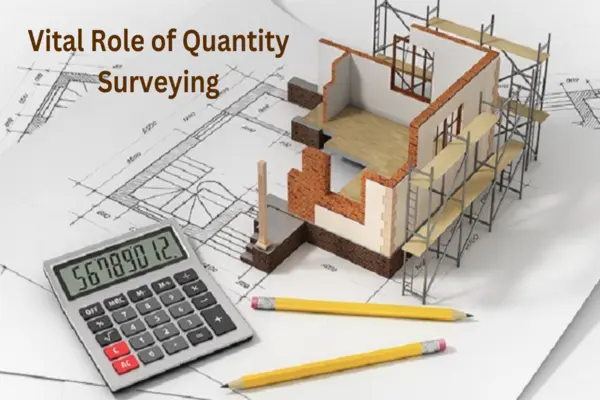
What is Quantity Surveying?
Quantity Surveying is the commercial heart of the construction industry. Often referred to as “Construction Economists” or “Cost Engineers,” Quantity Surveyors (QS) manage all financial and contractual aspects of a construction project from its initial inception to final account closeout.
They ensure that projects are financially viable, disputes are minimised, and profit margins are protected.
Core Responsibilities
A quantity surveyor’s ultimate goal is cost control and legal protection. They make sure the client gets value for money, or that the contractor maximises their profit margin ethically and legally. Their core responsibilities include:
- Cost Estimation & Budgeting: Preparing preliminary cost estimates from early architectural sketches that evolve into highly detailed budgets.
- Bill of Quantities (BOQ) Preparation: Meticulously measuring and listing every single item, material, and labour hour required for a project based on construction drawings.
- Procurement & Tendering: Managing the bidding process, evaluating contractor proposals, and advising clients on the best procurement routes.
- Contract Administration: Drafting and managing construction contracts (such as FIDIC, JCT, or NEC suites) and interpreting clauses to mitigate risks.
- Valuations & Variation Management: Assessing ongoing work on-site to approve monthly progress payments for contractors, and pricing “variations” (changes made to the design midway through construction).
Ideal Personality Traits
Quantity surveying requires an analytical, business-oriented mind. It is a perfect fit for individuals who display:
- Strong Numerical Aptitude & Love for Finance: A passion for economics, budgeting, data analysis, and financial tracking.
- Meticulous Eye for Documentation: The ability to read through hundreds of pages of contract legal jargon or architectural drawings to spot discrepancies.
- Negotiation & Dispute Resolution Skills: The diplomatic tact required to negotiate costs with subcontractors and settle financial disputes between clients and builders.
Direct Comparison: Side-by-Side Breakdown
To fully understand how these paths diverge, let’s look at a comparative matrix detailing the structural differences across key career metrics:
| Feature/Metric | Civil Engineering (CE) | Construction Management (CM) | Quantity Surveying (QS) |
| Primary Focus | Technical design, structural safety, mechanics, and infrastructure integrity. | Site operations, team leadership, project scheduling, and execution. | Financial management, cost estimation, contract law, and procurement. |
| Core Question | “Will this structure safely support the required loads and withstand forces?” | “How can we build this efficiently, safely, and on schedule?” | “How much will it cost, and how do we manage contracts and budgets?” |
| Work Environment | 70% Office (Design/Software) / 30% Site (Inspections). | 20% Office / 80% Site (Active field management and coordination). | 60% Office / 40% Site (Valuations, audits, and meetings). |
| Key Software Tools | AutoCAD, Revit, STAAD.Pro, ETABS, Civil 3D, Ansys. | Primavera P6, MS Project, Procore, Autodesk Construction Cloud. | PlanSwift, CostX, Candy (CCS), Bluebeam, MS Excel. |
| Key Subjects Studied | Calculus, Fluid Mechanics, Structural Analysis, Geotechnical Engineering. | Project Planning, Supply Chain Logistics, Site Safety, Leadership, Construction Methods. | Construction Economics, Contract Law, Measurement & Estimation, Procurement. |
| Major Professional Bodies | ICE (UK), ASCE (USA), ERB (Tanzania), Engineers Australia. | CIOB (UK), CMAA (USA), PMI (Global). | RICS (Global), AIQS (Australia), TIQS (Tanzania). |
Educational Pathways and Professional Licensing
The educational foundations for these careers vary significantly, affecting how quickly you can enter the workforce and the licenses you must obtain to practice legally.
Civil Engineering Pathway
Because civil engineers bear legal responsibility for public safety, their educational route is highly regulated:
- Degree: A minimum of a 4-year Bachelor of Science (B.Sc.) or Bachelor of Engineering (B.Eng.) in Civil Engineering from an accredited institution.
- Curriculum: Heavy emphasis on advanced mathematics, structural dynamics, physics, materials science, and hydraulics.
- Licensure: After graduation, you typically register as a Graduate Engineer. Following a mandatory period of structured professional experience (usually 3 years) working under mentor engineers, you must pass rigorous professional exams to become a Professional Engineer (PE) or Chartered Engineer (CEng). This license grants you the legal authority to sign off and stamp structural drawings.
Construction Management Pathway
The entry barriers for construction management are slightly more flexible, prioritising practical execution over theoretical physics:
- Degree: A Bachelor’s degree in Construction Management, Construction Project Management, or Civil Engineering. Some professionals transition into this role from trade backgrounds combined with construction certifications.
- Curriculum: Focuses on project delivery methods, construction safety codes, estimating, human resource management, scheduling, and business law.
- Certifications: While state-mandated licensing is less common than in civil engineering, top-tier career progression requires certifications such as the Certified Construction Manager (CCM) or Project Management Professional (PMP), along with memberships in bodies such as the Chartered Institute of Building (CIOB).
Quantity Surveying Pathway
Quantity surveying blends construction knowledge with commercial business acumen:
- Degree: A Bachelor’s degree in Quantity Surveying, Construction Economics, or Commercial Management.
- Curriculum: Centred around measurement methodologies (e.g., NRM2, SMM7), construction technology, property law, contract administration, and accounting.
- Professional Status: The gold standard for a quantity surveyor is achieving Chartered Status through the Royal Institution of Chartered Surveyors (RICS) or your respective national board (e.g., the Board of Quantity Surveyors in your country). This requires completing an Assessment of Professional Competence (APC), a rigorous process involving structured workplace training and a panel interview.
A Day in the Life: A Real-World Project Scenario
To truly see how these three professionals interact, let’s look at a real-world scenario: the construction of a new 20-story commercial tower.
Phase 1: Planning and Budgeting (The Quantity Surveyor Takes the Lead)
Before any ground is broken, the client wants to know if the project is financially viable. The Quantity Surveyor steps in to analyse early architectural concepts. They compile a preliminary cost plan, estimating costs per square meter.
Once the client approves, the QS drafts a detailed Bill of Quantities (BOQ), listing every metric ton of steel, cubic meter of concrete, and square meter of glazing required. They use this BOQ to invite construction firms to bid on the project, ensuring the contract terms protect the client from unexpected financial risks.
Phase 2: Structural Engineering and Design (The Civil Engineer’s Domain)
Simultaneously, the Civil Engineer is hard at work in front of multiple monitors. They receive the architectural vision of a sleek, glass-faced tower and begin applying the laws of physics.
The civil engineer runs wind tunnel simulations and seismic analyses using advanced software. They design a robust foundation system (such as deep concrete piles) that pierces unstable topsoil to reach solid bedrock.
They determine exactly how much internal steel reinforcement is required inside the concrete columns to prevent the building from buckling under its own weight or swaying excessively during a storm. They package these calculations into stamped technical drawings.
Phase 3: Construction and Mobilisation (The Construction Manager Takes Command)
Once the drawings are approved and the financial contracts are signed, the project moves to the field. The Construction Manager sets up their mobile office trailer on the vacant site.
The CM reviews the civil engineer’s drawings and maps out an aggressive, week-by-week timeline. They organise the crane assembly, arrange road closures to allow concrete mixers to pour the foundation without interruption, and manage hundreds of workers.
The Intersecting Daily Challenges:
- Scenario A: The excavation crew strikes a pocket of unstable, waterlogged soil underground that was not highlighted in the original survey. The Construction Manager halts work in that zone and calls the Civil Engineer. The engineer re-analyses the soil data and designs a revised, reinforced retaining wall. The Quantity Surveyor immediately assesses the cost of the extra steel and concrete needed for this wall, evaluating how it impacts the contingency budget and issuing an official contract variation notice.
- Scenario B: A major global supply chain crisis delays the delivery of the specified structural steel by three weeks. The Construction Manager must rapidly reorganise the site schedule to advance internal brickwork or plumbing lines so labour isn’t wasted. The Quantity Surveyor reviews the contract clauses to determine if this delay constitutes an “Excusable Delay” or if the contractor will face heavy liquidated damages for missing the deadline.
Work Environment: Desk vs. Dirt
Where do you want to spend your working hours? Your preference for office comfort versus field action is one of the most practical filters when choosing between these career paths.
Civil Engineering: The Balanced Hybrid (Leaning Technical Office)
Civil engineers spend the majority of their early career in an office setting. They sit at high-powered workstations utilising CAD, BIM (Building Information Modelling), and structural analysis software.
However, their job isn’t entirely desk-bound. They regularly visit site locations to conduct quality assurance inspections.
For instance, before a contractor pours concrete into a massive beam, the civil engineer must stand inside the formwork to verify that the steel rebar placement matches their design drawings exactly.
Construction Management: The High-Octane Field Office
If you hate the idea of being chained to a desk all day, construction management is your haven. Construction managers live where the action is. Their home base is a temporary site office, but they spend hours walking the construction floor.
They are exposed to all weather conditions—heat, rain, mud, and dust. They are constantly interacting with people, attending safety briefings, inspecting workmanship, and resolving logistics bottlenecks. It is an active, physically demanding, and highly dynamic environment.
Quantity Surveying: The Professional Corporate Office
Quantity surveyors enjoy a more traditional, corporate office environment. They spend their days analysing spreadsheets, working with specialised measurement software, studying contracts, and reviewing invoices.
Their site visits are structured, clean, and analytical. A QS visits the site primarily to perform financial audits or monthly valuations, literally walking around with a clipboard or tablet to verify if a contractor has actually completed 40% of the brickwork before authorising a payment release. It is a highly professional, numbers-driven workspace.
Career Trajectory, Growth, and Market Demand
All three career paths offer fantastic long-term earning potential and upward mobility, but they lead to different corporate heights.
Civil Engineering Advancement
Civil engineers typically progress from Graduate Engineer to Senior Structural/Civil Engineer, Principal Design Consultant, and eventually Engineering Director or Partner at a global consultancy firm.
Alternatively, many civil engineers leverage their technical backgrounds to pivot into project management or specialised technical roles in sectors such as renewable energy, environmental conservation, and smart city infrastructure design.
Construction Management Advancement
Construction managers climb an operational ladder. Starting as an Assistant Site Manager, you can advance to Project Manager, Senior Construction Manager, Project Director, and ultimately executive suite roles such as Chief Operating Officer (COO) or Vice President of Construction for major developers or general contracting firms.
The ceiling is exceptionally high for individuals who can consistently deliver massive projects under budget and ahead of schedule.
Quantity Surveying Advancement
Quantity surveyors follow a highly lucrative corporate commercial path. A junior surveyor advances to Senior QS, Commercial Manager, and eventually Commercial Director or Partner in a professional practice.
Because they manage finances and possess deep knowledge of contract law, quantity surveyors are highly favoured candidates for Chief Executive Officer (CEO) positions within construction conglomerates, as they understand how to protect corporate profit margins better than anyone else.
Summary Guide: Which Path is Right for You?
Choosing a career path is a highly personal decision that should align with your natural aptitudes, academic strengths, and lifestyle preferences.
Choose Civil Engineering if:
- You are fascinated by physics, mechanics, structural design, and how things work from a foundational perspective.
- You enjoy deep, focused analytical problem-solving and working with advanced digital design and simulation software.
- You want a balanced career that offers professional corporate engineering status along with vital field inspection work.
- You want to design major public infrastructure assets like bridges, highway networks, dams, and skyscrapers.
Choose Construction Management if:
- You are a natural leader who loves motivating teams, managing logistics, and organising complex operations.
- You thrive in high-energy, fast-paced environments and enjoy active, hands-on work over sitting at a desk.
- You have great interpersonal skills and can communicate effectively with corporate executives and on-site trade crews.
- You derive immense satisfaction from seeing tangible, daily physical progress built directly by your teams.
Choose Quantity Surveying if:
- You have a sharp mind for business, construction economics, mathematics, and data analytics.
- You are highly organised, pay close attention to detail, and enjoy analysing legal documents and complex contracts.
- You prefer a structured, professional business office environment with calculated, strategic site interaction.
- You want to be the commercial mastermind who steers the financial success, risk management, and profitability of mega-scale projects.
Frequently Asked Questions (FAQs)
1. Can a Civil Engineer work as a Construction Manager or a Quantity Surveyor?
Yes, civil engineers have a highly versatile degree that opens doors across the industry. A civil engineer can transition into Construction Management relatively smoothly because they have a thorough understanding of construction technology, blueprint reading, and structural processes.
Transitioning into Quantity Surveying is also possible but requires a steeper learning curve in contract law, standard measurement methods (like NRM/SMM), and commercial accounting. Many civil engineers pursue an MSc in Construction Project Management or Quantity Surveying later to cement these career pivots.
2. Which of these three career paths pays the highest salary?
Salaries depend heavily on your geographic location, project scale, and years of experience. However, general trends show:
1. Early Career: Civil Engineers and Quantity Surveyors often start with slightly higher baseline salaries than entry-level Assistant Site Managers due to the technical and professional certifications required.
2. Mid-to-Late Career: Construction Managers and Quantity Surveyors often see their earning potential rise rapidly as they take on direct responsibility for massive site budgets, project delivery bonuses, and commercial risk mitigation. Commercial Directors (QS background) and Project Directors (CM background) are among the highest-paid professionals in the built environment.
3. Which field is least likely to be automated by Artificial Intelligence (AI)?
While AI is transforming the construction sector, all three fields remain resilient due to their reliance on human judgment, though in different ways:
1. Civil Engineering uses AI to optimise structural calculations and generative designs, meaning engineers spend less time drafting and more time verifying safety parameters and complex engineering constraints.
2. Quantity Surveying leverages AI to automate basic material take-offs and digital measurements from 3D models. However, AI cannot replace a human QS during high-stakes contract disputes or intense negotiations between clients and contractors.
3. Construction Management is highly insulated from automation. Managing unpredictable human labour, organising physical site logistics, and addressing real-world field crises in real time require emotional intelligence, leadership, and hands-on adaptability that software simply cannot replicate.
4. I prefer a structured 9-to-5 work schedule. Which career path should I choose?
Quantity Surveying generally offers the most predictable, structured corporate hours, as it is primarily office-based and aligned with standard corporate business hours. Civil Engineering consultancy roles also offer a relatively stable schedule, though design submittal deadlines can occasionally require extra hours.
Construction Management is typically the most demanding path in terms of time commitment, often requiring early-morning site arrivals, weekend shift coordination, and extended hours to keep field operations on schedule.
5. Do I need to be excellent at math to succeed in Quantity Surveying?
Quantity surveying does not require the advanced calculus, differential equations, or physics formulas found in civil engineering. Instead, it relies heavily on commercial mathematics, arithmetic, statistics, cost estimation, and financial data analysis. If you can manage a complex budget spreadsheet, spot trends in numbers, and apply logical measurement rules, you have the mathematical skills needed for quantity surveying.
Conclusion
The construction industry does not run on a single skill set; it thrives on collaboration. The Civil Engineer creates the structural blueprint, ensuring it withstands the elements.
The Quantity Surveyor secures the financial framework, protecting the project from financial ruin. The Construction Manager takes charge of the field, orchestrating the labour, materials, and machinery to bring the vision to life.
Every path offers excellent job security, competitive salaries, and the profound satisfaction of pointing to a landmark structure and saying, “I helped build that.”
Evaluate your strengths, understand where you want to spend your working days, and choose the path that resonates with your professional goals.
Tell us. What is your Construction Management, Civil Engineering, or Quantity Surveying? Drop your answer in the comments form below.
Like Our Page on Facebook | Share to educate others about the differences among Construction Management, Civil Engineering, and Quantity Surveying.