As sub-Saharan Africa positions itself at the centre of the global digital transformation and green-economy transitions, higher education institutions face an unprecedented challenge.
The rapid advancement of technology, coupled with critical environmental threats like climate change and the rising global demand for highly specialised technical expertise, means that the standard curriculum of the past decade is no longer sufficient.
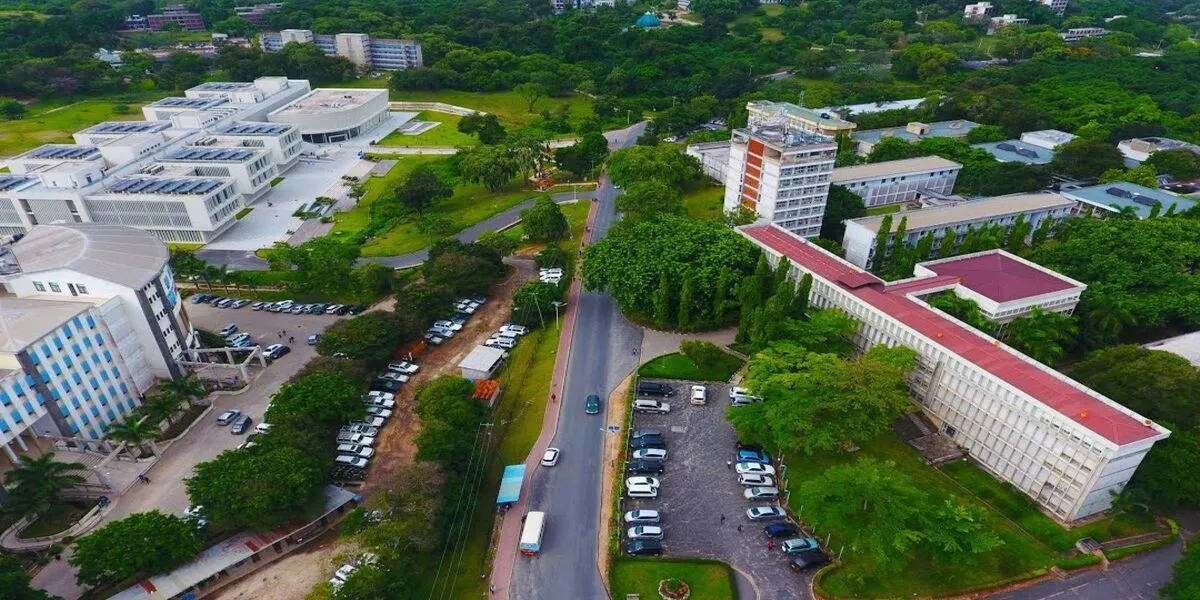
Responding to this paradigm shift, the University of Dar es Salaam (UDSM), Tanzania’s oldest and most prestigious public university, has announced a major curricular overhaul.
For the 2026/2027 academic year, UDSM is rolling out 29 newly accredited undergraduate programs. Far from minor administrative updates, this deployment represents a structural realignment of academic options.
The strategy behind these new courses, informed by an extensive review of more than 120 baseline bachelor’s programs, is clear: to align students’ skill sets directly with the evolving realities of the Tanzanian, East African regional, and global job markets.
From cutting-edge artificial intelligence to localised climate change management and specific applied scientific tracks, here is a comprehensive breakdown of how UDSM’s new offerings are set to redefine tertiary education.
Recommended Articles
Artificial Intelligence and Data Science
The centre of global business, engineering, and research has decisively shifted toward automation, algorithmic efficiency, and data-driven decision-making.
No longer the exclusive domain of Silicon Valley labs, predictive analytics and automated workflows are transforming East Africa’s fintech, agricultural logistics, and urban management platforms.
To address the shortage of localised expertise, UDSM has introduced specialised technology programs, prominently anchored at its constituent colleges, such as the Mkwawa University College of Education (MUCE) in Iringa.
- B.Sc. in Data Science and Artificial Intelligence: This flagship program bridges fundamental mathematical theory, advanced statistical computing, and machine learning architectures. Students will not simply learn how to operate existing AI tools; they will be trained to design, train, and deploy localised models capable of optimising real-world regional systems. From predicting agricultural crop yields using satellite data to managing smart city telemetry and automated infrastructure tracking, this degree introduces a highly technical cadre of computational experts directly into the regional workspace.
Powering the Green and Blue Economies: Environmental Sciences
Tanzania boasts extensive marine assets along its coastline and a vast network of inland freshwater lakes.
However, these systems face critical vulnerabilities due to overexploitation, pollution, and the escalating impacts of climate change.
Concurrently, international climate finance, corporate sustainability mandates, and regional conservation frameworks have created an urgent need for professionals who understand the intersection of policy, environment, and science.
UDSM’s new environmental and aquatic degrees are distributed strategically across specialised centres, including the Institute of Marine Sciences (IMS) in Zanzibar and the School of Aquatic Sciences and Fisheries Technology (SoAF):
- B.Sc. in Oceanography (IMS-Zanzibar): Positioned directly on the coast, this degree dives deep into marine physics, chemistry, geology, and biology. Graduates will lead ocean research, map maritime resources, analyse coastal erosion patterns, and support sustainable economic infrastructure along the Western Indian Ocean.
- B.Sc. in Aquaculture and Technology: Moving beyond traditional, low-yield fish farming methods, this program incorporates modern biological techniques, automated water monitoring, and efficient feed technology to scale up commercial aquaculture operations safely and sustainably.
- B.Sc. in Aquatic Environmental Sciences and Conservation: Focused explicitly on ecological restoration and the management of freshwater and marine habitats, this track equips conservationists to counter industrial degradation and preserve biodiversity hotspots.
- B.Sc. in Climate Change and Natural Resources Management (MUCE): This program synthesises climate modelling, carbon accounting, and socio-economic frameworks. It trains professionals to draft regional mitigation strategies, manage carbon credits, and advise government bodies on building climate-resilient infrastructure.
- B.Sc. in Environmental Health and Sustainability (MUCE): Bridging human health and environmental dynamics, this path examines how waste, sanitation, and chemical pollution affect communities, and develops sustainable interventions for municipal and industrial operators.
- B.Sc. in Environmental Assessment and Natural Resource Management: Tailored for corporate, industrial, and infrastructure compliance, this program trains experts to run Environmental Impact Assessments (EIAs), ensuring large-scale civil engineering, mining, and manufacturing projects meet strict ecological safeguards.
Spatial Intelligence: GIS and Urban Planning
The infrastructure boom across East Africa requires precise spatial modelling, advanced land mapping, and analytical urban design.
As cities expand exponentially, unplanned development threatens both community safety and environmental stability.
- B.Sc. in Geographical Information Systems (GIS) and Remote Sensing: This highly specialised scientific track trains students to interpret satellite imagery, manage large geospatial databases, and deploy advanced mapping technologies. Graduates will find immediate utility in tracking land-use changes, assessing geological risks, managing infrastructure networks, and guiding agricultural logistics.
- B.A. in Urban and Rural Development: Moving away from standard theoretical planning models, this course addresses the socio-economic and structural dynamics of regional settlement patterns. It equips graduates to design equitable, efficient, and robust master plans for modernising cities and balancing rural agricultural zones.
Modernising the Humanities: Language, Politics, and Heritage
A common critique of higher education across developing markets is that humanities curricula can become isolated from direct commercial application.
UDSM’s 2026/2027 curriculum overhaul resolves this by turning classical liberal arts into highly pragmatic, market-facing professions.
- B.A. in Translation and Interpretation: As East Africa acts as a central hub for continental trade via the AfCFTA and hosts major international diplomatic panels, the demand for certified translation experts is soaring. This degree formalises the study of multilingual mechanics, preparing professionals for simultaneous interpretation in corporate, legal, and international diplomatic arenas.
- B.A. in Literary Studies and Creative Writing / B.A. in Literary and Publishing Studies: These programs transform creative talent into a commercial asset, preparing students to lead in the digital media sector, independent publishing houses, content creation, and regional narrative branding.
- B.A. in Politics and International Relations: Designed for a world characterised by changing geopolitical alliances, this degree prepares future analysts, diplomats, and corporate advisors to evaluate cross-border policies, international trade dynamics, and structural political risk.
- B.A. in Historic Archives and Heritage Studies: Focused on the commercialisation and preservation of history, this track connects directly with cultural tourism management, national archive infrastructure, and historical asset tracking.
- B.A. in Religious Studies: This course provides deep sociological insights into religious pluralism, preparing graduates to manage communal relations, advise on non-governmental policy, and lead community development projects.
Specialised Biotechnology and Applied Sciences
Industrial growth requires specialised biological and chemical research. The new applied science programs at UDSM step away from generic laboratory theory to focus entirely on targeted industrial applications.
- B.Sc. in Food Biotechnology: This degree targets food security and preservation. Students explore enzymatic processing, genetic crop enhancements, structural food-quality analytics, and advanced fermentation science, all of which are vital for transforming agricultural outputs into value-added consumer goods.
- B.Sc. in Chemical Sciences: Providing a strong technical backbone for the manufacturing, pharmaceutical, and mining processing sectors, this course delivers advanced training in industrial chemistry, synthesis, and materials engineering.
Structural Alignment: Why This Overhaul Matters Now
This comprehensive curriculum expansion is not an isolated academic exercise; it is an economic necessity.
Historically, universities across East Africa have been critiqued for producing a mismatch between graduate capabilities and the practical demands of the job market.
By introducing standalone degrees in high-growth fields like data science, oceanography, agricultural biotechnology, and geospatial technologies, UDSM is actively correcting this imbalance.
Furthermore, the allocation of these degrees across multiple campuses—such as the Mlimani Campus, MUCE in Iringa, and IMS in Zanzibar—ensures that specialised training is delivered where practical resources are most accessible.
For instance, base-level oceanography at Zanzibar or environmental health in the rapidly developing Southern Highlands creates immediate, regional contexts for field research and hands-on learning.
Application and Admissions for Prospective Students
The 29 newly accredited programs are fully integrated into the UDSM Online Admission System (UDSM-OAS) for the 2026/2027 academic intake window.
Prospective students, local and international, can review specific entry requirements—including cut-off points and prerequisite subject combinations—directly on the official portal.
Key Steps for Applicants
- Portal Navigation: Access the centralised portal via admission.udsm.ac.tz.
- Profile Creation: Generate an applicant profile using valid index numbers and verified identification documents.
- Program Selection: Filter by the newly accredited 2026/2027 list to select programs across computing, natural sciences, or humanities.
- Tracking: Monitor selection status updates directly via the automated dashboard.
Final Thoughts
The introduction of 29 new undergraduate courses for the 2026/2027 academic year marks a defining moment in the history of the University of Dar es Salaam (UDSM.
By designing programs that align with global trends while remaining rooted in Tanzania’s specific ecological, technological, and socio-economic realities, UDSM is setting a new benchmark for higher education in the region.
For the incoming cohort of students, these degrees offer an unprecedented opportunity to acquire the exact skills that will build, power, and protect the world of tomorrow.
Good Luck.