
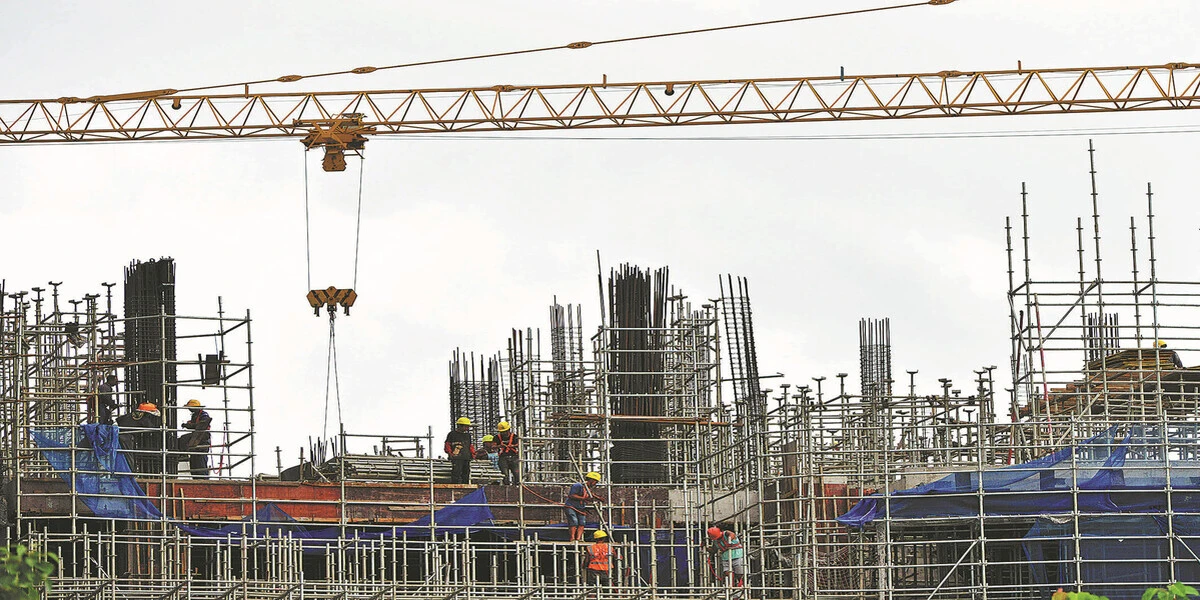
Civil engineering is the oldest, most fundamental branch of engineering. It is the invisible force that shapes human civilisation.
From the ancient aqueducts of Rome and the structural marvels of the Egyptian pyramids to the soaring hyper-skyscrapers, vast high-speed rail networks, and deep subsea transit tunnels of the modern era, civil engineers design, construct, and preserve the physical framework of society.
However, as we navigate through 2026, the discipline is undergoing a massive transformation. The intersection of civil engineering with advanced computing, material science, and data technology has birthed a new paradigm: Civil Engineering Technology.
Today’s civil engineers are no longer just manipulating concrete, steel, and soil using traditional mathematics.
They are deploying artificial intelligence, satellite-guided automation, building information modelling (BIM), and smart sensor networks to build resilient, sustainable, and hyper-connected smart cities.
This comprehensive guide offers an exhaustive look at the world of civil engineering and technology, exploring its core sub-disciplines.
This technological revolution is rewriting the rules, career development pathways, the landscape of premier global institutions, major scholarship opportunities, and the future of this vital profession.
Recommended Articles
- The 2026 Ultimate Guide to Foundation Engineering Interview Questions and Answers
- A List of Construction Companies & Home Builders Across China: The Complete Guide
- Which Engineering Scholarships are Open Right Now? (For 2027 Entry)
- How to Choose the Best Apple Macs For Engineers and Designers
- The Definitive Best 10 HBCUs in America Selection Breakdown
- Mastering GPT Prompt Engineering: The 2026 Ultimate Guide
What is Civil Engineering? The Bedrock of Society
At its core, civil engineering is a professional engineering discipline that deals with the design, construction, and maintenance of the physical and naturally built environment.
This includes public and private infrastructure assets such as roads, bridges, canals, dams, airports, sewage systems, pipelines, building structural frames, and transit networks.
The professional responsibilities of a civil engineer can be broadly broken down into three phases:
- Conception and Feasibility Analysis: Analysing environmental, geological, and demographic data to determine if a project can be built safely and sustainably within budgetary constraints.
- Mathematical Modelling and Design: Utilising advanced equations in mechanics, fluid dynamics, and materials science to create structurally sound blueprints that withstand extreme environmental forces (such as earthquakes, typhoons, and thermal expansion).
- Long-Term Resilience & Asset Management: Implementing monitoring systems to ensure structures age safely over decades, minimising lifecycle costs and environmental degradation.
The Pillars of Civil Engineering
Civil engineering is a vast field split into specialised sub-disciplines. Each addresses a specific challenge in built or natural environments.
Structural Engineering
Structural engineering focuses on the internal skeleton of human fabrications. Structural engineers design the load-bearing frameworks of buildings, bridges, and towers to resist forces such as gravity, wind shear, and seismic load.
They calculate internal stresses, moments, and deflections to ensure materials such as reinforced concrete, structural steel, and mass timber are utilised efficiently without risking structural collapse.
Geotechnical Engineering
Every structure must sit securely on or within the earth. Geotechnical engineering uses soil and rock mechanics to design foundations, retaining walls, tunnels, and earthen dams.
Geotechnical engineers analyse soil compaction, bearing capacity, slope stability, and groundwater flow to ensure that skyscrapers do not settle unevenly and retaining walls do not collapse under lateral soil pressures
Transportation Engineering
Transportation engineering focuses on moving people and goods safely, quickly, and sustainably. Engineers in this field design highways, urban rapid transit networks, airports, harbours, and rail lines.
Modern transportation engineering relies heavily on traffic flow theory, geometric roadway design, and algorithmic optimisation to ease urban congestion and integrate autonomous transit fleets.
Water Resources & Environmental Engineering
This discipline manages the delicate balance between human infrastructure and the water cycle. Engineers build massive water treatment plants, urban storm drainage systems, and flood barriers like levees and dams.
Their focus is on protecting communities from natural hazards such as storm surges, providing clean drinking water and treating industrial wastewater before returning it to the ecosystem.
Construction Engineering & Management (CEM)
CEM bridges abstract mathematical blueprints with physical on-site construction. Construction engineers oversee the execution of mega-projects, managing hundreds of workers, heavy machinery logistics, supply chains, and multi-million-dollar budgets.
They optimise schedules using critical path methods (CPM) and ensure that raw building materials match the precise strength and durability tolerances set by design teams.
The Core Software Driving Modern Infrastructure
The days of drafting tables, slide rules, and manual blueprints are completely gone. Modern civil engineering technology operates on a highly integrated digital stack.
Engineers use sophisticated software ecosystems to model, simulate, and stress-test infrastructure before a single shovel touches dirt.
Computer-Aided Design (CAD) & Spatial Modelling
Software packages such as AutoCAD Civil 3D and Bentley MicroStation serve as the geometric foundation of civil projects.
They allow engineers to perform precise site grading, map complex topographic contours, and lay out intricate highway corridors with automated calculations for curves, slopes, and earthwork volumes.
Building Information Modelling (BIM)
Autodesk Revit stands at the centre of modern structural coordination. BIM is more than just a 3D modelling tool; it is a live, data-rich repository where every element (a concrete column, an HVAC duct, an electrical run) holds specific physical and functional properties.
BIM prevents spatial clashes between disciplines, automates cost estimation, and provides a digital blueprint that facilities managers use throughout a building’s decades-long lifecycle.
Finite Element Analysis (FEA) & Structural Simulation
When stress-testing a skyscraper against high-velocity wind loads or simulated earthquakes, engineers use FEA software like SAP2000, ETABS, and ANSYS.
These platforms break complex, continuous physical structures into millions of smaller mathematical elements, solving thousands of structural equations simultaneously to map stress distribution, identify points of failure, and optimise material efficiency.
Hydrological & Fluid Flow Modelling
For environmental and water resource projects, software like HEC-RAS (Hydrologic Engineering Centre’s River Analysis System) is the industry standard.
It models the hydraulics of water flow through natural rivers and engineered channels, allowing engineers to accurately predict floodplain boundaries, design stable bridge piers, and simulate how city drainage systems respond to major storms.
Civil Engineering Technology
Civil engineering technology is rapidly shifting from passive physical design to reactive, intelligent structural systems.
The integration of advanced field tech has turned static concrete into data-driven digital infrastructure.
Digital Twins & Cyber-Physical Infrastructure
A Digital Twin is a dynamic, virtual replica of a physical asset—such as a bridge, a water treatment plant, or an entire city neighbourhood—updated in real time via Internet of Things (IoT) data.
By embedding fibre-optic strain gauges, tiltmeters, and acoustic sensors directly into newly poured concrete structures, the physical asset sends real-time structural health updates to its digital twin.
Artificial intelligence models analyse this data stream to predict structural fatigue, flag cracks before they are visible to human inspectors, and schedule maintenance before a component fails.
Autonomous Construction & Advanced Robotics
The physical work on construction sites is increasingly automated. Heavy machinery—like excavators, bulldozers, and grading rigs—is routinely fitted with GPS-guided machine control systems.
These rigs operate autonomously or semi-autonomously, executing earthmoving plans directly from 3D CAD files with sub-centimetre accuracy, drastically speeding up excavation phases while reducing fuel consumption.
Simultaneously, Drones (UAVs) equipped with high-resolution LiDAR (Light Detection and Ranging) sensors fly over expansive project zones daily. They capture millions of precise data points, creating real-time 3D point-cloud terrain models. These scans automate progress tracking, measure material stockpile volumes, and inspect hard-to-reach bridge structures without putting workers in danger.
Material Science Innovation: Green Concrete and Smart Steel
Traditional concrete production accounts for roughly 8% of global carbon emissions. To address this environmental impact, materials scientists and civil engineers have developed Green Concrete by substituting traditional Portland cement with industrial byproducts such as fly ash and slag, or by incorporating captured carbon dioxide through carbon curing technologies.
Furthermore, the introduction of Self-Healing Concrete has altered asset management timelines. This material embeds microscopic capsules filled with specific bacterial spores and nutrient media within the concrete mix.
When a micro-crack forms and water enters, the water breaks the capsules open. The bacteria reactivate, consuming the nutrients and secreting calcium carbonate (limestone), which seals the crack from within and prevents water from corroding internal steel reinforcement.
Best Universities for Civil Engineering
Choosing the right educational foundation is essential for mastering both traditional engineering mechanics and advanced computing tools required by the modern industry.
Here are the leading global universities for civil engineering, recognised for their elite research budgets, state-of-the-art laboratory testing infrastructure, and direct connections to major civil industries.
1. Massachusetts Institute of Technology (MIT)
- Location: Cambridge, Massachusetts, USA
- Overview: MIT’s Department of Civil and Environmental Engineering (CEE) focuses on blending traditional engineering with data analytics, computational mechanics, and planetary science. The institute leads research into macro-scale smart cities, advanced material physics, and resilient urban design.
2. University of California, Berkeley
- Location: Berkeley, California, USA
- Overview: UC Berkeley is a top choice for structural and geotechnical engineering, driven by its proximity to active fault lines along the Pacific Rim. The university operates the world-renowned Pacific Earthquake Engineering Research Centre (PEER), giving students access to massive shaking tables that simulate real-world seismic events on multi-story building models.
3. Tsinghua University
- Location: Beijing, China
- Overview: Tsinghua University stands as a global hub for civil engineering and construction technology, directly contributing to massive domestic high-speed rail networks and mega-skyscraper construction portfolios. The school offers top-tier facilities for structural mechanics, concrete material science, and large-scale hydraulic engineering.
4. National University of Singapore (NUS)
- Location: Singapore
- Overview: Facing the challenges of a dense, island nation, NUS leads the world in underground space utilisation, coastal resilience infrastructure, and Modular Integrated Construction (MiC). Their civil engineering tracks focus heavily on digital twins, high-density smart city networks, and deep maritime engineering.
5. Imperial College London
- Location: London, United Kingdom
- Overview: Imperial College London provides a comprehensive, technically rigorous European hub for civil and environmental design. The university features world-class computing facilities and specialised testing labs for structural dynamics, soil mechanics, and intelligent transport system design.
Elite Civil Engineering Scholarships
Pursuing a high-tech degree in civil engineering can be capital-intensive. Fortunately, global foundations, professional organisations, and corporate partners offer extensive funding tracks to secure top-tier talent.
Global & Professional Society Foundations
- ASCE Foundation Scholarships: The American Society of Civil Engineers administers numerous undergraduate and graduate financial aid funds (such as the Samuel Fletcher Tapman ASCE Student Chapter Scholarship). These awards target students who demonstrate exceptional academic merit, leadership within student chapters, and a commitment to infrastructure research.
- ICE Research Fellowships: The Institution of Civil Engineers (UK) provides targeted grant funding and student awards for research initiatives that align with low-carbon structural technologies, hydraulic flood defence, and smart infrastructure operations.
Major International Scholarship Schemes
- Fulbright Foreign Student Program: Funded by the U.S. Department of State, this program covers full tuition, airfare, a living stipend, and health insurance for exceptional international graduates seeking to pursue a Master’s or PhD in engineering disciplines at top-tier American institutions (like MIT or UC Berkeley).
- DAAD Scholarships (Germany): The German Academic Exchange Service provides fully funded master’s and doctoral scholarships for international students, specifically targeting advanced engineering tracks like Computational Mechanics or Structural Engineering at Germany’s elite TU9 technical universities.
- Erasmus Mundus Joint Master’s Degrees: A flagship European Union program that funds highly competitive, multi-university master’s tracks. Students interested in advanced infrastructure can pursue specialised programs such as the Master’s in Earthquake Engineering and Engineering Seismology (MEEES), which is offered across multiple European centres of excellence.
Navigating the Career Pipeline
To legally stamp design blueprints and oversee public infrastructure works, a civil engineer must navigate a strict professional licensing process designed to protect public health and safety.
Phase 1: Academic Foundation
Aspiring engineers must complete a Bachelor of Science (B.S) degree in Civil Engineering from a university accredited by bodies like ABET (Accreditation Board for Engineering and Technology) in the United States or equivalent national professional boards internationally.
Phase 2: The Fundamentals of Engineering (FE) Exam
During their final undergraduate year or immediately upon graduation, students sit for the FE Civil Exam.
This comprehensive, computer-based exam evaluates knowledge across foundational engineering topics, including fluid mechanics, statics, dynamics, structural analysis, and engineering economics.
Passing this exam earns the individual the title of Engineer-in-Training (EIT) or Civil Engineering Intern (CEI).
Phase 3: Professional Experience
An EIT must have at least 4 years of verifiable, progressive work experience under the direct supervision of a licensed Professional Engineer.
During this phase, interns perform structural calculations, draft field site maps, and manage construction compliance checks.
Phase 4: The Professional Engineer (PE) Exam
After completing the required work experience, the intern sits for the rigorous PE Civil Exam.
This intense, specialised evaluation tests an engineer’s advanced competency across a chosen sub-discipline (Structural, Geotechnical, Transportation, Water Resources, or Construction).
Passing the PE exam grants the engineer their state or national license, legally allowing them to sign, seal, and submit engineering drawings to public building departments.
Frequently Asked Questions (FAQs)
Q1: What is the main difference between Civil Engineering and Architecture?
A: Architects focus primarily on the aesthetics, space layout, human functionality, and visual design of a structure. Civil/Structural engineers take the architect’s creative vision and calculate the mathematical, physical, and material realities required to ensure the building can safely support its own weight and withstand external forces such as wind, earthquakes, and live load.
Q2: How is Artificial Intelligence currently used in civil engineering technology?
A: AI is deployed across multiple phases of a project. In the design phase, Generative Design AI can run through thousands of structural variations to find the configuration that uses the least material while maintaining structural integrity. During operations, AI algorithms analyse real-time vibration data from sensors on bridges and dams to detect structural damage early, optimising maintenance schedules before manual inspections would catch an issue.
Q3: What is Building Information Modelling (BIM), and why is it important?
A: BIM is a smart, 3D digital modelling framework that connects structural layout with physical properties and construction data. It allows structural, mechanical, electrical, and plumbing engineers to work together virtually on a project. This catches structural clashes early, automates cost calculations, and provides owners with an accurate asset-management database that lasts throughout the building’s operational life.
Q4: Why is a Professional Engineer (PE) license so important for a career in civil engineering?
A: A PE license is the legal authorisation required to sign and seal structural blueprints, approve public works projects, and offer engineering consulting services to the public. Holding a PE license indicates that an engineer has met high standards of education, experience, and testing, unlocking senior leadership positions and higher earning potential.
Q5: What role does civil engineering play in climate change mitigation?
A: Civil engineers are on the front lines of climate adaptation. They design resilient coastal barriers, upgrade municipal stormwater drainage networks to withstand extreme weather, and develop low-carbon materials such as green concrete to reduce construction emissions. They also design the structural foundations for renewable energy assets like offshore wind arrays and utility-scale solar installations.
Conclusion
Civil engineering is no longer defined solely by moving earth and pouring heavy concrete. As we navigate the complexities of climate change, rapid global urbanisation, and resource scarcity, the profession has evolved into a high-tech discipline that relies on data, software simulation, and advanced materials.
By merging traditional physics and structural design principles with cutting-edge tools such as Building Information Modelling (BIM), autonomous robotics, self-healing materials, and artificial intelligence, modern civil engineering tech ensures that our roads, bridges, and cities are built sustainably and equipped to last for generations.
Thats All.
Like Our Page on Facebook | Share to educate others about the list of Construction Companies & Home Builders Across China.

