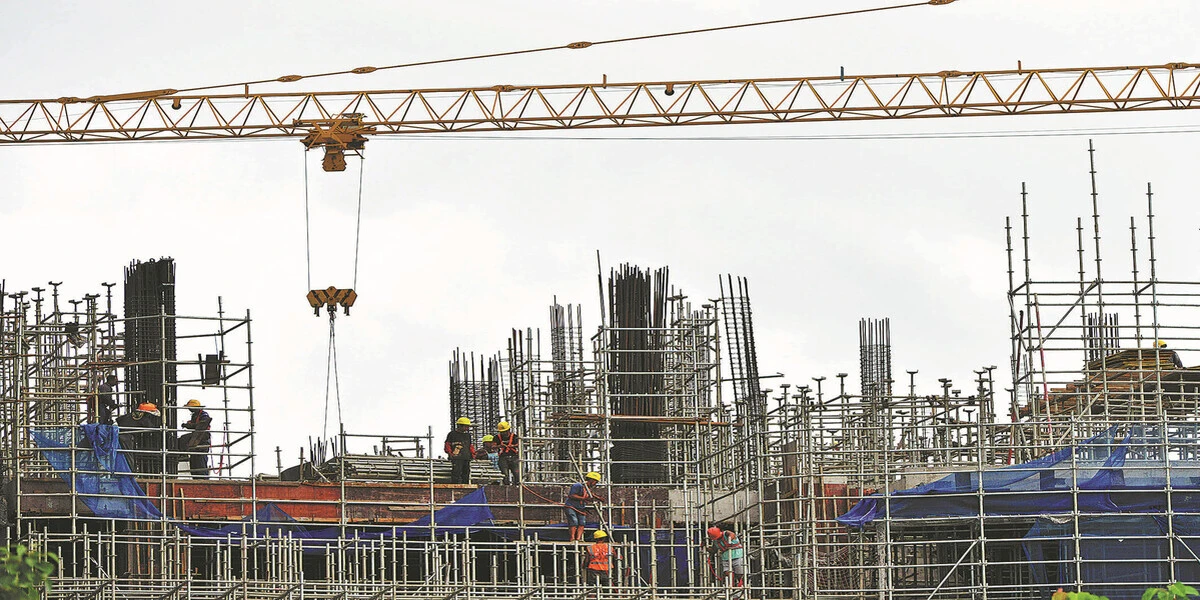
The scale, velocity, and technical sophistication of the Chinese Construction Companies and home-building industry are unmatched globally.
Driven by decades of rapid internal urbanisation, major state-directed infrastructure initiatives, and a massive pivot toward off-site fabrication, China is home to the largest engineering contractors on earth.
Also Read: Tekla Structural Designer vs. ETABS: The US Engineer’s Guide to Complex Seismic & Lateral Design
For international developers, state procurement entities, supply chain managers, and real estate investors, engaging with Chinese construction companies provides a direct line to unprecedented production capacity, highly optimised material supply chains, and advanced technical capabilities like digital twins, high-speed automated prefabrication, and complex structural engineering.
This guide provides an exhaustive review of China’s leading construction conglomerates, commercial real estate master-builders, and innovative modular/prefabricated housing manufacturers.
It details their geographical locations, operational duties, corporate responsibilities, and structural advantages.
Recommended Articles
- Which Engineering Scholarships are Open Right Now? (For 2027 Entry)
- How to Choose the Best Apple Macs For Engineers and Designers
- The Definitive Best 10 HBCUs in America Selection Breakdown
- How to Apply for The Knight-Hennessy Scholars Program: The Step-by-Step Guide
- The Ultimate Guide to Tanzania’s Standard Gauge Railway (SGR) Project
Table of Contents
The Dynamic Ecosystem of Chinese Construction & Housing
The contemporary Chinese construction market operates as a multi-tiered, highly structured hierarchy. At the top sit massive State-Owned Enterprises (SOEs) under the direct supervision of the State-Owned Assets Supervision and Administration Commission (SASAC).
These mega-conglomerates act as national champions, managing macro-infrastructure projects domestically and spearheading global turnkey assets through the Belt and Road Initiative (BRI).
Alongside these infrastructure giants are mixed-ownership and private property developers that serve as the nation’s premier residential home builders.
Finally, a rapidly growing sector of specialised, high-tech modular and prefabricated housing factories manufactures volumetric buildings, space cabins, and steel-frame structures for rapid deployment worldwide.
State-Owned Infrastructure & Civil Engineering Conglomerates
These public-backed behemoths represent the heavy muscle of global engineering. They occupy the top five slots in the Engineering News-Record (ENR) global contractor rankings, carrying out massive infrastructure projects ranging from deep-bore subways to super-tall skyscrapers.
1. China State Construction Engineering Corporation (CSCEC)
As one of the Construction Companies in China, CSCEC consistently ranked as the number one construction contractor in the world by annual revenue.
CSCEC is an industrial powerhouse with a massive workforce and an operational footprint spanning more than 100 countries.
- Headquarters Location: Beijing, China.
- Primary Corporate Responsibilities: Serving as the master general EPC contractor for mega-scale urban centres, landmark civic structures, and high-capital real estate portfolios; deploying state capital and structuring long-term public-private partnership (PPP) frameworks for international municipal developments; pioneering national building science research, including high-performance structural materials and automated climbing formwork.
- Core Engineering Duties: Executing foundation, structural, and architectural works for projects exceeding billions of dollars in capitalisation; Formulating, testing, and pumping high-strength concrete mixes vertically to heights exceeding 500 meters for super-tall skyscrapers; Directing multi-tiered supply chains to optimise material procurement, keeping structural costs substantially lower than global market averages.
2. China Railway Group Limited (CREC)
As one of the Construction Companies in China, CREC is a heavy civil engineering giant specialising in high-speed rail networks, extensive subterranean tunnelling projects, and large-scale transportation logistics.
- Headquarters Location: Beijing, China.
- Primary Corporate Responsibilities: Overseeing state-level rail infrastructure master planning, geological surveying, and structural route alignments; developing and manufacturing heavy industrial machinery, including custom tunnel-boring machines (TBMs) and specialised bridge girder launchers; and managing asset investments in mining, resource extraction, and transport-adjacent commercial properties.
- Core Engineering Duties: Mapping, boring, and stabilising deep-earth rail tunnels through unstable geological strata and high-pressure water tables; constructing long-span rail bridges, elevated viaducts, and highly reinforced track beds optimised for high-speed seismic dampening; and integrating complex mechanical, electrical, and digital signalling networks across extensive transnational transportation lines.
3. China Railway Construction Corporation Limited (CRCC)
Operating in parallel with CREC, CRCC is a major infrastructure contractor responsible for an extensive share of China’s domestic high-speed rail tracks, municipal subways, and highway systems.
- Headquarters Location: Beijing, China.
- Primary Corporate Responsibilities: Executing high-volume, turnkey EPC contracts for domestic and international high-speed passenger rail networks, providing engineering design, architectural consulting, and feasibility studies for cross-border transit corridors, and developing real estate and residential estates along major rapid transit routes through dedicated development subsidiaries.
- Core Engineering Duties: Laying heavy-ballast and ballastless high-speed track systems with sub-millimetre tolerances to ensure operational safety at high speeds, excavating subway stations, ventilation shafts, and complex pedestrian interchanges within heavily congested urban centres, and implementing large-scale rockfall netting, slope stabilisation structures, and retaining walls along mountain expressways.
4. China Communications Construction Company (CCCC)
As one of the Construction Companies in China, CCCC is a world leader in marine engineering, port construction, deep-water dredging, and complex oceanic bridge structures.
- Headquarters Location: Beijing, China.
- Primary Corporate Responsibilities: Designing, financing, and constructing commercial shipping harbours, deep-water ports, and artificial marine islands; leading international maritime logistics infrastructure developments along global trade routes; and Manufacturing heavy port container cranes and automated cargo-handling systems through its globally dominant subsidiary, ZPMC.
- Core Engineering Duties: Executing large-scale marine dredging, underwater sheet piling, and soft-soil land reclamation projects; fabricating, floating, and sinking massive concrete caissons and immersed tunnel tubes for trans-oceanic crossings; and conducting advanced hydrodynamic and wave-action modelling to ensure coastal assets resist major typhoons and rising sea levels.
5. Power Construction Corporation of China (PowerChina)
As one of the Construction Companies in China, PowerChina is a highly specialised state conglomerate specialising in large-scale hydroelectric dams, renewable energy networks, and water conservancy systems.
- Headquarters Location: Beijing, China.
- Primary Corporate Responsibilities: Acting as the primary engineering entity for state-level clean energy projects, including hydro, solar arrays, and offshore wind farms; developing global river basin master plans, environmental restoration projects, and cross-regional water diversion channels; and providing comprehensive survey, design, construction, and operational lifecycle services for power infrastructure.
- Core Engineering Duties: Pouring massive roller-compacted concrete (RCC) gravity dams and structural spillways designed to withstand extreme hydraulic pressures; boring massive underground power caverns, penstocks, and surge shafts to feed industrial hydroelectric turbines; and installing high-capacity offshore wind turbine foundations, submarine cabling networks, and grid-tied substation platforms.
Also Read: Ultimate 2026 Hardware Guide for Revit, Civil 3D, and Tekla Structures: Stop the Viewport Lag
6. Shanghai Construction Group (SCG)
As one of the Construction Companies in China and ranked 8th globally, SCG represents a premier regional state-owned enterprise that has evolved into a global force, renowned for high-tech urban engineering and super-tall skyscraper construction.
- Headquarters Location: Shanghai, China.
- Primary Corporate Responsibilities: Serving as the primary urban development arm for the modernisation of Shanghai and other major domestic metropolises; pioneering digital twin technologies, automated climbing formwork, and advanced structural health monitoring systems; and managing highly specialised subcontracting networks across architectural finishes, historical restorations, and complex HVAC system designs.
- Core Engineering Duties: Constructing hyper-dense urban building complexes while minimising vibration, sound, and structural disruption to adjacent historical structures; utilising Building Information Modelling (BIM) to track structural deformation, thermal stresses, and wind load dynamics on skyscrapers in real time; and executing large-scale urban deep-basement excavations, utilising top-down construction methods to protect high-density surrounding streets.
Premier Commercial & Residential Property Developers (Home Builders)
While the heavy infrastructure SOEs shape the physical geography of transit and power, these developers operate as master home builders.
They specialise in high-density residential estates, master-planned smart communities, and large mixed-use complexes.
1. China Vanke Co., Ltd.
As one of the Construction Companies in China, Vanke is widely recognised as one of China’s most stable, quality-centric residential developers, focusing heavily on mass-market, durable urban housing ecosystems.
- Headquarters Location: Shenzhen, Guangdong Province, China.
- Primary Corporate Responsibilities: Acquiring urban land plots through competitive state bidding processes; assembling residential blueprints; developing green, family-oriented residential estates equipped with integrated community spaces and retail centres; and managing property maintenance, smart-home software networks, and community services through Vanke Service.
- Core Engineering Duties: Standardising residential apartment layouts to maximise space efficiency, natural ventilation, and structural load distribution; enforcing precast concrete implementation to accelerate construction schedules while minimising on-site material waste; and supervising finishing contractors across thousands of apartment units, ensuring compliance with residential thermal and acoustic insulation standards.
2. Poly Developments and Holdings (Poly Real Estate)
A core subsidiary of the state-owned Poly Group, this firm is a highly resilient, well-capitalised home builder that handles mid- to luxury-scale residential developments.
- Headquarters Location: Guangzhou, Guangdong Province, China.
- Primary Corporate Responsibilities: Executing high-end residential real estate developments that blend traditional design elements with modern sustainable materials; developing cultural real estate assets, including state-of-the-art theatres, convention centres, and civic exhibition galleries; and partnering with local municipal governments to lead complex urban renewal projects and old-town structural regenerations.
- Core Engineering Duties: Managing deep foundation excavation and slurry wall installation within heavily congested urban historic districts, selecting, testing, and sourcing premium structural finishing materials, including natural stone facades, reinforced safety glass, and energy-efficient window systems, and deploying integrated solar array systems and rainwater collection loops across multi-building residential complexes to achieve green certifications.
3. Longfor Group Holdings
As one of the Construction Companies in China, Longfor is a premier private developer celebrated for its financial discipline and its unique ability to combine high-end residential estates with mega-scale shopping malls (known as “Paradise Walks”).
- Headquarters Location: Chongqing, China.
- Primary Corporate Responsibilities: Synergising transit-oriented developments (TODs) by building high-density residential towers directly atop subterranean subway and rail hubs; creating luxury villa complexes, high-rise condominiums, and innovative rental apartment brands designed for young professionals; and providing premium property management services using AI-driven predictive facility maintenance platforms.
- Core Engineering Duties: As one of the Construction Companies in China, Core Engineering Duties include solving complex structural load-transfer puzzles associated with building massive residential towers over active subterranean transit tunnels and train basements, designing advanced, multi-layered structural soundproofing systems to isolate residential spaces from nearby retail and transit noise, and implementing landscape architecture, artificial waterways, and urban micro-climate greenery into high-density housing layouts.
4. China Overseas Land & Investment Limited (COLI)
As one of the Construction Companies in China, COLI, a subsidiary of CSCEC, is an elite property developer specialising in high-end luxury residential projects and premium commercial skyscrapers.
- Headquarters Location: Hong Kong / Shenzhen, China.
- Primary Corporate Responsibilities: Targeting prime core-city locations for ultra-premium residential and grade-A commercial tower developments; maintaining international capital market compliance; serving as a bridge for foreign real estate investments into mainland assets; and driving premium eco-friendly residential benchmarks across mainland Tier-1 cities.
- Core Engineering Duties: Supervising precision glass curtain wall installations and premium exterior structural framing, integrating high-end mechanical systems, including smart centralised climate control, active indoor air filtration, and destination-dispatch elevator banks, and implementing rigorous structural testing for extreme seismic and wind shear resistance on slender luxury high-rises.
Specialised Niche & Regional State-Owned Builders
Beyond the national conglomerates, specialised state-owned entities provide highly targeted technical construction capabilities, ranging from heavy petrochemical processing setups to specialised green buildings.
1. Metallurgical Corporation of China (MCC)
As one of the Construction Companies in China, MCC is the primary builder responsible for China’s massive industrial steel and metal processing plants, providing specialised heavy industrial EPC services.
- Headquarters Location: Beijing, China.
- Primary Corporate Responsibilities: Acting as the foundational builder for domestic and international mining, smelting, and steel production infrastructure, pioneering large-scale structural steel fabrication systems used across other civil construction sectors.
- Core Engineering Duties: Constructing massive, high-temperature blast furnaces, raw material storage yard frameworks, and high-capacity automated rolling mills, and executing heavy industrial foundations capable of supporting immense, vibrating mechanical processing equipment.
2. China National Chemical Engineering Group (CNCEC)
As one of the Construction Companies in China, CNCEC is a highly specialised engineering group focusing entirely on petrochemical processing facilities, chemical plants, and heavy refinery setups.
- Headquarters Location: Beijing, China.
- Primary Corporate Responsibilities: Providing global turnkey EPC solutions for complex oil refineries, LNG terminals, and fertiliser manufacturing complexes, ensuring rigorous compliance with hazardous material containment, chemical processing, and environmental safety codes.
- Core Engineering Duties: Erecting complex chemical distillation towers, high-pressure processing pipelines, and specialised cryogenic storage tanks, installing advanced automated industrial safety override systems and hazardous environmental gas detection loops.
3. Beijing Urban Construction Group (BUCG)
As one of the Construction Companies in China, BUCG is a top-tier regional builder recognised for its deep expertise in large civic architecture, high-capacity subways, and international aviation terminals.
- Headquarters Location: As one of the Construction Companies in China, BUCG is headquartered in Beijing.
- Primary Corporate Responsibilities: Serving as a primary general contractor for major national civic projects in the capital region, including Olympic venues and international airport hubs (e.g., Beijing Daxing International Airport) and expanding urban rail transit lines across major domestic metropolitan zones.
- Core Engineering Duties: Erecting long-span, complex spatial steel roof structures over massive public airport terminals and stadium seating arrays, managing highly accurate subterranean boring operations in proximity to dense municipal utility networks and historic sites.
4. Shaanxi Construction Engineering Holding Group (SCEGC)
As one of the Construction Companies in China, SCEGC represents a strong provincial-level building conglomerate that has scaled nationally and internationally, focusing heavily on vertical supply chain integration.
- Headquarters Location: Xi’an, Shaanxi Province, China.
- Primary Corporate Responsibilities: Driving regional development across Northwest China; leading international infrastructure projects in Central Asia and parts of Africa; and operating internal building-material production bases, ensuring direct control over raw-material supply chains.
- Core Engineering Duties: Constructing large industrial manufacturing parks, educational campuses, and large-scale public housing blocks, and deploying regional precast concrete networks to supply localised materials across vast interior provinces.
Also Read: The Structural Engineering Software Dilemma: Which Should You Learn First?
Innovative Prefabricated & Modular Home Builders
As global building trends shift toward off-site modular assembly to counter rising on-site labour costs, Chinese modular manufacturers have pioneered highly efficient factory production lines.
They ship fully finished volumetric modules worldwide.
| Company Name | Production HQ Location | Core Technical Specialty | Primary Export Markets |
| K-HOME (Qingdao K-Home Steel Structure) | Xinxiang, Henan / Qingdao, Shandong | Engineering site housing, flat-pack container systems, and long-life PEB industrial warehouses. | Middle East, Africa, Central Asia. |
| Hebei YJD Prefabricated House Co. | Shijiazhuang, Hebei Province | Volumetric expandable container homes, Apple pods, and luxury architectural space cabins. | North America, Western Europe, Australia. |
| HiBuild Steel System International | Hangzhou, Zhejiang Province | Pre-engineered steel buildings (PEBs), multi-story structural modular framing networks. | Europe, Middle East, South America. |
| Lian Sheng International | Weifang, Shandong Province | 3D quick-assembly container houses, foldable modular cottages, and resort micro-cabins. | Southeast Asia, Oceania, Japan. |
1. K-HOME (Qingdao K-Home Steel Structure Co., Ltd.)
As one of the Construction Companies in China, K-HOME is an established modular construction partner specialising in complete site housing systems, durable flat-pack containers, and Pre-engineered Buildings (PEBs).
- Headquarters & Production Bases: Xiaodian Industrial Park, Xinxiang City, Henan Province / Qingdao, Shandong Province, China.
- Primary Corporate Responsibilities: As one of the Construction Companies in China, the Primary Corporate Responsibilities include Designing, manufacturing, and exporting heavy-duty, long-lifespan modular container units and industrial steel frames, providing full EPC lifecycle management for self-contained construction camps, oilfield housing, and temporary school or medical complexes, and engineering specialised structural frames and insulation packages capable of withstanding extreme environmental conditions (such as high wind zones or desert heat).
- Core Industrial Duties: Operating automated CNC steel-processing lines to weld and punch high-strength galvanised steel structural frames; applying thick protective anti-corrosion marine coatings; integrating premium, high-density rockwool or polyurethane insulation panels; and Pre-fitting electrical runs, plumbing manifolds, and commercial-grade vinyl flooring to deliver immediate plug-and-play field usability.
2. Hebei YJD Prefabricated House Co., Ltd.
As one of the Construction Companies in China, YJD is a highly innovative manufacturer specialising in high-end modern residential container designs, expandable modular houses, and futuristic architectural pods.
- Headquarters & Production Base: Shijiazhuang, Hebei Province, China.
- Primary Corporate Responsibilities: Designing and manufacturing sleek, architectural-grade modular homes for urban backyard extensions, eco-resorts, and tiny-home villages; navigating strict global structural import regulations, ensuring all components match the destination country’s code framework; and Pioneering hydraulic and mechanical folding mechanisms that allow oversized homes to compress into standard shipping container profiles.
- Core Industrial Duties: Assembling high-precision lightweight steel structures integrated with panoramic dual-glazed low-emissivity (Low-E) tempered safety glass, installing smart-home automation systems, architectural LED lighting tracks, and premium interior cabinetry directly on factory floors, and conducting rigorous factory testing for watertight seals, structural balance under crane loads, and automated folding clearance checks.
Detailed Analysis of Corporate Responsibilities vs. Engineering Duties
To navigate this extensive list of Construction Companies & Home Builders Across China, it is vital to contrast their high-level institutional responsibilities against their practical, everyday on-site or factory engineering duties.
Institutional Corporate Responsibilities
The macro role of these entities involves managing legal, financial, environmental, and safety risks. For state conglomerates, this means aligning project choices with national mandates such as the Belt and Road Initiative, establishing multi-million-dollar financing facilities, and maintaining Special Grade construction qualifications.
For home builders and modular construction companies, corporate responsibility focuses on securing land development rights, obtaining international material certifications (such as UL, CE, or AS/NZS), and handling logistics across global shipping lines.
On-Site & Factory Engineering Duties
The practical execution of these responsibilities involves everyday technical tasks on the ground:
- Geotechnical & Structural Alignment: Surveying soil capacities, managing deep-excavation slurry walls, and calculating precise wind-load resistance coefficients for high-rises.
- Materials Science Optimisation: Mixing precise concrete slumps capable of withstanding high structural pressures and executing non-destructive testing (NDT) on steel weld seams.
- Mechanical & Electrical Integration: Pre-wiring volumetric modular pods with localised electrical systems, installing centralised smart climate control, and running comprehensive hydrostatic pressure tests on plumbing arrays to ensure zero leaks.
Global Procurement Blueprint for Working with Chinese Builders
Engaging a Chinese firm for a major infrastructure project or sourcing modular houses for import requires a clear, structured procurement roadmap.
Step 1: Verification of Ministry Qualifications (MOHURD)
Before signing contracts with any Construction Companies, infrastructure providers or regional contractors, inspect their official qualifications issued by the Ministry of Housing and Urban-Rural Development (MOHURD).
Ensure they hold a Special Grade rating for the specific sector required (e.g., Civil Building, Highway, or Marine Engineering).
This rating serves as legal verification of their elite technical capacity, sound financial status, and robust safety record.
Step 2: Component Harmonisation with Local Codes
When procuring modular buildings from manufacturers such as K-HOME or YJD, you must provide clear documentation of your country’s local building codes.
Instruct the factory to adapt its standard production run to include:
- Electrical Systems: Swapping out domestic wires and breakers for localised, certified options (such as UL-listed wires for North America or SAA/CE components for Oceania and Europe).
- Structural Load Calculations: Requesting engineering variants that alter steel column thickness and floor framing to withstand localised snow loads, high coastal wind forces, or specific regional seismic design criteria.
Step 3: Deployment of Independent Third-Party Inspection Teams
Do not rely solely on internal factory quality-assurance data. Retain an independent, international testing agency (such as SGS, Bureau Veritas, or TÜV SÜD) to monitor production milestones directly on the factory floor or construction site.
- For Modular Housing: Mandate ultrasonic non-destructive testing (NDT) on primary steel chassis welds, verify insulation density, and require a continuous 24-hour high-pressure water test to confirm roof and window seals are entirely watertight.
- For Major Civil Projects: Monitor concrete core crush tests, verify rebar spacing layouts against structural plans, and ensure precise alignment of foundational piles.
Step 4: Structuring Logistics & Heavy Shipping Protection
Volumetric modules are highly susceptible to structural distortion and salt-air corrosion during long ocean transits.
- Incoterms: Utilise clear FOB (Free On Board) or CIF (Cost, Insurance, and Freight) terms, clearly establishing when risk transfers from the manufacturer to your logistics team.
- Physical Protection: Require the factory to apply heavy-duty structural steel cross-bracing inside each volumetric pod to prevent warping during crane lifts. All open faces must be sealed with heavy construction companies’ industrial. UV-resistant shrink wrap to prevent salt spray from damaging internal finishes during ocean transit.
Frequently Asked Questions (FAQs): Construction Companies
Q1: What makes a “Special Grade” qualification different from standard building licenses in China?
A: The Special Grade qualification is the premier engineering ranking granted by China’s Ministry of Housing and Urban-Rural Development (MOHURD). Unlike standard Grade I, II, or III licenses that restrict a contractor to specific project heights or investment caps, a Special Grade designation indicates a company has elite capital reserves, advanced national R&D centres, and a clean long-term safety record. It legally empowers the firm to undertake complex, high-investment EPC contracts of any scale globally.
Q2: Can Chinese modular homes comply with strict Western fire-safety and energy insulation standards?
A: Yes, they can. Top export-focused modular builders achieve compliance by adjusting their material inputs to meet destination-country requirements. They swap standard insulation for high-density, non-combustible rockwool or fire-rated polyurethane cores that meet international safety rules. Buyers should explicitly list these required fire-resistance ratings (FRR) and insulation R-values in their procurement contracts.
Q3: What is the operational difference between an infrastructure SOE and a residential home builder in China?
A: Infrastructure SOEs (e.g., CSCEC, CREC, CCCC) are state-backed giants focused on macro civil engineering projects like high-speed rail lines, marine ports, hydroelectric dams, and major civic facilities. Residential home builders (e.g., Vanke, Longfor) operate primarily as property developers. Their focus is on land plot acquisition, master-planning high-density urban residential estates, managing local housing sub-contractors, and providing long-term community property management.
Q4: How are volumetric modular homes anchored onto a local project site after arriving from China?
A: When the finished volumetric units arrive on-site, a local general contractor crane-lifts them onto a pre-poured, permanent concrete foundation (such as a concrete slab or stem wall embedded with structural steel anchor bolts). The modules feature heavy-duty, integrated corner castings that are bolted or welded directly to the foundation anchors and to adjacent modules, creating a highly rigid, seismic-resistant structural matrix.
Q5: How do independent third-party audits protect international buyers when sourcing from Chinese builders?
A: Independent audits provide unbiased, on-site technical oversight. Third-party engineering inspectors check weld penetration depths using non-destructive testing, measure steel galvanisation thicknesses with digital gauges, and test structural seals under simulated storm conditions. This ensures that any manufacturing defects or code variations are caught and repaired on the factory floor before the structures are packed, crated, and shipped across ocean channels.
Conclusion On Construction Companies
The expansive ecosystem of construction companies and home builders across China offers an efficient mix of massive scale, digital integration, and off-site manufacturing.
Whether utilising the heavy engineering capabilities of Tier-1 giants like CSCEC and CCCC to execute multi-billion-dollar infrastructure projects, or partnering with specialised factory fabricators like K-HOME to rapidly deploy modular workforce communities, the Chinese construction market delivers high-value structural solutions.
Successfully tapping into this powerful manufacturing machine requires active procurement management.
By conducting thorough due diligence on MOHURD licenses, harmonising structural blueprints with local regional codes, and deploying independent third-party quality audits, international developers can capture significant cost efficiencies and accelerated timelines while maintaining world-class structural safety and building quality.
Tell us about construction companies and home builders across China. Drop your answer in the comments form below.
Like Our Page on Facebook | Share to educate others about the list of Construction Companies & Home Builders Across China.