
Civil and Structural Engineering is one of the most important disciplines in the modern world. Every skyscraper, bridge, airport, highway, tunnel, railway, dam, offshore platform, and smart city depends on the expertise of civil and structural engineers.
As global populations continue to grow and governments invest heavily in infrastructure, sustainable development, and climate-resilient construction, the demand for highly skilled engineers continues to rise.
For students planning careers in infrastructure development, construction, structural design, transportation engineering, or urban planning, choosing the right university can significantly shape future opportunities.
The world’s leading universities provide access to internationally recognised faculty, advanced laboratories, groundbreaking research, strong industry partnerships, and global professional networks.
According to the QS World University Rankings by Subject 2026 for Civil and Structural Engineering, the world’s highest-ranked institutions continue to be led by the Massachusetts Institute of Technology (MIT), followed by the National University of Singapore (NUS), the University of California, Berkeley, ETH Zurich, and Delft University of Technology.
MIT remains the world’s top-ranked university, NUS is the highest-ranked institution in Asia, and ETH Zurich is Europe’s leading university in the discipline.
Recommended Articles
- Best Paint Brands in Tanzania: A Complete Guide for Homeowners, Builders, and Contractors
- Best Engineering Universities in East Africa: The Complete Guide
- Artificial Learning for Engineers: What You Need to Know
- Mastering GPT Prompt Engineering: The 2026 Ultimate Guide
- How Engineers Use AI for Project Planning: The Complete Guide
- The Best Engineering Universities in Singapore 2026: Complete Guide
Table of Contents
Best Civil and Structural Engineering Universities in the World
Based on the QS World University Rankings by Subject 2026 for Civil and Structural Engineering, industry employer feedback, and breakthrough research outputs, here is the complete guide to the best 5 civil and structural engineering universities in the world.
1. Massachusetts Institute of Technology (MIT) – United States
- 2026 Global Subject Ranking: #1 (Consistent Leader)
- Core Focus Areas: Infrastructure Digital Twins, Molecular Mechanics, and AI-Driven Materials
- Key Metric: Perfect 100/100 score in both Academic and Employer Reputation metrics.
The Academic Philosophy
As one of the Best Civil and Structural Engineering Universities, MIT’s Department of Civil and Environmental Engineering (CEE) approaches structural engineering from the molecular level up.
The program breaks down the traditional barrier between classic physical engineering and computer science.
Students here spend as much time coding algorithms for system optimisation as they do analysing physical loading patterns.
The educational philosophy focuses on “predictive engineering”—using data science to model exactly how a skyscraper, bridge, or transit system will age and respond to environmental stressors decades before construction begins.
Cutting-Edge Research & Facilities
As one of the Best Civil and Structural Engineering Universities, MIT is home to the Pierce Laboratory, where researchers are pioneering the use of machine learning to create “Digital Twins”—live, real-time virtual models of massive structures like bridges and dams.
These digital twins use Internet of Things (IoT) sensors to monitor stress levels and predict exactly when a structure will require maintenance, eliminating catastrophic unexpected failures.
Another massive area of focus at MIT is the development of next-generation infrastructure materials. The Concrete Sustainability Hub (CSHub) at MIT is working on altering the chemical makeup of cement at the nanometer scale to reduce its enormous carbon footprint, aiming to create structures that naturally absorb Carbon Dioxide from the atmosphere over their lifespan.
Career Outlook & Industry Network
Graduates from MIT don’t just go to traditional construction firms; they are heavily recruited by tech giants building urban infrastructure networks, global engineering consultancies, and green-tech startups.
The institutional prestige alone guarantees that MIT graduates boast the highest average starting salaries in the civil engineering sector globally.
2. National University of Singapore (NUS) – Singapore

- 2026 Global Subject Ranking: #2 (Top Institution in Asia)
- Core Focus Areas: High-Density Urbanisation, Subterranean Megastructures, and Floating Infrastructure
- Key Metric: Exceptionally high H-index citations (88.7) reflecting global research impact.
The Academic Philosophy
Singapore is an island nation with zero land to waste and severe exposure to tropical climate realities. This makes the National University of Singapore the ultimate living laboratory for civil engineering.
The curriculum at NUS is deeply centred around high-density urban planning, mega-scale coastal reclamation, and floating infrastructure solutions.
Cutting-Edge Research & Facilities
NUS houses the Centre for Soft Ground Engineering (CSGE) and the Centre for Hazards Research. A major highlight of their technical infrastructure is the NUS Geotechnical Centrifuge.
This massive piece of machinery allows engineers to test scaled models of tunnels, deep foundations, and retaining walls under forces equivalent to hundreds of times the Earth’s gravity, simulating complex soil-structure interactions with extreme precision.
With Singapore’s ambitious plan to construct subterranean cities, NUS civil engineering students get direct, real-world access to active engineering marvels, including underground ammunition depots, cavern construction, and deeply buried mass transit networks.
Career Outlook & Industry Network
NUS serves as the undisputed gateway to the booming Asian infrastructure market. It maintains direct structural pipelines with mega-corporations like Jurong Town Corporation (JTC), Surbana Jurong, and the Land Transport Authority (LTA).
Graduates are uniquely positioned to lead massive, multi-billion-dollar “Smart City” initiatives across Southeast Asia, India, and China.
3. University of California, Berkeley – United States

- 2026 Global Subject Ranking: #3
- Core Focus Areas: Advanced Structural Engineering, Geosystems, and Seismic Resilience
- Key Metric: Leading Academic Reputation score in North America (98.1).
The Academic Philosophy
As one of the Best Civil and Structural Engineering Universities, UC Berkeley’s Department of Civil and Environmental Engineering (CEE) has a long-standing reputation as a powerhouse for public sector infrastructure design and structural safety.
Situated right next to major seismic fault lines in California, Berkeley has spent decades setting the global standard for how buildings survive high-magnitude earthquakes.
Cutting-Edge Research & Facilities
The absolute crown jewel of Berkeley’s civil engineering infrastructure is the Pacific Earthquake Engineering Research Centre (PEER), located at the Richmond Field Station.
Here, students and faculty utilise the world’s most advanced multi-degree-of-freedom shake tables. These massive platforms can hold full-scale building components and shake them with the exact seismic signatures of historical earthquakes (like the infamous 1989 Loma Prieta earthquake) to evaluate real-world structural resilience.
Berkeley is also a major pioneer in sustainable transportation engineering, utilising data analytics to re-engineer transit loops, minimise urban traffic congestion, and lower vehicle carbon emissions across large metropolitan zones.
Career Outlook & Industry Network
Berkeley’s alumni network is vast and deeply embedded across both private engineering giants (like Bechtel and AECOM) and crucial public sector bodies (such as Caltrans and the US Army Corps of Engineers).
If your goal is to design iconic, resilient superstructures or revolutionise public transit, Berkeley provides unmatched regional and global clout.
4. ETH Zurich – Switzerland

- 2026 Global Subject Ranking: #4 (Top Institution in Europe)
- Core Focus Areas: Robotic Construction, Advanced Hydrology, and Computational Mechanics
- Key Metric: Outstanding International Research Network score (85.0).
The Academic Philosophy
As one of the Best Civil and Structural Engineering Universities, ETH Zurich (the Swiss Federal Institute of Technology) approaches civil engineering through the lens of rigorous European precision combined with automated, futuristic construction technologies.
The language of instruction for the Bachelor’s degree is primarily German, while the Master’s programs are completely in English, attracting brilliant mathematical and analytical minds from every corner of the globe.
Cutting-Edge Research & Facilities
ETH Zurich is world-renowned for its pioneering work in Robotic Fabrication in Architecture and Construction.
Inside their specialised fabrication laboratories, students work alongside autonomous robotic arms that use 3D printing techniques to construct intricate, ultra-optimised concrete structures on-site.
By using algorithms to place material only where structural loads require it, ETH researchers are building bridges and walls that use 40% less concrete than conventional methods.
Additionally, their Laboratory of Hydraulics, Hydrology and Glaciology (VAW) is at the absolute forefront of managing alpine water resources, building flood prevention networks, and tracking how melting glaciers alter geotechnical soil stability.
Career Outlook & Industry Network
An engineering degree from ETH Zurich is considered the gold standard across Europe. Graduates easily move into leading roles within massive European construction syndicates, environmental defence institutions, and elite structural design firms across Zurich, London, Paris, and Munich.
5. Delft University of Technology (TU Delft) – Netherlands
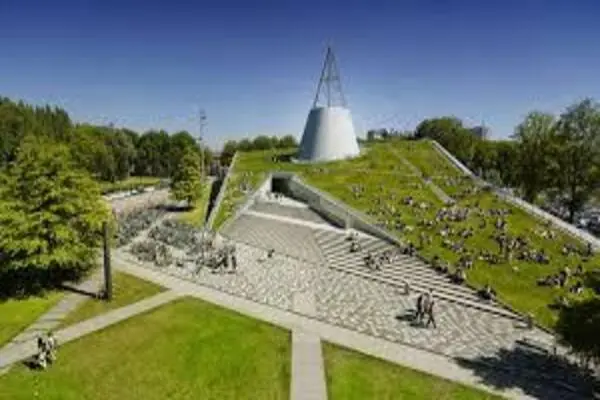
- 2026 Global Subject Ranking: #5
- Core Focus Areas: Hydraulic Engineering, Coastal Defences, and Structural Mechanics
- Key Metric: Exceptionally high Academic Reputation score (98.5).
The Academic Philosophy
When a massive portion of your country sits below sea level, civil engineering becomes a matter of national survival.
As one of the Best Civil and Structural Engineering Universities in the World, TU Delft in the Netherlands is globally recognised as the undisputed capital of hydraulic and coastal engineering.
The university’s philosophy centres entirely around “building with nature”—creating infrastructure that works harmoniously with volatile fluid dynamics and changing marine environments.
Cutting-Edge Research & Facilities
TU Delft features the WaterLab, a world-class testing ground equipped with deep-water flumes and wind-wave simulators.
Students can construct scaled models of dikes, levees, and offshore wind turbine foundations, then subject them to simulated catastrophic North Sea storms to measure fluid-structure impacts.
As one of the Best Civil and Structural Engineering Universities in the World, TU Delft is also heavily invested in structural mechanics and smart transport networks, researching self-healing asphalt that uses embedded bacteria to autonomously seal cracks when exposed to rainwater, drastically extending the lifespan of highways.
Career Outlook & Industry Network
As one of the Best Civil and Structural Engineering Universities in the World, TU Delft is the primary talent pool for the world’s elite maritime, dredging, and coastal defence firms (such as Boskalis, Van Oord, and Deltares).
If your career path involves offshore energy networks, massive port designs, or protecting coastal mega-cities from rising oceans, TU Delft offers an education that simply cannot be replicated anywhere else.
Global Comparison Matrix
To help visualise how these premier programs stack up against one another across core operational metrics, review the comparison matrix below:
| University | Region | Standout Specialty Facility | Primary Research Theme |
| MIT | North America | Pierce Lab & CSHub | Materials nanotechnology & infrastructure digital twins |
| NUS | Asia | Geotechnical Centrifuge | Ultra-dense smart cities & subterranean engineering |
| UC Berkeley | North America | PEER Seismic Shake Tables | Earthquake resilience & structural dynamics |
| ETH Zurich | Europe | Robotic Fabrication Labs | 3D concrete printing & automated construction |
| TU Delft | Europe | The WaterLab Flumes | Coastal defences, flood management & fluid dynamics |
More comparison on the best 5 Civil and Structural Engineering Universities in the World:
| University | Country | Global Strength |
|---|---|---|
| MIT | United States | Overall engineering excellence |
| NUS | Singapore | Smart cities and urban infrastructure |
| UC Berkeley | United States | Earthquake and transportation engineering |
| ETH Zurich | Switzerland | Structural and computational engineering |
| TU Delft | Netherlands | Water and hydraulic engineering |
Choosing the Right University: A Strategic Framework
Deciding which of these top-tier institutions aligns with your personal and professional path requires looking beyond overall scores and focusing on program alignment.
Identify Your Engineering Vertical
Civil engineering is an incredibly broad umbrella. If your passion lies in high-stress structural design or surviving natural disasters, UC Berkeley is the logical choice.
If you want to redefine building materials or manage automated smart grids completely, MIT provides the required computing focus. For those interested in water, ports, and climate adaptation, TU Delft is unparalleled.
Factor in Regional Industry Dynamics
Where you study is often where you will secure your initial career placements. Studying at NUS embeds you directly into Asia’s massive urban transformation projects.
Selecting ETH Zurich gives you instant proximity to central European engineering standards and advanced robotics initiatives.
Evaluate the Technical Prerequisites
These elite institutions require a massive foundational background in advanced mathematics (calculus, differential equations, and linear algebra) and classical physics (mechanics and thermodynamics).
Furthermore, in 2026, a basic proficiency in programming languages like Python or MATLAB is highly recommended before setting foot on campus, as data analytics is now fundamental to every top-tier civil engineering curriculum.
Check Our Recommendations:
- 10 Best Laptops for Civil 3D and Revit Right Now
- How to Choose the Best Laptop for Architecture in 2026
- The Best Gifts For Engineers To Make Them Smile in 2026
- Best Engineering Books For Engineers
- Best Laptop Brands For Engineers | All You Need To Know
- Home Furniture | Meaning and Type You Should Know in 2026
- Best Drones for Surveying and Mapping: Guide for Engineers
- 9 Best Monitors For Engineers and Architects 2026
Funding and Research Assistant Fellowships
Securing funding is a critical component of pursuing an elite graduate degree in civil and structural engineering.
At top-tier global institutions like MIT, NUS, and ETH Zurich, funding mechanisms differ significantly based on the region’s academic structure and whether you are pursuing a research-focused Master’s/PhD or a coursework-based professional degree.
The primary international funding paths, institutional fellowships, and assistantship frameworks for these three world-renowned universities include:
1. Massachusetts Institute of Technology (MIT)
Department of Civil and Environmental Engineering (CEE)
As one of the Best Civil and Structural Engineering Universities in the World, MIT operates under a model in which research-oriented graduate tracks are almost universally funded, whereas professional master’s degrees typically require external or personal financing.
- SM/PhD Track Funding: If you are admitted to the Master of Science (SM) or Doctor of Philosophy (PhD) tracks within MIT CEE, you are automatically considered for full funding. This guarantee covers full tuition, health insurance, and a monthly living stipend.
- Research Assistantships (RAs): This is the primary long-term funding mechanism for most MIT CEE graduate students. As an RA, you are paired with a faculty advisor and work directly on sponsored research projects (e.g., smart materials at the Concrete Sustainability Hub or predictive modelling at the Pierce Lab).
- Departmental & Institutional Fellowships: In your first year or semester, MIT often awards internal fellowships as a merit-based acknowledgement of academic excellence. After this initial period, students typically transition onto an advisor’s RA funding.
- Professional Master of Engineering (MEng) Limitations: Unlike the SM or PhD, the coursework-focused MEng degree does not traditionally offer departmental RA or fellowship funding. International MEng students are encouraged to secure external funding via programs like the Fulbright Foundation or national scholarship pipelines from their home countries.
2. National University of Singapore (NUS)
College of Design and Engineering (CDE)
NUS offers an array of high-value fellowships and scholarships aimed at drawing elite global talent to Singapore, structured strictly by the type of program (Research vs. Coursework).
Research-Based Programs (M.Eng. / PhD)
Admissions to research tracks are paired with highly competitive monthly stipends that match or exceed living costs in Singapore:
- President’s Graduate Fellowship: The most prestigious award for incoming PhD candidates of any nationality. It provides a full tuition waiver and a premium monthly stipend of up to SGD 4,800/month.
- NUS Research Scholarship: Available to international students across all research disciplines. It covers full tuition fees and offers a monthly stipend of up to SGD 3,800/month for PhD candidates.
- NUS Industry-Relevant PhD Scholarship (NUS-IRP): Tailored for doctoral candidates whose research aligns closely with industrial applications, providing up to SGD 3,800/month.
Coursework-Based Programs (M.Sc. in Civil Engineering)
While coursework Master’s degrees are generally self-funded, specific regional and merit-based awards exist:
- CDE Global Fellowship Programme: Target scholarships designed to offset costs for top-tier international applicants.
- Specific Private & Structural Endowments: The Department of Civil and Environmental Engineering administers targeted merit awards for enrolled students, such as the S D IYER Scholarship and the TUCSS M.Sc. (Geotechnical) Scholarship.
3. ETH Zurich (Switzerland)
Department of Civil, Environmental and Geomatic Engineering (D-BAUG)
In the Swiss higher education system, tuition fees are famously low compared to US institutions, but the cost of living in Zurich is exceptionally high.
Therefore, ETH Zurich’s funding ecosystem focuses heavily on merit-based living cost coverage for master’s students and direct employment models for doctoral candidates.
Master’s Degree Funding include:
- Excellence Scholarship & Opportunity Programme (ESOP): This is ETH Zurich’s premier merit award, open to international applicants who graduated in the top 10% of their undergraduate program. It provides a full tuition fee waiver and a stipend of CHF 12,000 per semester to cover living and study expenses completely. To apply, you must submit a formal pre-proposal for your Master’s thesis during the initial application window (November 1–30).
- Subsidiary Social Scholarships: ETH offers need-based funding designed to assist with partial living costs. However, for international students, these are strictly supplementary and require comprehensive documentation proving financial hardship. They are typically only accessible after completing your first year or earning a specific number of ECTS credits at ETH.
PhD Candidate Funding (The Employee Model)
At ETH Zurich, a PhD is not viewed merely as a student status—it is a professional research staff position.
- Research Assistant/PhD Employment: If accepted into a doctoral group within D-BAUG, you will sign an official employment contract with the university.
- Compensation: You receive a highly competitive Swiss salary along with social security benefits. Your primary responsibilities involve conducting your doctoral research and acting as a teaching assistant for undergraduate labs, completely covering your living costs without the need to apply for external scholarships.
Summary Strategy for Applicants
| Dimension | MIT | NUS | ETH Zurich |
| PhD Funding Model | Fully funded via RA/Fellowship (Tuition + Stipend) | Fully funded via Research Scholarships (up to SGD 4,800/mo) | Official employment contract with standard Swiss salary |
| Master’s Funding Model | SM is funded via RA; MEng is typically self-funded | M.Eng is funded; M.Sc. relies on select regional/merit chips | Highly competitive ESOP program (CHF 12,000/semester) |
| Action Plan | Reach out to specific faculty advisors whose lab research matches your thesis goals. | Apply during early windows to be automatically matched for university fellowships. | Prepare a robust, original Master’s thesis pre-proposal for the November ESOP deadline. |
Civil and Structural Engineering Universities: FAQs
1. What is the distinction between Civil Engineering and Structural Engineering?
Civil engineering is a broad field that encompasses transportation networks, water management, geotechnical analysis, and environmental systems. Structural engineering is a specialised branch within civil engineering that focuses strictly on the physics of load-bearing structures. It ensures that buildings, bridges, and tunnels can safely withstand the external forces (gravity, wind, earthquakes) acting upon them. All top 5 universities listed combine these into integrated or highly overlapping departments.
2. What is the average duration of a degree at these top universities?
For undergraduate Bachelor of Science (B.S. or B.Eng.) programs, the standard timeline is 4 years in the United States (MIT, UC Berkeley) and Singapore (NUS). In Europe (ETH Zurich, TU Delft), the academic journey is typically split into a 3-year Bachelor’s degree followed by a 2-year Master’s degree, conforming to the European Bologna process.
3. Are these universities highly competitive for international students?
Yes, exceptionally so. Acceptance rates for civil engineering programs at institutions like MIT and UC Berkeley hover between 5% and 10%. Applicants need near-perfect GPAs, stellar recommendations, and demonstrated interest in research or structural projects. For ETH Zurich and TU Delft, undergraduate entry depends heavily on passing rigorous entrance exams, though their Master’s programs are highly selective on a global scale.
4. Do I need to learn a foreign language to study at ETH Zurich or TU Delft?
For Undergraduate (Bachelor’s): Yes. ETH Zurich requires fluency in German, as it is the primary language of instruction. TU Delft offers select components in Dutch, though they are increasingly introducing English-taught pathways.
For Postgraduate (Master’s/PhD): No. Both ETH Zurich and TU Delft offer their Master of Science and doctoral tracks completely in English, making them highly accessible to international scholars.
5. Is data science or coding really required for Civil Engineering in 2026?
Absolutely. The era of the civil engineer working purely with physical blueprints is over. Top universities integrate Python, MATLAB, and GIS (Geographic Information Systems) mapping into their core curricula. Modern civil engineering relies heavily on data science for structural health monitoring, computational fluid dynamics, and generative architectural design.
Conclusion: Civil and Structural Engineering Universities
The global demand for innovative, adaptive civil and structural engineers has never been more urgent. As cities grow denser and climate realities force us to completely rethink how we interact with our environment, old infrastructure templates are no longer sufficient.
Whether you find yourself optimising cement at the nano-scale in Boston, modelling deep foundations in Singapore, or testing massive sea walls in the Netherlands, an education from any of these top 5 universities provides the ultimate technical foundation.
By aligning your specific passion, be it robotics, coastal defence, or seismic safety, with the distinct philosophy of one of these elite institutions, you will gain the skills needed to literally reshape the face of the Earth.
Tell us. What do you think about the best Civil and Structural Engineering Universities? Drop your answer in the comments form below.
Bookmark this page for the latest in engineering education.
Like Our Page on Facebook | Share to educate another engineer about the Best Civil and Structural Engineering Universities.