
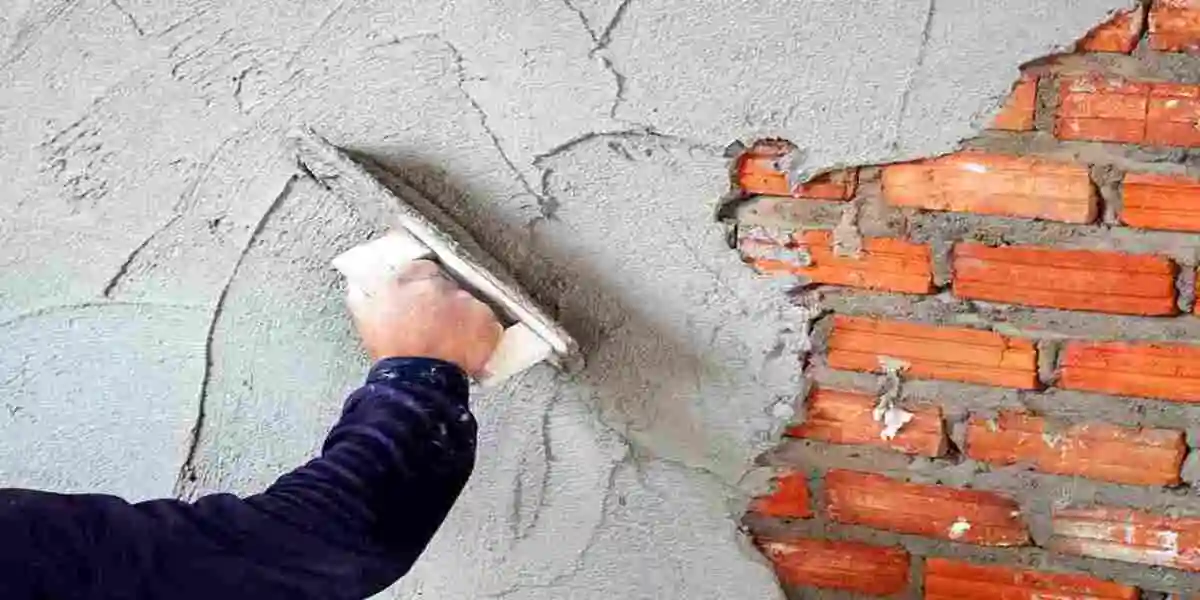
Plastering materials are primarily a mixture of cement and sand, the quantities of which are determined by the mix ratio and the desired thickness of the plaster.
Plastering materials are used as protective and decorative materials for both internal and external walls.
Below are the simplest steps to estimate the quantity of Plastering materials, which are Cement as a binding agent and sand.
Recommended Articles
Purposes of Plastering
The various types of plastering serve multiple purposes in construction, all contributing to the overall functionality, aesthetics, and longevity of structures.
The following are the key reasons why plastering is a necessary step in the building process:
- Increase the Durability of the Masonry wall
- Provide a smooth Surface for Painting Work
- Provide Protection Against Atmospheric Attack
- Protect the wall Against Moisture
- Provide a Better Aesthetic View of the building or wall
Quantity of Plastering Materials
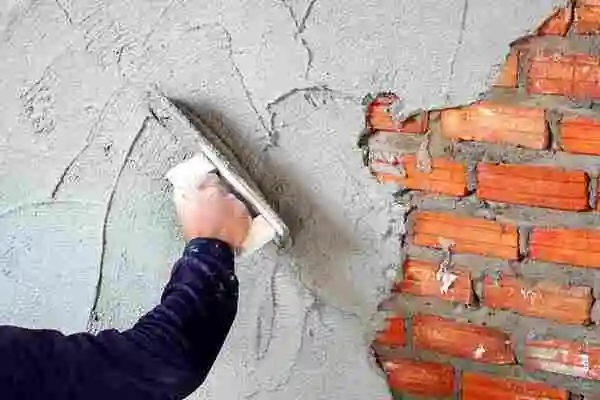
The following steps are used:
- Step One: Find the Plastering area
- Step Two: Find the Plastering volume
- Step Three: Find the Cement and Sand quantities
Example
Data Given
- Length of Wall = 11.9m
- Wall height = 3.3m
- Assume the thickness of Plaster to be 16 mm (0.016 m)
Calculations
1. Plaster Volume
- Area of Wall = Wall Length x Wall Height = 11.9 x 3.3 = 39.27m2
- Volume of the plaster = Area x Thickness = 39.27 x 0.016 = 0.63m3
- Add about 20% extra for wastage & bulking = 20% + 0.63 = 0.76m3
- Plaster volume = 0.76m3
2. Cement and Sand Quantities
- Mix ratio is 1:6
- Total parts = 1 + 6 = 7
- Volume of Cement = (1/7) x 0.76 = 0.11m3
- Total bags of Cement = Volume of Cement/(0.035) = (0.11)/(0.035) = 3.1bags
- Total bags of cement, approximately 4bags
- Quantity of sand = (6/7) x 0.76 = 0.65m3
- Quantity of sand = 0.7m3 approximately
Please note: Wastage and bulking may be up to 30% depending on the consideration.
That’s all.
Join the conversation by replying on Bluesky.
If you liked this article, please join WebsiteForEngineers on Twitter, Facebook, TrueSocial, Pinterest, BlueSky, and in our WhatsApp channels.

