
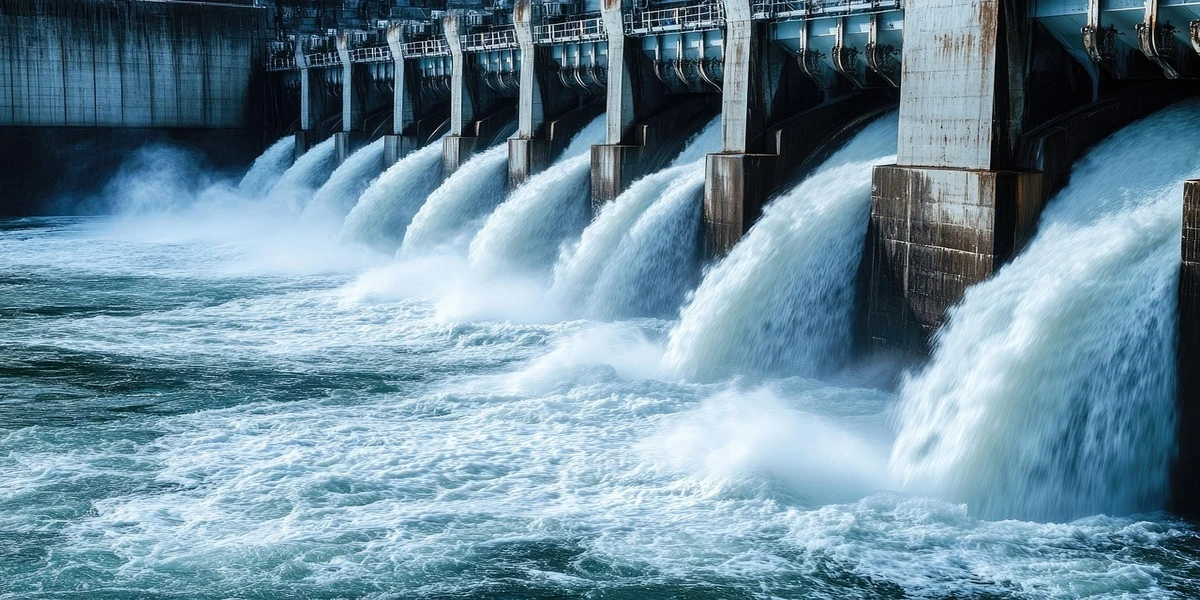
After drawing water through intakes, the next task is to pump it to treatment plants. But if the source is at a higher level than the treatment plant, the water can flow under gravity automatically.
Similarly, after necessary purification, the water must be conveyed to the consumers. To ensure the quality of water to be distributed and the reliability of the system, the designer must select the proper pipe materials, special fittings, and pipe appurtenances, and specify the correct construction methods.
Recommended Articles
- Unit Operations for Wastewater Treatment: The Complete Guide
- Water Treatment: The Complete Guide to All Civil Engineers
- What is Research Methodology?: The Ultimate Engineer’s Guide
- Water Pollution and Control: Everything You Need To Know
- How To Design a Combined Footing in Accordance with BS 8110
- Design of Staircase: The Complete Guide to Civil Engineers
Table of Contents
Forms of Conveyance Devices
The following are the forms of Conveyance devices you should know:
1. Open channels (Canals)
In water supply schemes, raw water from the source to the treatment plant is carried in open channels (canals). These are very cheap and easy to construct.
The channel must be adequately lined to prevent seepage loss. It must be given a uniform longitudinal slope and can only be constructed where such continuously sloping ground is available.
If unlined, the channel must be run with a limited velocity of flow; otherwise, scouring and erosion may occur. In channels, there is always a lot of loss of water due to seepage and evaporation. Thus, they are not used for water distribution.
2. Aqueducts
An aqueduct is a term which refers to a closed conduit of masonry or RCC built at a site. Aqueducts may be used for conveying water from the source to the treatment plant or for distribution.
They usually do not flow under pressure and often run “half to two-thirds” full. Formerly, rectangular adequate were mainly used, but nowadays circular or horseshoe-type adequate are in everyday use.
From the hydrant’s point of view, a “circular section” provides the maximum “hydraulic mean depth” and is thus most efficient.
Moreover, since the perimeter per unit of cross-section is the least, the construction cost or material required is also the least.
But circular sections cannot be easily supported on the ground, and therefore are seldom used. A rectangular shape is hydraulically inefficient and requires a significant amount of material for its construction, but it’s more stable when supporting the ground.
“Horse-shoe” shape is a compromise between circular and rectangular shapes. However, its construction is somewhat more challenging.
3. Tunnels
Tunnels are aqueduct-like conduits. Tunnels which are not under pressure are usually constructed in a horseshoe shape.
But if they convey water under pressure, a “circular” cross-section is the best. In present tunnels, the depth of cover is generally such that the weight of overlying material overcomes the bursting pressure.
Some large cities use tunnels to convey water from outside sources; however, such tunnels must be watertight and constructed with a steel lining embedded in the concrete.
4. Flumes
Flumes are open channels supported above the ground over trestles, etc. They are used to convey water across valleys and minor depressions or over drains and other obstructions in their path.
They may be made of masonry, RCC, metal, or wood and are usually circular or rectangular in cross-section.
5. Pipes
A pipe is a circular closed conduit which is used to convey water from one point to another “under gravity” or “under pressure”.
If pipes do not run full, they are said to be running under gravity. But flow under gravity is possible only if the pipeline is given a definite longitudinal slope. “Sewage flow” through pipes occurs under the influence of gravity.
Pipes running full will be said to be running under pressure. “Water mains” are mostly pipes and always run under pressure.
Depending on the material from which the pipe is made, the most common types for water supplies are:
- Cast iron (CI)
- Ductile iron
- Bitumen-coated steel
- Galvanised mild steel (GS)
- Asbestos cement (AC)
- Reinforced concrete (RC)
- Prestressed concrete (PC)
- Plastic (PVC) pipes
- Polythene pipes
- Copper and lead pipes
The last two are only used for internal plumbing.
The stresses that a pipe has to withstand are caused by “internal pressure” and “external loads”, and the pipes must be designed and manufactured to withstand these forces.
The internal pressure of water causes tension in the pipe walls. Buried pipes are subjected to loads from the overlying material, backfill, and the weight of traffic, as well as impact effects.
External temperature changes can cause stress in pipes and are particularly important in the case of exposed pipes. Expansion joints eliminate temperature stresses.
The selection of pipe depends on the following factors:
- Carrying capacity of the pipe
- Durability and period of life
- Quality of water to be conveyed
- Initial cost and maintenance cost
- Internal pressure in the pipe, as well as external stresses due to soil, traffic, and impact
The pipes, which are more economical and fulfil all the above-mentioned requirements, should be adopted for use.
Hence, note that: the pipes are designed to withstand the following:
- Internal pressure of water (hoop stress)
- Water hammer
- External pressures when laid above the ground
- Flexural stresses when laid over supports constructed at intervals or on bridges
- Longitudinal stresses due to flow around bends
- Foundation reaction depending upon the nature of the support and
- Handling stress.
Water supply main pipeline and other distribution pipelines are made by joining a large number of pipe lengths.
The process of joining different lengths of pipes is called Jointing. The method of joining pipes is carried out in trenches after the pipes have been lowered into them.
Different types of joints are used for joining different kinds of pipes. The following are types of joints:
- Socket and spigot joint (or bell and spigot joint)
- Joint in flanged pipe
- Mechanical joint
- Victaulic coupling or joint
- Dresser coupling
- Flexible joint
- Riveted joints
- Expansion joints
- Cement collar joints
- Screwed socket joints
6. Pipe Fittings (Pipe Specials)
Pipe fittings are specially manufactured pipe pieces designed to facilitate changes in direction, changes in diameter, and the creation of branches in the pipeline.
They are made in standard sizes and are generally provided with socket and spigot ends or flanged ends (for the case of C.I pipes).
Fittings for G.S. and wrought iron pipes are also available. These specials include bends, reducers, increasers, cap sleeves, offsets, and more.
- Bends: required for changing the direction of the pipeline. Designed by the angle in degrees through which the pipeline can be turned. A fraction of a circumference also designs it. E.g., if a pipeline turns 90º, it is called a ¼ bend; 45º is called a 1/8 bend; 22.5º is called a 1/16 bend; 11.25º is called a 1/32 bend; and 5 5/8 is called a 1/64 bend.
- To join a branch line with a main pipeline at an angle other than 90 °, a Y-branch is used.
- T-Branch (or three-way branch): is used when branch lines meet the main line strictly at 90º
- A cross piece is used when two pipelines instead of joining cross each other. All four joints are bell slopes.
- Reducers and increasers are used when pipeline diameter changes. These are the same pieces because a reducer becomes an increaser if the direction of flow is reversed and vice versa.
- Blow-off branches are used where hydrants are to be fitted.
- Caps are used to close the open dead end of the pipeline.
Note: Additional fittings are required to install valves, meters, and other mechanical devices, as well as to facilitate the changeover from one pipe material to another.
7. Pipe Appurtenances and Accessories
For the successful working of a water distribution system, pipe appurtenances are essential devices.
These appurtenances include fittings on public supply mains and fittings on the pipework inside the house.
Some of the items on the pipework are:
- Valves: These devices are used to control the flow of water in pipelines. With the help of valves, any section of a pipeline may be isolated for the repair of a leak or breakage. They are fitted on all the mains and submains.
- Manholes are provided at suitable intervals along the pipeline to facilitate its laying and to serve as access points for inspections and repairs. They are generally offered on large pipelines that bring water from the source to the city at intervals of 300 to 600m.
- Installation Joints: Are provided along the pipelines at suitable intervals to insulate the pipe against the flow of stray electric currents and thus prevent electrolysis.
- Anchorages: Are devices provided to the pipeline to resist the tendency of pipes to pull apart at bends or other points of inbalanced pressures.
- A hydrant is a fitting on a pipeline, primarily used to form a connection for a fire hose. Hydrants are usually of the post type (i.e,. They remain above 1 to 1.5m projected above ground level, and thus, there is no need to place any distinguishing marks over them to indicate their location.
- A water meter is a device that measures the amount of water flowing through it. Water meters are required to estimate the quantity of water supplied to the industries, public buildings, and private houses, so that they may be charged accordingly.
Mains
Pipelines are classified into different categories according to their functions:
1. Trunk Mains
Convey water over long or short distances from the source to the selected points in the distribution system.
The following categories of trunk mains are recognised: gravity mains, Risung or pumping main, and Suction mains.
2. Distribution Mains
These are pipes that feed the distribution network to consumers and are supplied from storage tanks.
3. Service Mains
These are pipes which connect the distribution mains to the individual consumers.
4. Plumbing Pipes
These are pipes within the building conveying water to the various appliances.
FAQs on The Transmission of Water
1. What are the uses of pipe fittings in the transmission of water?
Pipe fittings are pipe pieces used to facilitate changes in direction, changes in diameter, and the making of branches of the pipeline.
2. What is a pipe?
A pipe can be defined as a circular closed conduit which is used to convey water from one point to another, “under gravity” or “under pressure”.
3. What Pipe Accessories are used in a water distribution system?
Pipe Accessories used in the water distribution system include valves, Manholes, Installation joints, Anchorage, Hydrants, and Water meters.
4. What are common materials used for making pipes?
The common materials for making pipes are: Cast iron (CI), Ductile iron, Bitumen-coated steel, Galvanised mild steel (GS), Asbestos cement (AC), Reinforced concrete (RC), Prestressed concrete (PC), Plastic (PVC) pipes, Polythene pipes, Copper and lead pipes.
5. What devices are used as forms of Conveyance?
The following are the forms of Conveyance devices: open channels, Pipes, Aqueducts, and tunnels.
6. What causes tension in the pipe walls?
The internal pressure of water causes tension in the pipe walls.
7. What are the causes of the stress that the pipe has to withstand?
The stresses that the pipe has to withstand are caused by internal pressure and external loads.
8. What is the importance of Bends in the pipeline?
Bends are essential because they are used to change the direction of the pipeline, and they are designed by the angle in degrees through which the pipeline can be turned.
9. What factors are used in the selection of pipes?
The selection of pipes depends on the following factors: Carrying capacity of the pipe, Durability and period of life, Quality of water to be conveyed, Initial and maintenance cost, and Internal pressure and external stress in the pipe.
10. What are the general principles that govern valves?
The general governing principle is that valves should be so placed that any pipe may be cut off from general circulation without interrupting service in the system.
11. What is the meaning of “Under Gravity” and “Under Pressure”?
Under gravity occurs when pipes are not full and the pipeline is given a definite longitudinal slope, such that sewage flows through pipes under gravity. In contrast, under pressure occurs when pipes are running full, such as water mains, which are always run under pressure.
12. What are the essential elements of a public water supply infrastructure?
The essential elements of a public water supply infrastructure may consist of:
Intake and reservoirs, a water treatment plant, valves that control the flow of water in the pipe system, hydrants that provide a connection with the water in the mains for firefighting, and mains, submains, and branch lines to carry water to the streets and to individual homes, etc.
Final Thought on The Transmission of Water
As explained above, water transmission can be defined as the process of transporting large volumes of water over long distances, either from a source to a treatment plant or from a treatment plant to distribution systems.
The process is achieved through pipes, canals, tunnels, fumes, or aqueducts and is powered by gravity or pumping stations.
From the post above, we notice that the process of jointing pipes is called jointing, and it is carried out in a trench after the pipes have been lowered into it.
Lastly, we have discussed mains as they are used in the distribution system. We discussed the classification of mains, which are trunk, distribution, service mains and plumbing pipes.
What do you think about this topic, Transmission of Water? Write your comment below.
Join the conversation by replying on Bluesky.
That’s all.
If you liked this article, please join Website For Engineers on Twitter, Facebook, TrueSocial, Pinterest, BlueSky, and in our WhatsApp channels.

