
Discover the best keyword research tools for 2026. Compare Semrush, Ahrefs, and Rankability, and learn mathematical models to prioritise organic search traffic.
In the modern digital landscape, the nature of search has undergone a tectonic shift. We have moved far beyond the era of simple “keyword stuffing.”
Today, search engines do not merely match character strings; they seek to understand semantic intent, user context, and conceptual relationships.
With the arrival of Google’s AI Overviews (AIO), Perplexity, and ChatGPT Search, the traditional “blue-link” Search Engine Results Page (SERP) is no longer the sole source of traffic.
For modern SEO specialists, content creators, and growth marketers, this evolution changes the objective of keyword research.
It is no longer enough to target search terms based purely on raw, unadjusted volume. Instead, data-driven teams must evaluate queries through the lens of:
- Search Intent Alignment: Distinguishing between informational, navigational, commercial, and transactional queries.
- AI Overview (AIO) Risk: Identifying which keywords trigger AI-generated summaries that capture the click, and which keywords yield traditional organic opportunities.
- Topic Traffic Potential (TP): Evaluating the total traffic a topic cluster can capture, rather than a single keyword in isolation.
- Information Gain and Entity Optimisation: Determining what unique perspectives or data points your content must contain to satisfy search engine algorithms that reward structural originality.
To achieve this level of precision, you need a highly analytical, tool-supported workflow. This guide reviews the top available keyword research tools, evaluates their technical advantages, and introduces mathematical frameworks to prioritise your organic search campaigns.
Recommended Articles
The Mathematics of Modern Keyword Prioritisation
Before selecting your software suite, it is vital to establish a quantitative framework to evaluate keywords. Standard keyword metrics can be deceptive if analysed in isolation.
For instance, a keyword with a monthly search volume of 50,000 might seem highly attractive, but if its keyword difficulty score is 95/100 and it triggers a massive AI Overview, the actual organic Click-Through Rate (CTR) may drop below 1.5%.
To solve this, advanced SEO teams rely on two core mathematical formulas.
1. The Keyword Efficiency Index (KEI)
The KEI is a classic mathematical ratio used to identify “low-hanging fruit”—keywords that exhibit high search volume relative to their competitive difficulty.
The formula is expressed as:
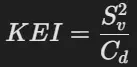
Where:
- Sv is the average monthly search volume of the target keyword.
- Cd is the competitive difficulty score (typically normalised on a scale from 1 to 100, where 100 represents maximum competition).
A high KEI score indicates an exceptional opportunity: a term with significant search demand that can be ranked for without requiring immense backlink authority or long-term domain age.
2. Topic Traffic Potential (TP)
Because modern search engines rank single pieces of content for hundreds of long-tail variations, measuring a single keyword’s volume is an inaccurate metric for page performance.
Instead, we calculate the estimated Traffic Potential (TP) of a parent topic cluster:
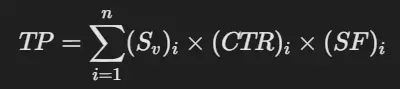
Where:
- (Sv)i represents the individual search volume of the i-th keyword variation in the cluster.
- (CTR)i represents the modelled Click-Through Rate for your target ranking position (e.g., 18%-22% for Position 1).
- (SF)I represents the SERP Factor Modifier (0 <= SF <= 1). If a SERP is dominated by ads, local map packs, or an AI Overview, (SF)i is adjusted downward (e.g., to 0.35). If the SERP consists of clean organic listings, (SF)i is set to 1.0.
Deep Dive Into The Top SEO Keyword Research Tools
1. Semrush (The Complete Enterprise Suite)
- Starting Price: approx $139.95/month (Pro Plan)
- Database Scale: Over $26.5 Billion keywords globally
- Best For: All-in-one SEO programs, competitive gap analysis, and AI search tracking.
Core Value Proposition
As one of the best Keyword Research Tools, Semrush is widely regarded as the most complete competitive intelligence suite on the market.
Its flagship module, the Keyword Magic Tool, allows users to enter a seed keyword and instantly generate millions of long-tail variations, dynamically grouped into thematic subgroups.
For modern search campaigns, Semrush provides exceptional value through its AIO (AI Overview) Sensor.
This feature tracks search results across Google’s experimental layouts to show you precisely which of your target keywords trigger AI-generated answers, which sites are cited within those answers, and where traditional blue-link organic opportunities remain untouched.
Technical Advantages
The technical advantages of using SEMrush include:
- Intent Categorisation: Automatically tags every keyword with an intent label (Informational, Navigational, Commercial, Transactional) based on real-time SERP features.
- Dynamic Search Volume Updates: Refreshes search volumes for highly popular queries multiple times a month, providing critical seasonal data.
2. Ahrefs (The Long-Tail and Competitor-Analysis Leader)
- Starting Price: $129/month (Lite Plan)
- Database Scale: Over 20 billion keywords across 10 search engines
- Best For: Competitor reverse-engineering and clickstream-supported traffic mapping.
Core Value Proposition
As one of the best Keyword Research Tools, Ahrefs is a favourite among technical SEOs and link-building experts.
Its keyword tool, Keywords Explorer, stands out by going beyond raw search volumes to include Clicks and Traffic Potential metrics.
Supported by a massive database of anonymised clickstream data, Ahrefs calculates how many searches for a given keyword actually result in a user clicking on a website versus leaving the page without a click.
Technical Advantages
Advantages of Ahrefs are:
- Multi-Engine Research: Uniquely displays keyword metrics for platforms outside of Google, including YouTube, Amazon, Bing, Yahoo, and Yandex.
- Parent Topic Sizing: Automatically identifies the main query driving traffic to top-performing pages, allowing you to optimise your content structure for maximum structural relevance.
3. Rankability (Unified Search & AI Platform)
- Starting Price: approx $99/month
- Database Scale: Proprietary multi-platform data integration
- Best For: Unified tracking across traditional Google, local pack, video, and LLM search engines.
Core Value Proposition
Rankability is a breakout platform engineered to address the fragmented nature of modern search. Rather than measuring success solely by traditional numeric ranks, Rankability utilises a unified metric, the Search Performance Index (SPI).
The SPI aggregates a brand’s visibility across classic organic search, Google Maps, video results, and modern AI answer engines (including Google AIO citations and Perplexity references) into a single, comprehensive KPI.
Technical Advantages
AI Overview Optimisation: Built-in tools that analyse the current citation sources in LLM answers and provide direct recommendations for structuring your content to earn AI citations.
Keyword to Brief Integration: Connects your keyword lists directly to an AI-assisted content brief editor, ensuring your writers optimise content for semantically related terms.
4. Keyword Insights (The Intent Clustering Specialist)
- Starting Price: approx $58/month (with custom pay-as-you-go options)
- Database Scale: Live algorithmic clustering engine
- Best For: Content architects who need to group thousands of raw keywords into distinct pages.
Core Value Proposition
The biggest bottleneck in SEO is moving from a raw list of thousands of keywords to a structured content plan. Keyword Insights solves this problem by using live SERP data to group keywords together.
If Google displays identical organic pages for 10 different search terms, Keyword Insights recognises that they share the same search intent and groups them into a single “content cluster” representing a single page.
Technical Advantages
- Massive Scale Processing: Processes files containing up to 100,000 keywords at a time, automating work that would take a human analyst weeks to complete.
- Content Brief Outlining: Generates automated content outlines based on clustered subtopics and competitive headings from live search.
5. Mangools KWFinder (Best Value for SMBs and Local SEO)
- Starting Price: approx $29/month
- Database Scale: Over $2.5 Billion keywords
- Best For: Freelancers, small businesses, and localised search campaigns.
Core Value Proposition
For teams that find platforms like Semrush or Ahrefs too complex or cost-prohibitive, KWFinder by Mangools is an outstanding alternative.
It features an incredibly clean, intuitive interface that quickly highlights search volume, difficulty, and competitive metrics without visual clutter.
It is highly valued for its localised search capabilities, allowing users to drill down to specific cities, districts, or postal codes to isolate local consumer intent.
Technical Advantages
Accurate Difficulty Scoring: Universally praised for having one of the most reliable and transparent Keyword Difficulty (KD) scores in the budget tool category.
SERP History Tracker: Shows how the top 10 search results have shifted over time, helping you identify highly volatile SERPs to avoid.
6. Answer Socrates & AnswerThePublic (Conversational & PAA Mining)
- Starting Price: Free tiers available; Answer Socrates starting at approx $9/month
- Database Scale: Continuous scraping of autocomplete API streams
- Best For: Discovering conversational, long-tail questions and building content outlines.
Core Value Proposition
With the rise of voice search, mobile queries, and natural-language prompts, users increasingly type full questions into search boxes.
As one of the best Keyword Research Tools, Answer Socrates and AnswerThePublic tap directly into search autocomplete suggestions (including Google’s “People Also Ask” databases) to map out every question, comparison, and prepositions-based query associated with a seed topic.
Technical Advantages
- Visual Question Maps: Formats search results into interactive, graphical maps that group questions by helping prepositions (Who, What, Where, Why, How, Is, Can).
- Real-Time Trend Discovery: Identifies rapidly rising conversational queries before traditional historical volume tools can catalogue them.
Comprehensive Keyword Research Tools Comparison Matrix
| Tool Name | Starting Price (USD) | Primary Strength | Database Scale | Best For | Target Search Environments |
|---|---|---|---|---|---|
| Rankability | $99/mo | Unified Search Performance Index (SPI) | Multi-Source | Agencies and Teams tracking AI + Traditional search | Google, AI Overviews, Local Pack, YouTube |
| Semrush | $139.95/mo | Complete SEO ecosystem & intent tracking | 26.5 Billion | Enterprise teams, competitor reverse-engineering | Google, AI Overviews |
| Ahrefs | $129/mo | Competitor backlink mining & Traffic Potential | 20.0 Billion | Technical SEOs, link builders, non-Google search | Google, YouTube, Amazon, Bing |
| KWFinder (Mangools) | $29/mo | Localized search and high-value UI simplicity | 2.5 Billion | Solopreneurs, SMBs, local contractors | |
| Keyword Insights | $58/mo | Intent-driven programmatic clustering | Live SERP Engine | Content architects mapping massive topic hubs | |
| Google Keyword Planner | Free | Direct, unskewed search volume forecasts | First-Party Ads | PPC coordination, raw baseline verification | Google Search & Display Network |
| Answer Socrates | $9/mo | Natural-language query mapping (PAA) | Autocomplete API | Content writers building comprehensive outlines | Google, Voice Assistant queries |
Building a Data-Driven Keyword Research Workflow
To turn raw data into a cohesive, high-performance content plan, follow this five-step engineering workflow.
Phase 1: Seed & Conversational Discovery
Begin by identifying your core topic. Input your seed terms into Google Keyword Planner to establish a baseline of commercial search volume, and use Answer Socrates to map out the conversational questions your audience is asking.
Phase 2: Competitor Gap Analysis
Plug your primary competitors’ domains into Ahrefs or Semrush. Extract the exact terms they rank for that you currently do not target (Content Gap Analysis). This instantly reveals established traffic-generating pathways in your industry.
Phase 3: Applying Mathematical Filters
Combine your keyword lists into a single spreadsheet. Calculate the Keyword Efficiency Index (KEI) for each term using your volume and difficulty metrics to separate high-priority opportunities from highly competitive terms.
Phase 4: Intent-Based Clustering
Run your filtered list through Keyword Insights to automatically group keywords by shared intent. This step ensures you do not make the classic mistake of creating ten separate pages for ten synonyms.
It tells you exactly how to outline your page to rank for the entire keyword group.
Phase 5: AI Overview & Citation Audit
Use Rankability to inspect the top-priority terms. Identify if an AI Overview is present. If an AIO dominates the page, adjust your content brief to directly answer the query in a highly structured, bulleted format to optimise for LLM citation.
If the SERP consists of clean organic blue links, optimise for standard on-page SEO factors.
FAQs Keyword Research Tools
1. What is the difference between Keyword Difficulty (KD) and PPC Competition?
Keyword Difficulty (KD) is a metric developed by third-party SEO platforms (like Semrush or Moz) to estimate how hard it is to rank organically on the first page of Google, based primarily on the backlink authority of the ranking pages.
PPC Competition (often displayed in Google Keyword Planner) measures the density of advertisers paying to run ads on that keyword. A keyword can have high PPC competition but low organic difficulty (making it a highly valuable organic SEO target).
2. Can I do keyword research entirely with free tools?
Yes. By combining Google Keyword Planner (for search volume and trends), Google Autocomplete / People Also Ask (for long-tail questions), and a free browser extension like Keywords Everywhere or Keyword Tool.io, you can build a highly effective keyword strategy. The limitation of free tools is that they require significantly more manual scraping, sorting, and clustering, which can be highly time-consuming for large campaigns.
3. What is a “seed keyword”?
A seed keyword is a broad, high-level term (usually 1-2 words) that represents your main business category or topic area (e.g., “cement,” “running shoes,” or “SEO software”). It acts as the starting point that you input into research tools to generate thousands of longer, more specific long-tail keywords (e.g., “high-strength hydraulic cement for foundations”).
4. How has AI search (like ChatGPT and Perplexity) changed keyword research?
AI search engines summarise answers directly for users, often drawing information from multiple source websites. This has shifted the goal from simply “ranking #1” to “being cited as a trusted source inside the AI answer.” To achieve this, keyword research must identify the exact questions users ask these conversational assistants, and content must be structured mathematically and logically to make it easy for AI web crawlers to parse and reference.
5. What is keyword cannibalisation, and how do I avoid it?
Keyword cannibalisation occurs when multiple pages on your website target and rank for the same keyword. This confuses search engines, as they must decide which page is the most relevant, often resulting in lower rankings for all of your pages.
To avoid this, use a clustering tool like Keyword Insights to group keywords by intent, ensuring that each distinct topic is served by a single, authoritative page.
Conclusion On The Keyword Research Tools
Data-driven SEO success is built on a foundation of rigorous, intentional keyword selection. In a search landscape that is rapidly transitioning from standard link indexing to conversational answer generation, relying on unadjusted keyword volume metrics is a recipe for wasted marketing budget.
By deploying professional suites like Semrush and Ahrefs for competitive discovery, automating intent grouping with Keyword Insights, and auditing your multi-platform brand visibility using Rankability, you can build a highly resilient search strategy.
Ultimately, the future of search belongs to those who use precise keyword data to design high-utility, intent-aligned content that answers the exact questions their customers are asking.
Thats All.